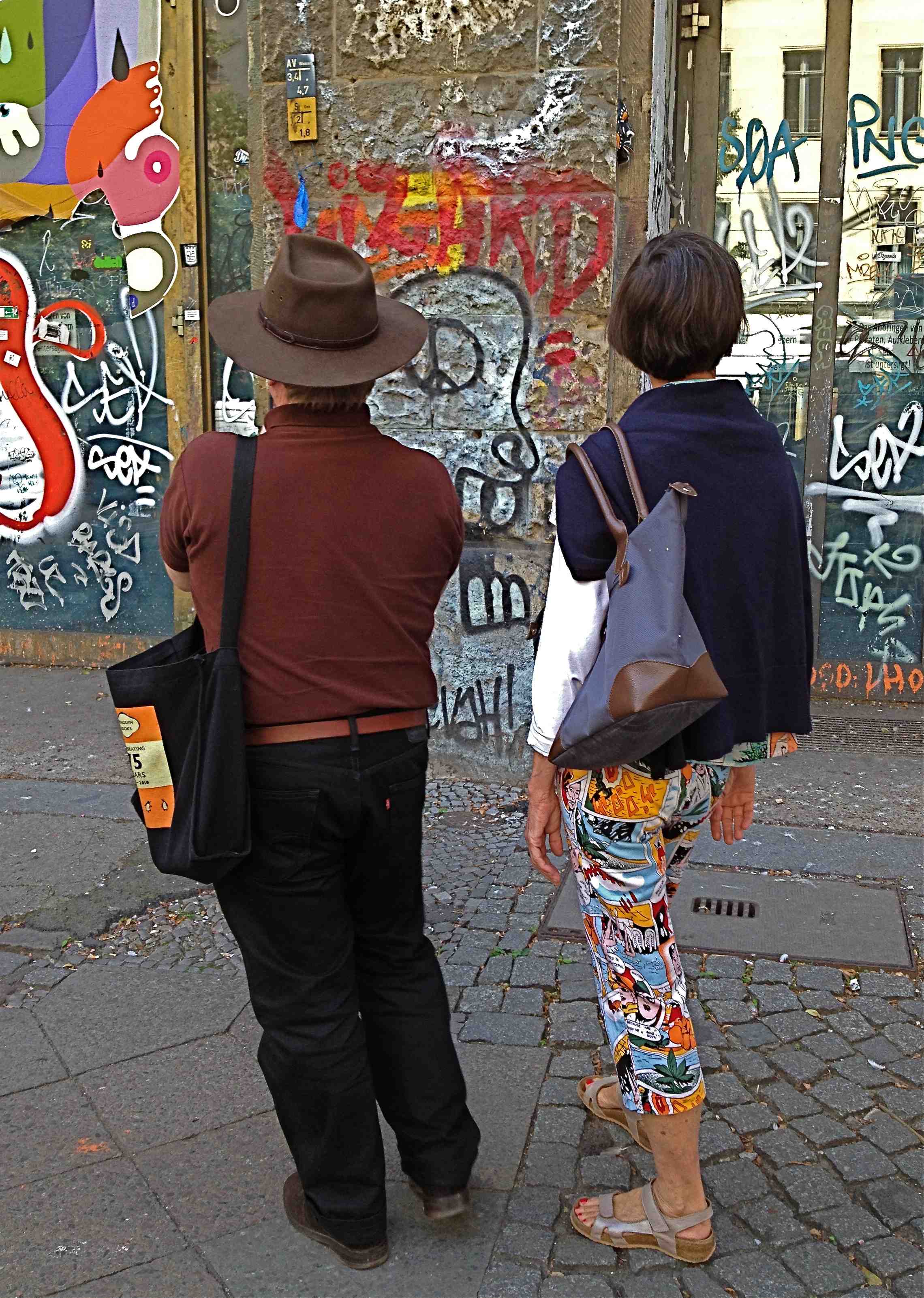
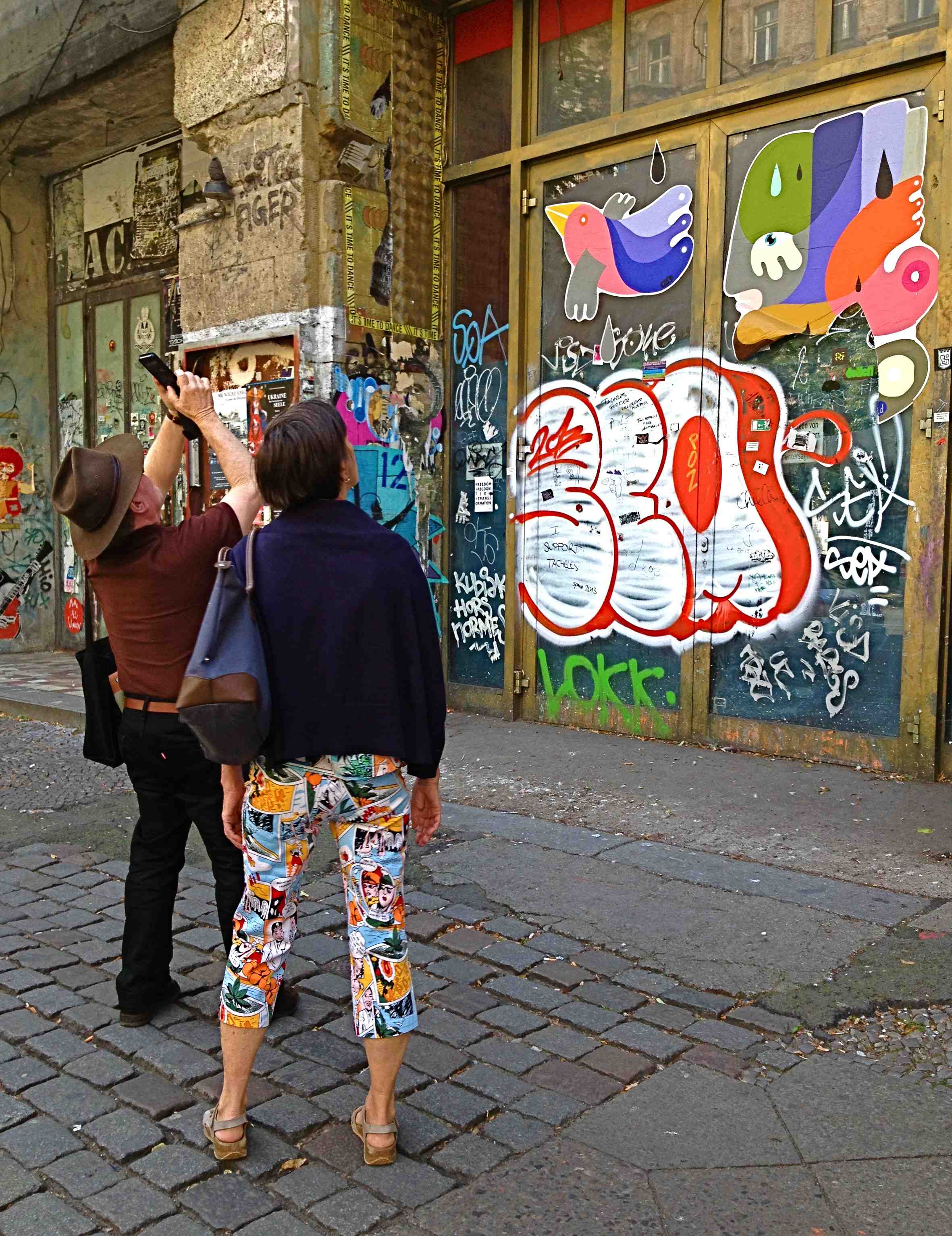
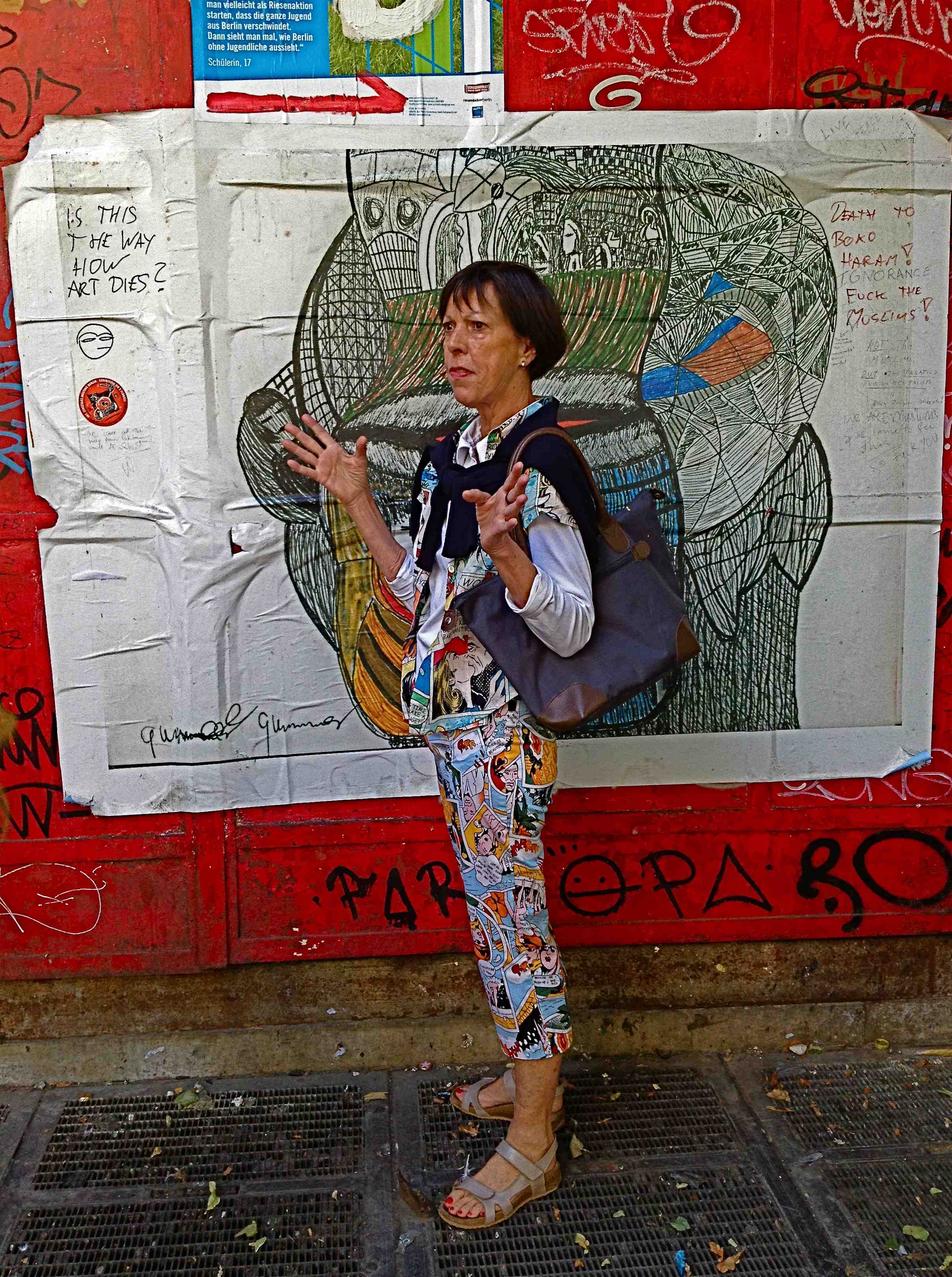
This post documents a recent walking tour of Berlin’s Staadt Mittee area…with friend, local resident and interpreter Mailef as my guide. The plan was to see the graffiti and traces of an artists’ commune (kunsthaus). I also wanted to visit Renate comics shop and bibliothek which has been located there since the early 1990s. I thought it would be good to purchase some German kunst comicbuchs (art comics) there!
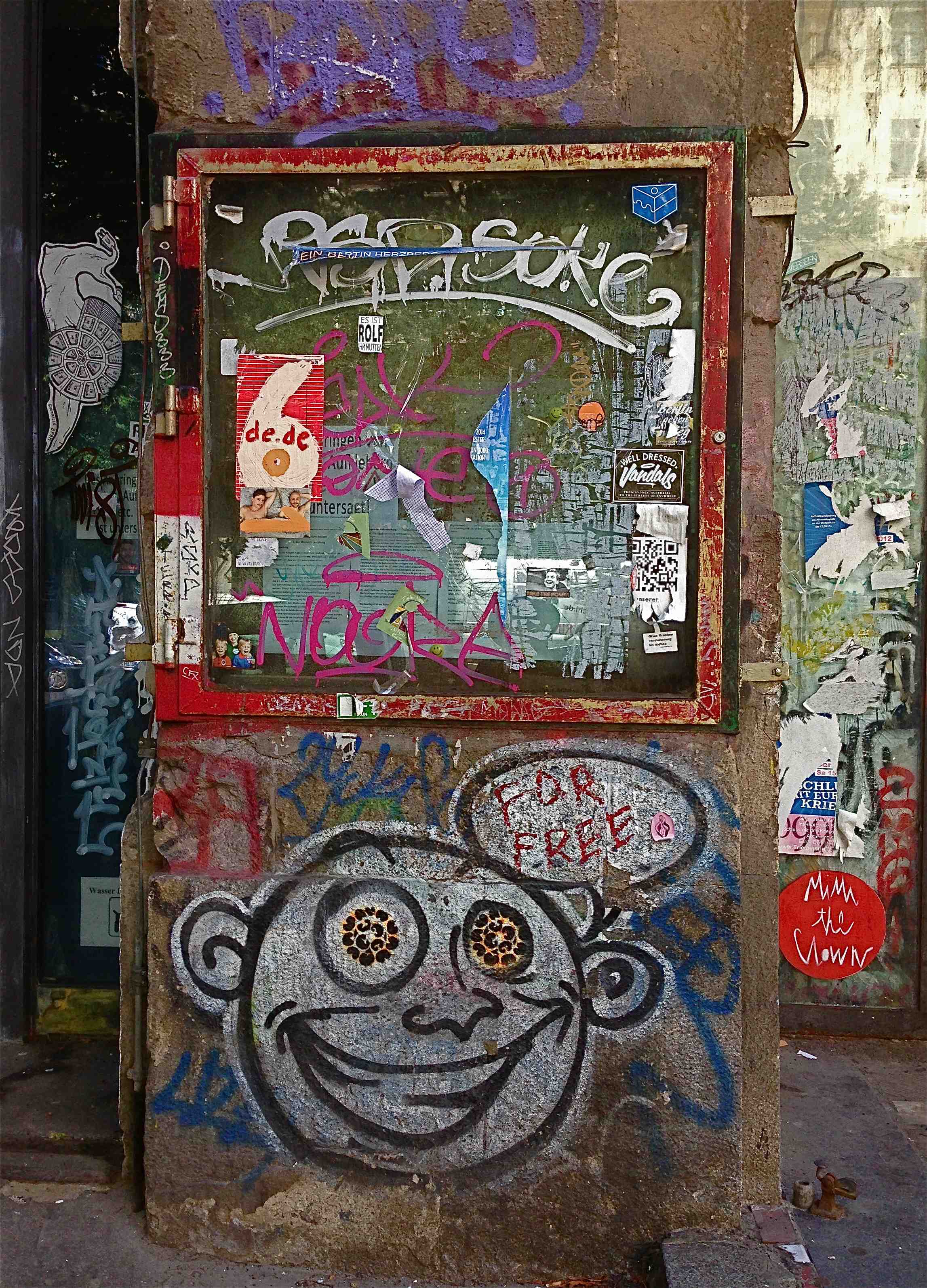
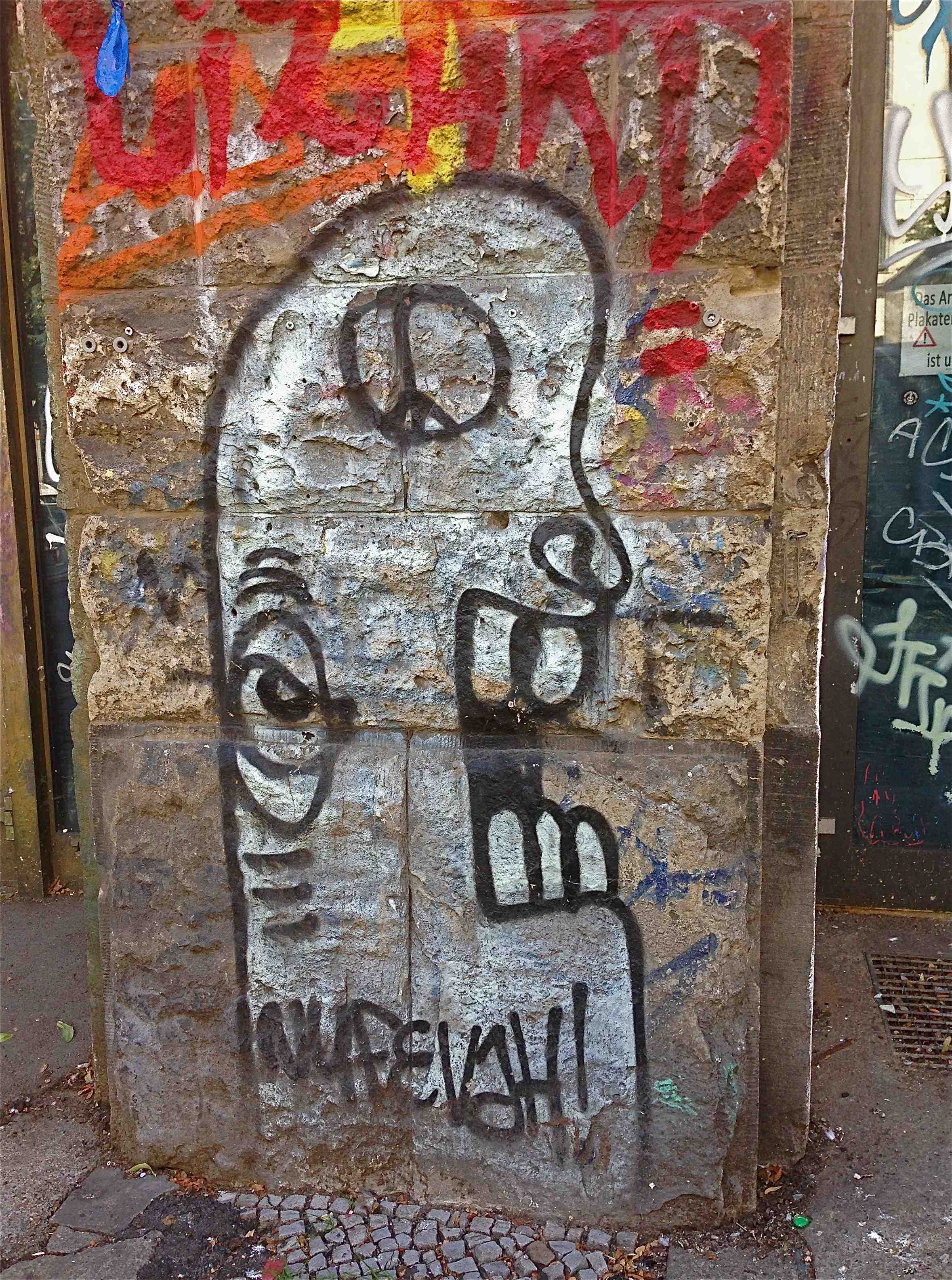
Mailef escorted me to the Kunsthaus (arthouse) Tacheles building on Oranienburger Strasse…a site that was previously part of East Berlin when the wall was up. The Tacheles (translation “let’s talk business”) building had, over a century, successively housed…an elegant shopping arcade, then Nazi offices and squatter artists. The building was damaged in World War 2 then repaired by the GDR…vacated in 1989 then occupied as an international artist squat in the 1990s. The artists were eventually displaced/evicted by representatives of the investors in 2012.
Art comics (kunst comicbuchs) by the hundreds were available at Renate Comics. Many of them were signed and marked as limited editions. These varied in size from A6 minicomics to the larger A3 format. Art postcards (kunst postkartes) have become an additional creative outlet for comics creators. I enjoy making art postcards myself…and there was a range of German stock in a rotating rack on the pavement outside the shop.
Art minicomicbuch purchase from the shop- Pure Sultana by Franziska Schaum.
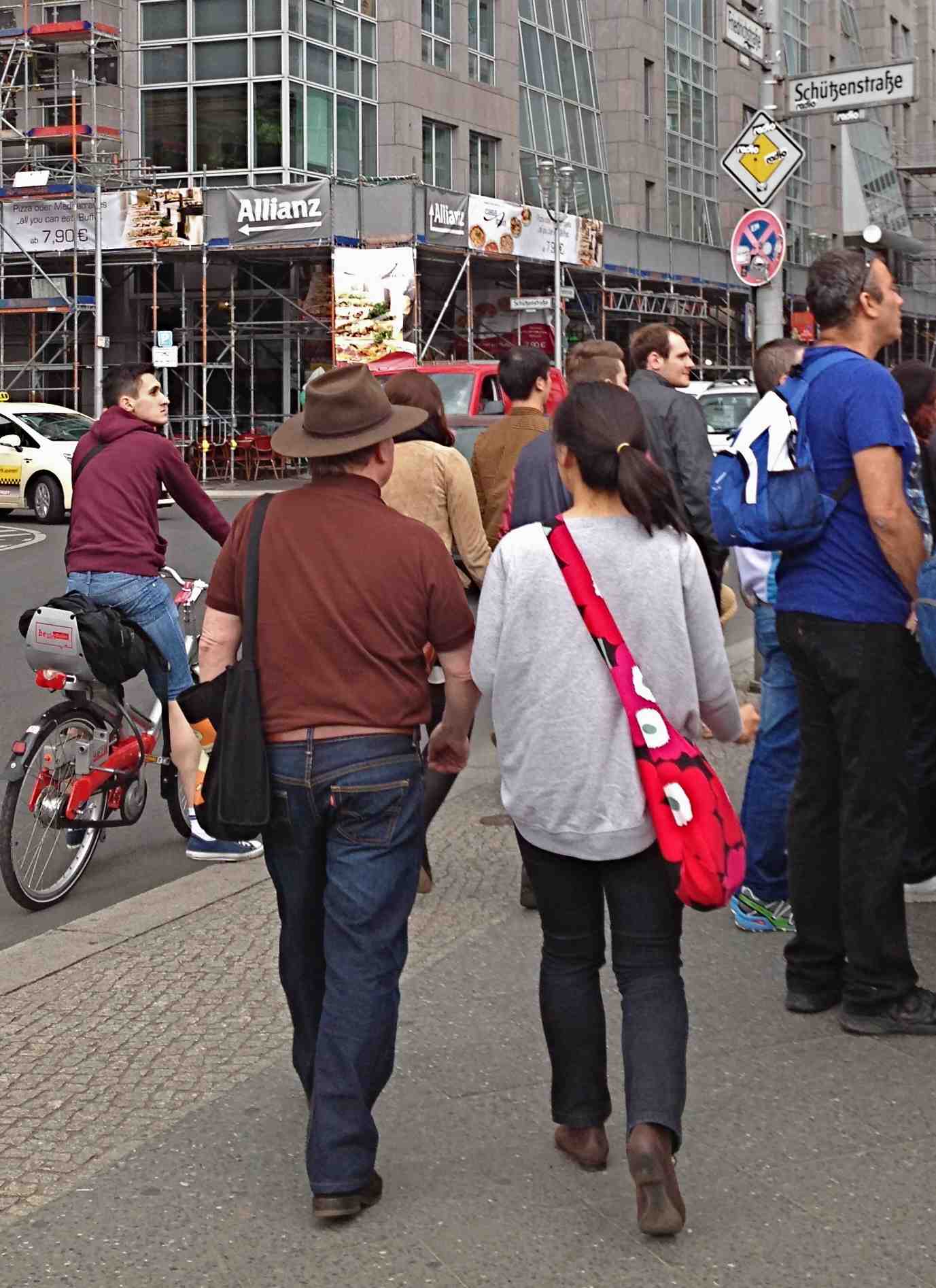
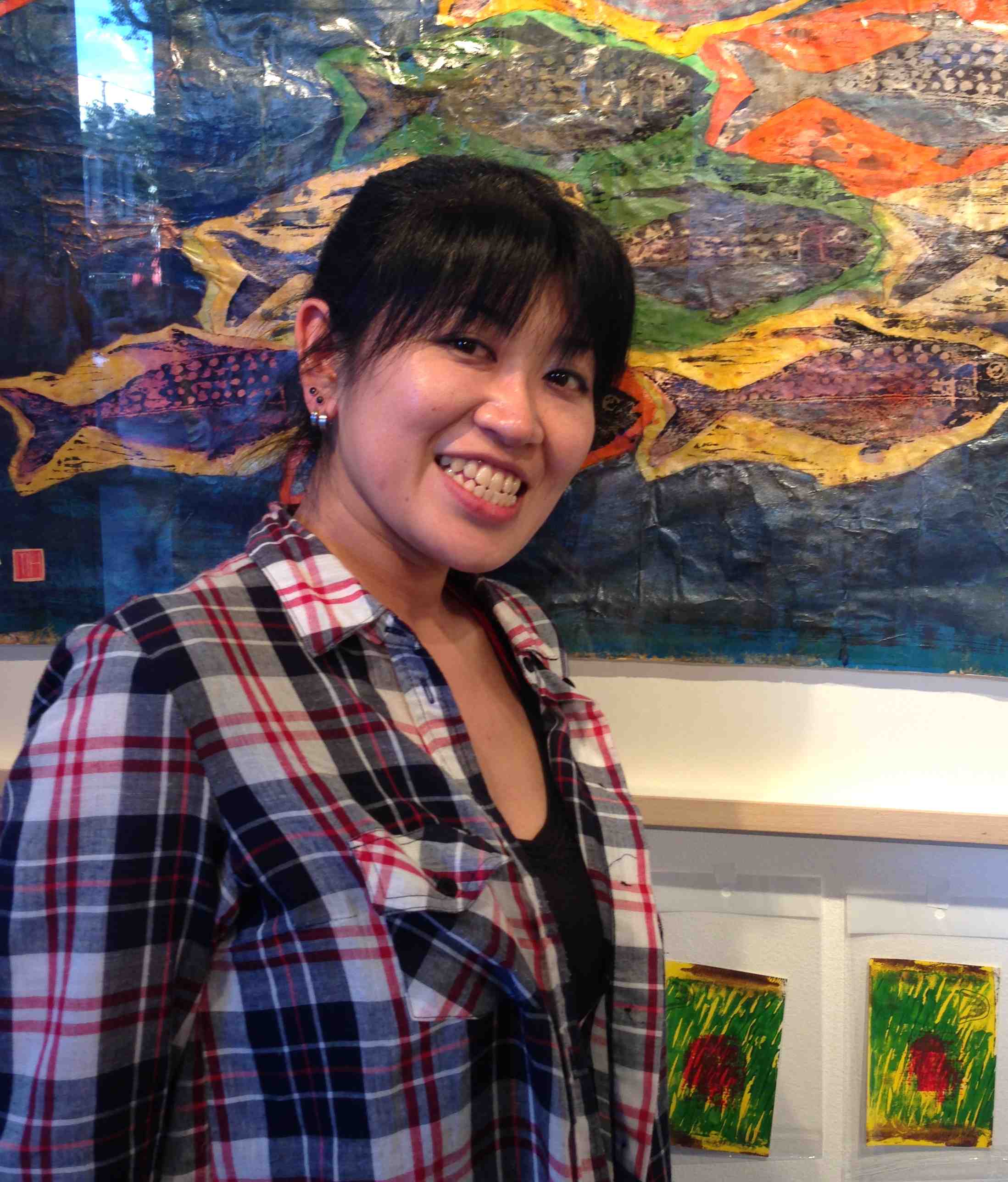
I took another walking tour of Mitte in Berlin with friend, former student, now animator, illustrator and printmaker, Michelle Park. She showed me a study of terror(see photos below). It was a busy morning for walking tours in Berlin. Starting out in Bezirk Kreuzburg…we passed the Deutsches Currywurst Museum in Schützenstraße,…Checkpoint Charlie Museum in Friedrichstraße, then walked along Niederkirchnerstraße to the old Gestapo and SS Headquarters site.
The Gestapo Headquarters building had taken a direct hit from English bombing during World War II. It was demolished after the war. It is now an open-air museum Topography Des Terrors (Topography of Terror). Some rubble remains. There is a section of the Berlin Wall(without the barbed wire) and a new building with an exhibition and information. The exhibition was titled Errfast, Verfolgt, Vernichtet (Registered, Persecuted, Annihilated). It was both grim and candid about the horror that had taken place there.
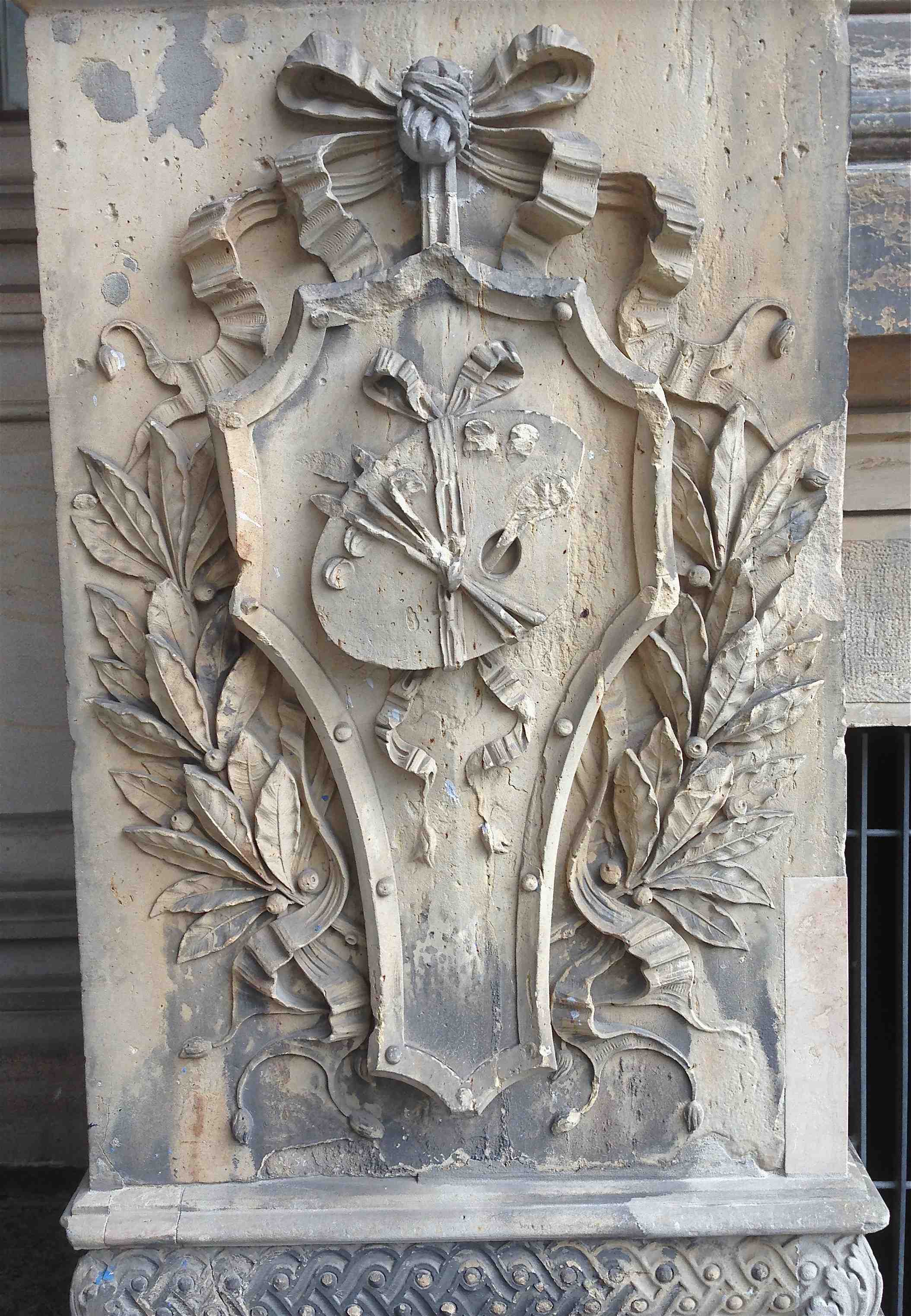
Next door at Martin Gropius Bau museum was the Hans Richter exhibition…Begegnungen, Von Dada Bis Heute (Encounters: From Dada to the Present Day).It was part of the Berlin Festival. Also present wasthe David Bowie exhibition from London’s Victoria and Albert Museum, and Chinese artist Ai Weiwei’s Evidence. What a line-up! This building had also suffered from the bombing alyjough not as much as the Gestapo site. It has been restored but still displays its scarification from shrapnel and bullets.
With both of us interested in animation and printmaking I wanted to show Michelle this wonderful exhibition of the artistic career of Hans Richter. He had been born in Berlin in 1888 and was a key figure in 20th Century art and animation. Three sides of Martin Gropius Bau had been allocated so a lot of walking was required. There were his woodcuts and paintings and his contributions to Dada. These included Dada magazine and his own zine G -Material zur elementarun Gestaltung (Material for elementary design). There were also his experiments with painted scrolls. These had led him to the discovery of displaying images in motion through animation. On screen were his abstract animations and live-action films including Dreams That Money Can Buy. There were also some home movies, plus documentation of his film teaching work in New York. Added to this were works by colleagues Max Ernst, Man Ray, Marcel Duchamp, Hans Arp, Raoul Hausmann, George Grosz, Francis Picabia, Viking Eggeling, Alexander Calder and Kurt Schwitters. Richter was a well connected man.
Hans Richter exhibition pamphlet at Martin Gropius Bau.
DADA: art and anti-art by Hans Richter.
With a life’s work on display there was much inter-connected visual material in the exhibition…we found ourselves walking back and forth. We could have spent 4 or 5 hours watching the films, videos and documentaries alone. It was an exhibition that called for fresh legs and more than one visit. Excellent art, impressive show, Michael.
Blauer Mann, 1917, by Hans Richter
Visionary self-portrait by Hans Richter.
Stalingrad (Sieg im Osten) (Victory in the East), scroll painting by Hans Richter.
This post covers some glimpses of the works on display and visitors to the exhibition Blotting Paper: Works On Paper 18-29 September at GAUGE Gallery in Glebe, Sydney. It included the publication and launch of the second issue of my artist book/comic Blotting Paper: The Recollected Graphical Impressions Of Doctor Comics, Chapter 2: A Blot On His Escutcheon.
Did you see this exhibition? If so, I would love to hear of your impressions of the show and of my art…and/or of this post about it. You can post to this Blog, Michael.
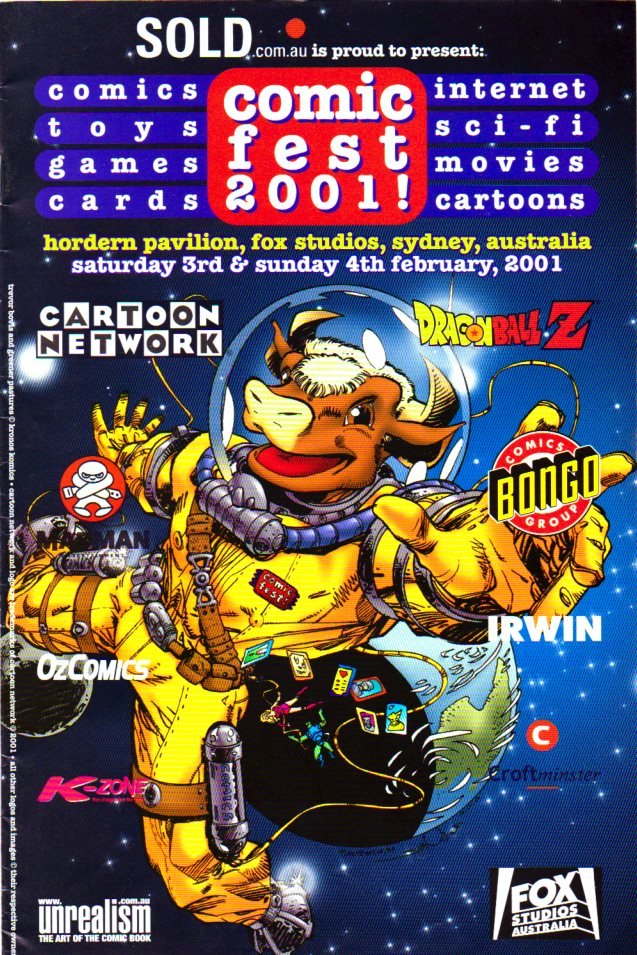
Prior to the emergence of one of the larger comics and entertainment media conventions in Australia Supanova Pop Culture Expothe same management team, led by Daniel Zachariou, staged an event called Comic-Fest. This had a mostly comics oriented focus compared with the subsequent broader span of Supanovain which comics represents just one of several entertainment media that included films, television series, toys, trading cards, computer games and the internet. There were two stagings in 2001, at Fox Studios in February then followed in September by Comi-Fest 2 at the Sydney Centrepont Convention Centre.
Trevor Bovis in space, the Greener Pastures program cover, designed by Tim McEwen.
Saturday seminar details with my involvement in the superheroes panel.
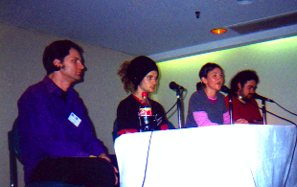
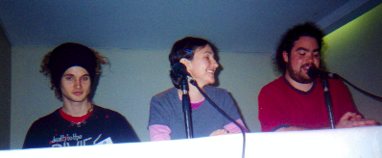
For the September event, withsupport from the event director, Daniel Zachariou, I organised a panel discussion on Australian alternative comics by local creators Dillon Naylor, Daniel Gloag, Amber Carvan and Ben Hutchings who each talked about their own comics and answered my questions. A general discussion of the Australian comics scene followed.
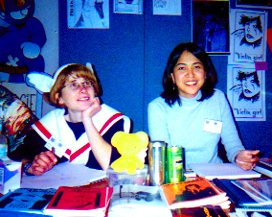
Aside from the panel discussion the big attraction for the local small press was the opportunity to set up shop and trade their work on the commercial floor along with the imported comics. There was also the opportunity to meet fellow local creators and exchange comics, contact details and curry recipes.
Along with the commercial trading there was the social attraction of meeting and chatting with fellow comics creators and sharing ideas and production experiences.
Did you go to COMIC-FEST? What did you think? Would you like to add a comment about your impression of that event on this Blog post? I would be happy to hear, Michael.
This is the eleventh in a series of posts called Archives of Australian Comics History that document moments in the recent history of Australian comics, particularly alternative comics and the Australian Small Press. I started researching this subject in the late 1990s and it eventually led to my PhD thesis: Ph.D. Macquarie University, Division of Society, Culture, Media and Philosophy, A Study Of Contemporary Australian Alternative Comics 1992-2000 With Particular Reference To The Work Of Naylor, Smith, Danko And Ord, 2003. On completion of the research I donated the materials and comics I had collected to the National Library of Australia: Michael Hill Collection of Australian Comics.
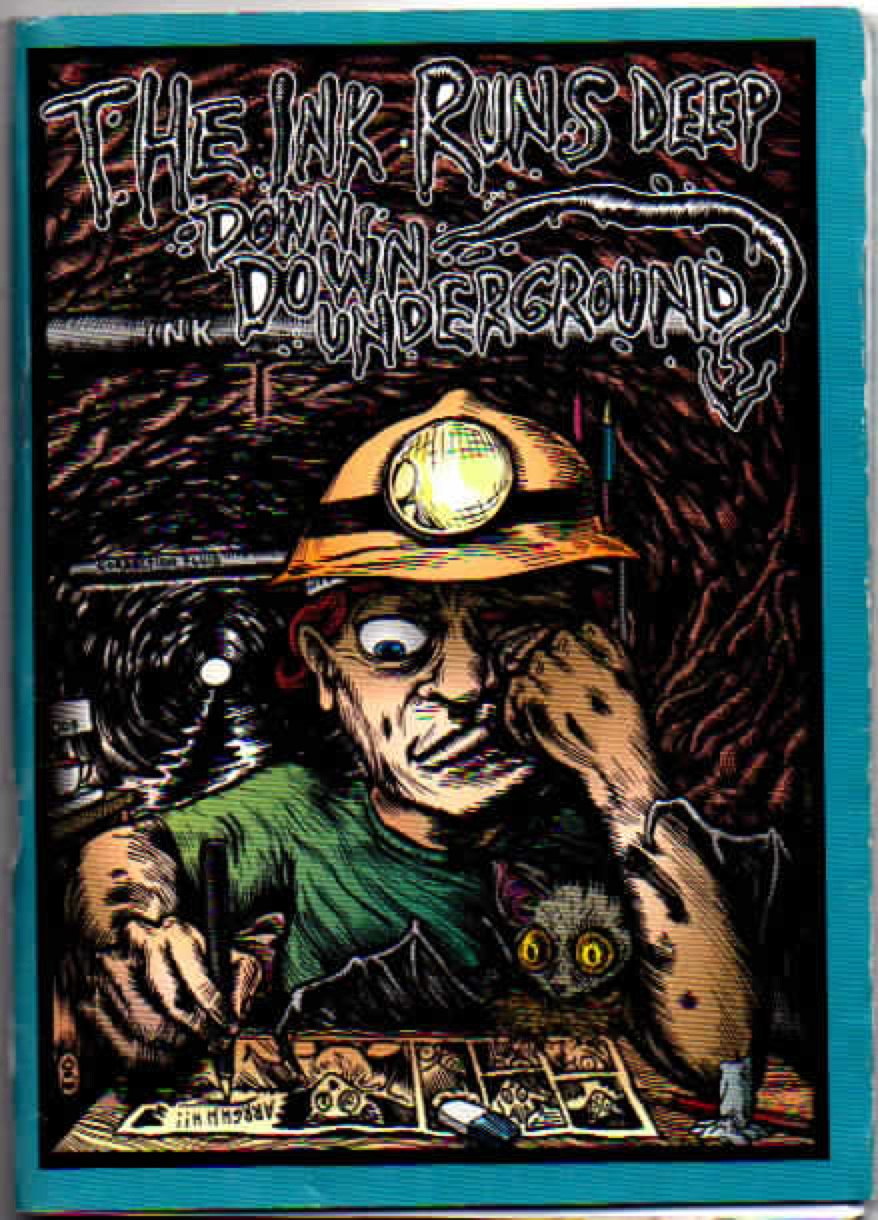
Underground comics are the subject of this post…in particular Australian alternative comics. I start with a review of an exhibition that Glenn Smith curated at the Orange Regional Gallery, in N.S.W. in 2005. The exhibition was titled The Ink Runs Deep Down, Down Underground. I wrote an essay titled “Art From The Inkubator” for inclusion in the exhibition catalogue.
The Ink Runs Deep...exhibition catalogue. (Art & Design by Glenn Smith)
The successive waves of Australian alternative comics produced since the 1980s often feature a raw, spontaneous graphic style. This is accompanied by an irreverent attitude and a D.I.Y. Punk influenced approach to production. It is notably different from mainstream approaches to comics production. These alternative comics can be pluralistic, wide-ranging, antagonistic, mocking and containing taboo themes. The exhibition in Orange celebrated the creative expression behind these comics. Comics art…this much maligned art form…usually consigned to the pop culture trash bin…was hung for exhibition on the gallery wall.
Back cover of the exhibition catalogue. (Design by Glenn Smith)
Creators featured in the exhibition, all 27 of them, are listed on the back cover of the exhibition catalogue, above. They exhibited applications of comics art in a range of mediums from pen and ink to digital imaging. These were applied in animation, painting, posters, book covers and skate boards.
Exhibit of Cruel World minicomics by Anton Emdin.
Exhibit of Black Light Angels minicomics by Louise Graber.
Noting the emergence of underground comix in Australia in his book Panel By Panel…John Ryan pointed to the social context of the 1970’s. This was a period in which a sense of national pride emerged. This led to a consequent interest in locally made art. That first wave of Australian alternative comics also seems to have been influenced by the North American Underground Comix movement. As in the Abstract Expressionist art movement of the 1950s, Australia seemed to have imported rather than grown, the art. Initially appearing somewhat derivative an Australian style later developed .
Louise Graber with her painting of a panel from her comic Black Light Angels from the exhibition.
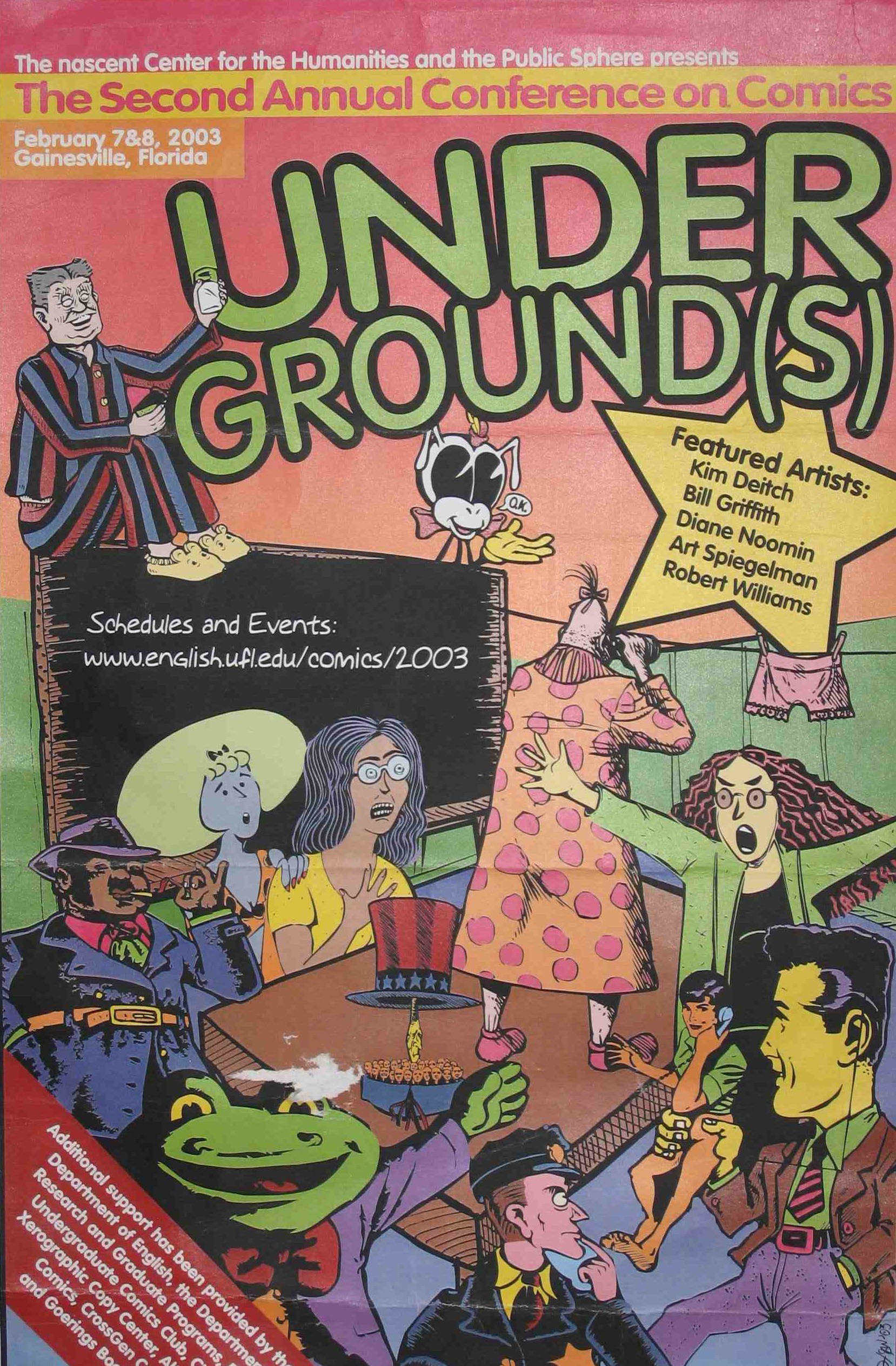
I had attended the Underground(s) conference on Comics and Graphic Novels at the University of Florida in 2003. It was organised by Donald Ault. At that conference I presented a research paper…titled “Down Under Ground: Emotional and Oppositional Outpourings from Sydney’s Subculture in the Comics of Glenn Smith”. Smith’s comics seemed to be an echo of the Underground comix of the late 1960s that began in San Francisco. They were different in style and content to the mainstream North American super-hero themed comics. They opened up the way for autobiographical and artform approaches. At that conference I heard from some of the creative figures from the original Underground(see back cover of program below). It was pleasing to describe Glenno’s work, and argue that it had some resonance with what they had done.
Front cover of Underground(s) conference program. (Design by William S. Kartalopoulos)
Back cover of Underground(s) conference program. (Design by William S. Kartalopoulos)
Underground(s) conference poster (detail).
Have you read any Underground comics? I’d love to hear your thoughts about them as well as reactions to this post.
This is the twelth in a series of posts titled Archives of Australian Comics History. They document moments in the recent history of Australian comics, particularly alternative comics and the Australian Small Press. I started researching this subject in the late 1990s. It eventually led to the writing of my doctoral thesis. Details: Ph.D., Macquarie University, Division of Society, Culture, Media and Philosophy, for the thesis…A Study Of Contemporary Australian Alternative Comics 1992-2000…With Particular Reference To The Work Of Naylor, Smith, Danko And Ord, 2003. On completion of the research I donated the large number of comics I had collected…to the National Library of Australia: Michael Hill Collection of Australian Comics.
1999 event: Outsider meetings. (Photo by Louise Graber)
On Sunday 27th September 1998, I drove from Sydney to Newcastle…to attend the two sessions devoted to the discussion of comics at the inaugural National Young Writers’ Festival. Accompanying me were three active members of the Sydney ‘small press’: Stuart Stratu, Anton Emdin and Ross Tesoriero. As there had been no formal attempts to discuss and promote ‘small press’ activity we were impressed with their inclusion in the event. As to its presence in a writers’ festival, there was some uncertainty as comics also has its drawing side. We were also a little curious…as to why the organisers had by-passed Sydney and only invited Melbourne and Canberra based creators! Nevertheless we were curious enough to make the trip. It offered an opportunity to meet with colleagues from interstate. Although familiar with their work, we had never met many of them.
1999 event: Tim Danko, Stuart Stratu, Q-Ray and Kieran Mangan. (Photo by Louise Graber)
1999 event: Michael Fikaris(Froth) reading minicomic. (Photo by Louise Graber).
1999 event: Carol Wood and Susan Butcher aka Pox Girls reading minicomics. (Photo by Louise Graber)
The organizational aspects improved considerably over the next few years and the festival developed, expanded and diversified. Originally called the National Young Writers’ Festival it became part of the umbrella event TiNA…the acronym for This is Not Art. This became a multidisciplinary event in the week leading up to the October holiday weekend. It was spread around Newcastle and became known as the TiNa Arena. During the festival weekend the city becomes a catchment area for visiting youth…from a range of artistic, literary, music and media fields all over Australia. I even met a guy who claimed to have walked right across Australia from Perth to attend. I went to five consecutive events from 1998 to 2002…by which time comics discussions had moved into the Town Hall main room. A high point for comics creators is the annual comic and zine fair held on the Sunday afternoon. There was a busy trading event staged in the park then moved into the Mission theatre with accompanying live music.
1999 event: Anton Emdin(If Pain Persists) with Lewis P. Morley and Marilyn Pride(Red World Komics). (Photo by Louise Graber)
1999 event: Tim Danko(Dead Xerox Press) and Stuart Stratu(Sick Puppy Comix). (Photo by Louise Graber)
On arrival in the city that afternoon in 1998 we easily found the centre of activities laid out in various sumptuously appointed rooms of the Newcastle Town Hall and Civic Centre. There were panels and presentations in the Banquet Room…the Function Rooms and some impressively attired Committee Rooms in the Council Chambers and also at the nearby Wintergarden Cafe. We were, however, unable to find the venue for the discussion of comics. On asking for that information we were directed out of the main building to the back. There it was, a modest room with a few plastic chairs. A few attendees had to sit on the floor. No podium, no lectern, no microphone, no monitor, no vcr, no whiteboard, no jug of water, no media nor reporters were present. Furthermore, this was not a seminar but a workshop. Comics were not so much to be discussed as produced…and if there was to be any discourse it would be on matters of production rather than on content. Then I realised how appropriate all of this was in the then current scheme of things. It was the “accustomed” venue at a writers’ festival for the discussion of comics and it indicated how marginalised the form was. The established, pure literary forms such as the novel and poetry headed the hierarchy. Even emerging word based forms such as e-mail and writing textual content for the Internet and journalism had superior status and were located in the main hall. But comics and zines were out the back and out of sight, so to speak.
1999 event: Happy Pox Girl Susan Butcher. (Photo by Louise Graber)
1999 event: Q-Ray(The Comic Messiah) and Kieran Mangan(Urrgh). (Photo by Louise Graber)
Interested (Photo by Louise Graber)
Things changed over subsequent years. There have been comics events at the Sydney Opera House with international guests…but it was so different back in Newcastle, so ‘underground’, so beneath the radar. Comics were even made during the event in an upstairs, cut and paste graphics studio called Octapod…where minicomics had been produced. At the 1999 event I did a series of interviews with many of the comics creators in attendance. This became research material for my doctoral thesis. In closing, I welcome comments about this blog, especially if you have attended an events like this.
1999 event: Ross Tesoriero(Radiation Sickness). (Photo by Louise Graber)
Event organiser Kylie Purr with Glenn Smith. (Photo by Louise Graber)
This is the tenth in a series of posts called Archives of Australian Comics History…that document moments in the recent history of Australian comics, particularly alternative comics and the Australian Small Press. I started researching this subject in the late 1990s and it eventually led to my PhD thesis: Ph.D. Macquarie University, Division of Society, Culture, Media and Philosophy…A Study Of Contemporary Australian Alternative Comics 1992-2000 With Particular Reference To The Work Of Naylor, Smith, Danko And Ord, 2003. On completion of the research I donated the materials and comics I had collected to the National Library of Australia: Michael Hill Collection of Australian Comics.
1999 event: Dr. Michael Hill. (Photo by Louise Graber)
In the 1990s it was not unusual to find alternative comics in record shops in Sydney. Examples were Phantom Records, Red Eye Records and Waterfront Records. Customers could find an assortment of locally made comics…in a corner on the floor or on a shelf or display rack. Odd sized comics which did not fit the display racks were laid on the floor. A similar layout could be found in Brisbane at Rocking Horse Records…in Canberra at Impact Records and in Adelaide at Big Star Records and Dominator Records. It was in these record shops that I first found some Australian alternative comics. These became the subject of my research into comics. There were also specialist bookshops that stocked comics as well as fantasy, science-fiction and movie material. In Sydney such shops were Land Beyond Beyond, Comic Kingdom, Kings Comics, and Half A Cow. The latter was a really wonderful shop to browse in with its carefully selected subcultural range of goods. It also had that strange logo of a cow cut in half…across not along like the Damien Hirst version and in cartoon rather than realistic style. There were also mail order distros such as Chewing Gravel that sold Australian comics.
The shop in Glebe. (Photo by Louise Graber)
Half A Cow business card with it’s eye catching sliced cow illustration.
The reason why independent record shops were selling alternative comics…was perhaps due to the perceived affinity of both medium’s independent approach to production and distribution. This positioning of the small press in the independent landscape…created parallels with the independent music industry that had flowed on from the Punk Rock movement. The term ‘Xerox music’ referred to the independent production of Punk records where the distribution system also employed a D.I.Y. approach with product being delivered to interested shops by hand. Alternatively it could be distributed by mail order. There were similarities in the way alternative comics were produced and distributed. These comics of the 1980s and 1990s…with their small print runs (usually less than 500), were commonly printed on photocopy machines by their creators. This was instead of the more costly offset process or digital printing used by professional print technicians for commercial clients. After printing their comics the creators, like their musical colleagues, would distribute their work themselves. Visiting comics, books and record shops…on foot, bus, train or bicycle…were creators carrying small amounts of stock in their bags. Then they would return a week later to check on sales. Eventually most of the more mainstream comics shops carried some alternative comics. There were even some musicians who made comics. Ray Ahn, Ryan Vella and Glenn Smith are examples. Half A Cow’s affinities with independent music ended up morphing them from a bookshop into an independent record label. Have you ever bought a comic from a record shop? I would love to hear!
Louise Graber’s Black Light Angels Gothic comic-first sold at Half A Cow in Glebe.
This is the ninth in a series of posts called Archives of Australian Comics History…that document moments in the recent history of Australian comics, particularly alternative comics and the Australian Small Press. I started researching this subject in the late 1990s and it eventually led to my PhD thesis: …Ph.D. Macquarie University, Division of Society, Culture, Media and Philosophy…A Study Of Contemporary Australian Alternative Comics 1992-2000…With Particular Reference To The Work Of Naylor, Smith, Danko And Ord, 2003. On completion of the research I donated the materials and comics I had collected to the National Library of Australia:…Michael Hill Collection of Australian Comics.
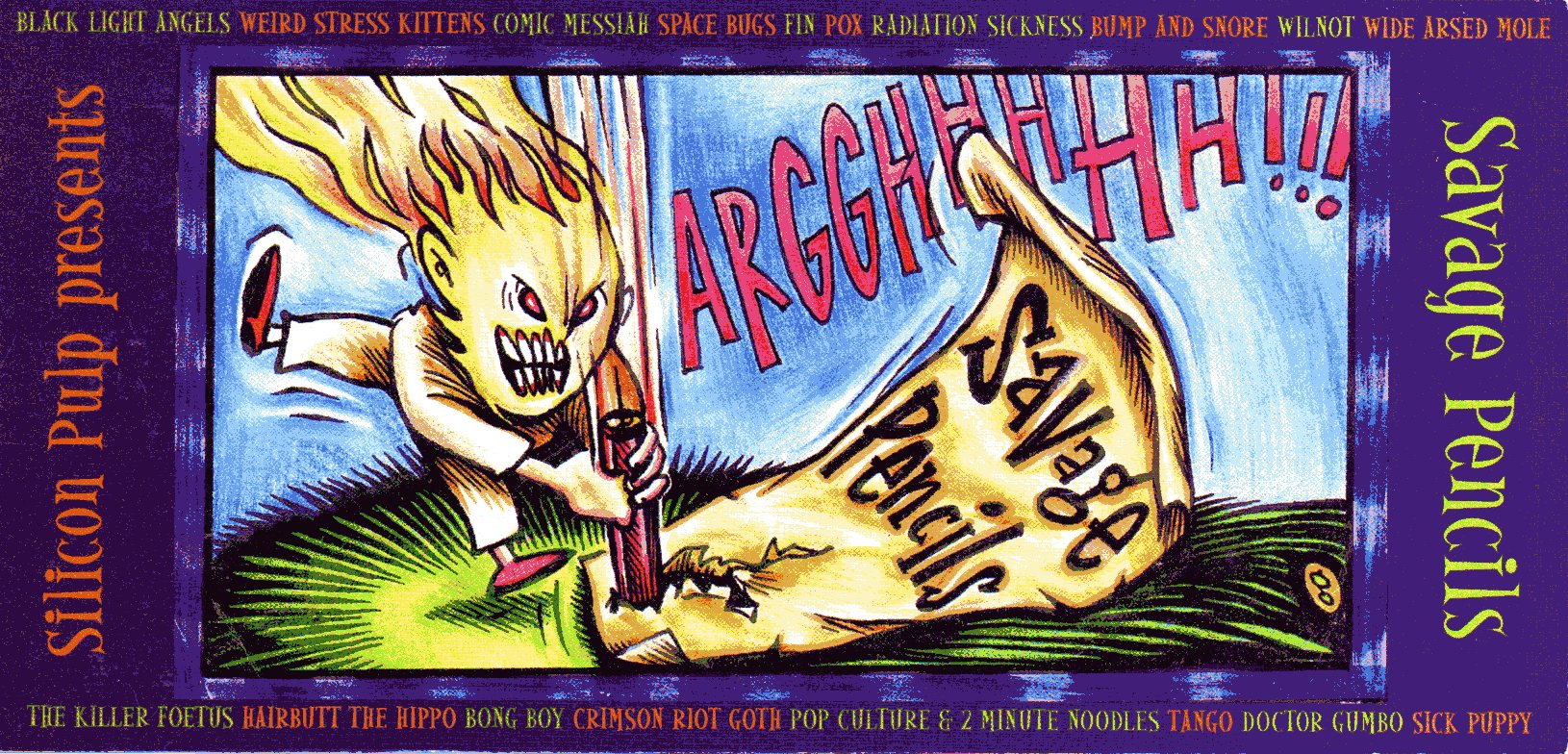
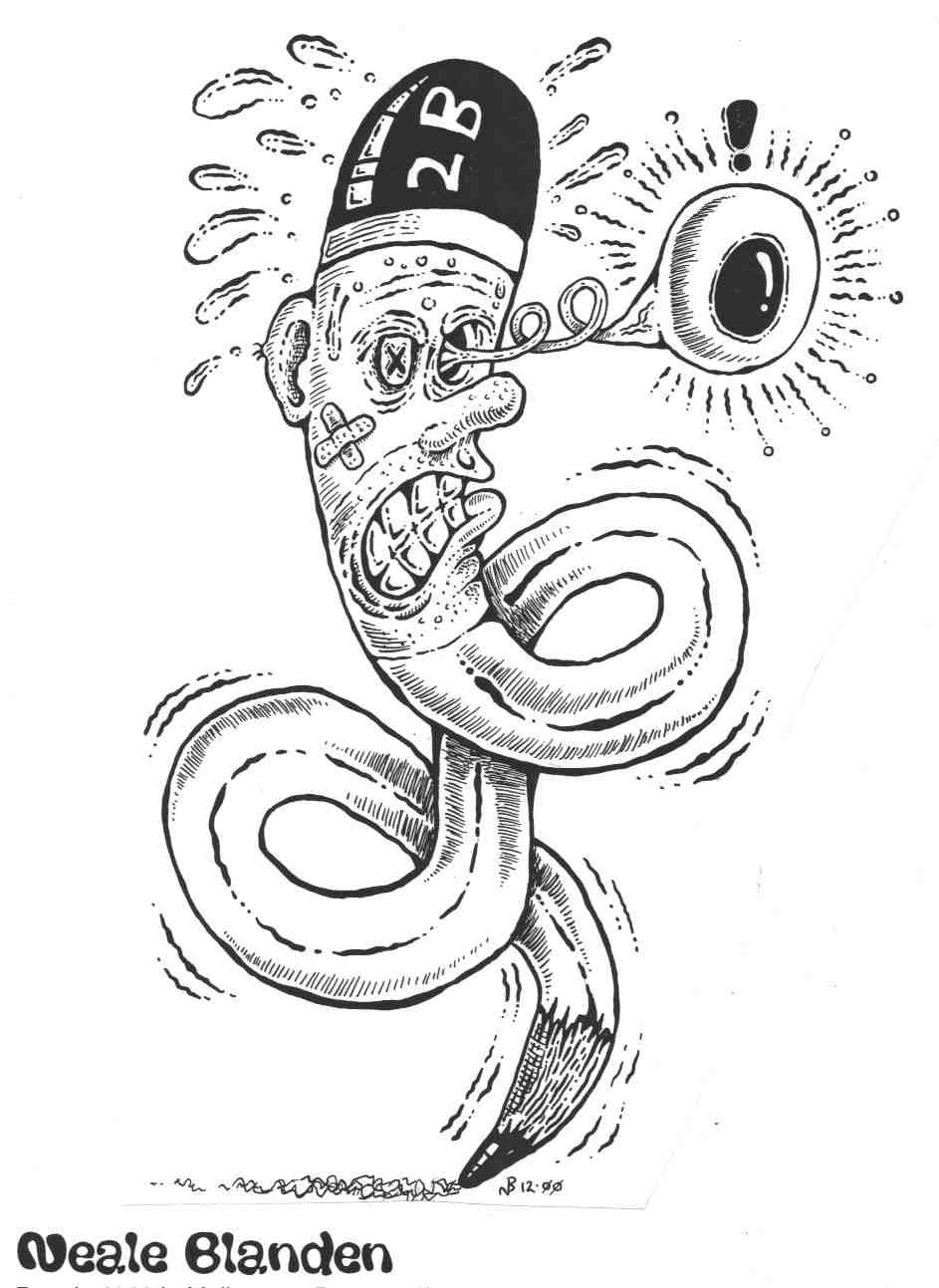
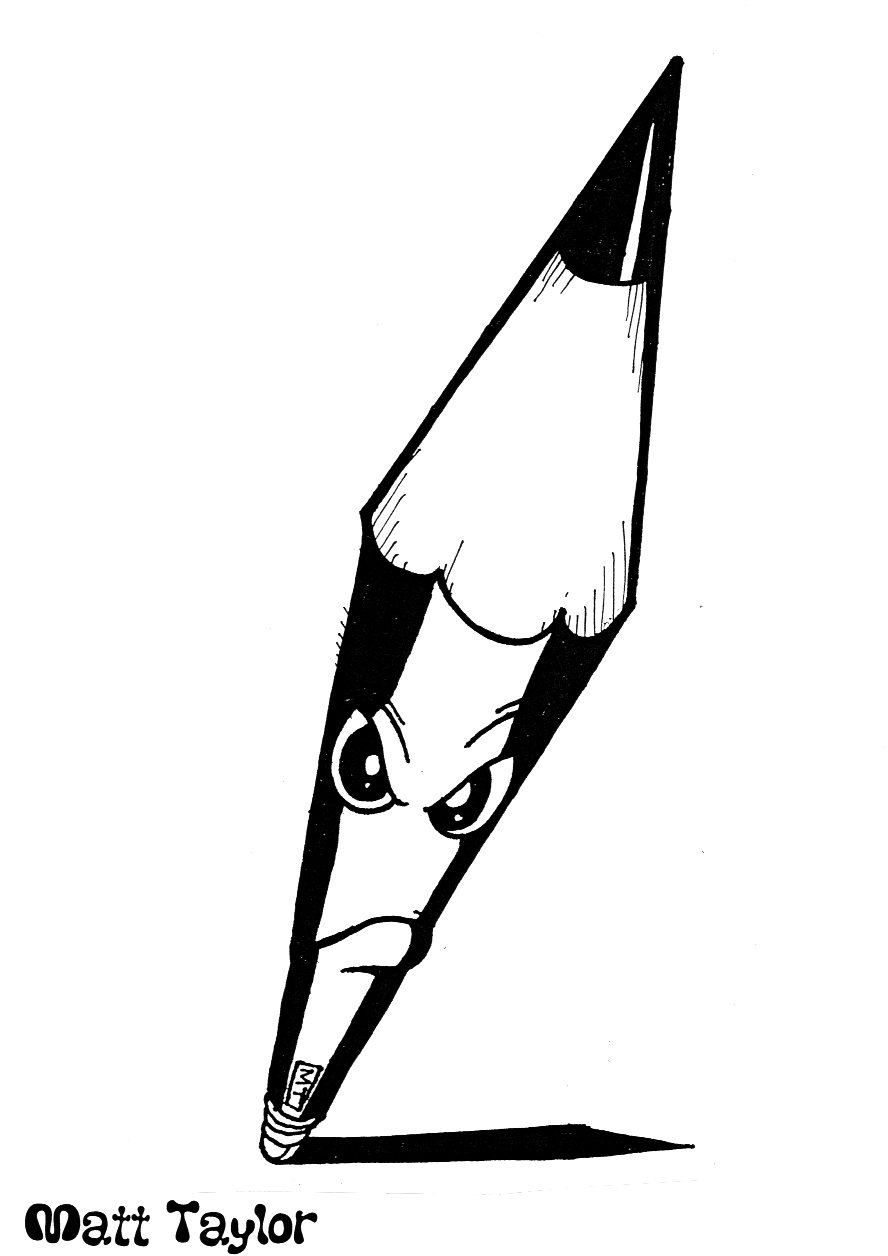
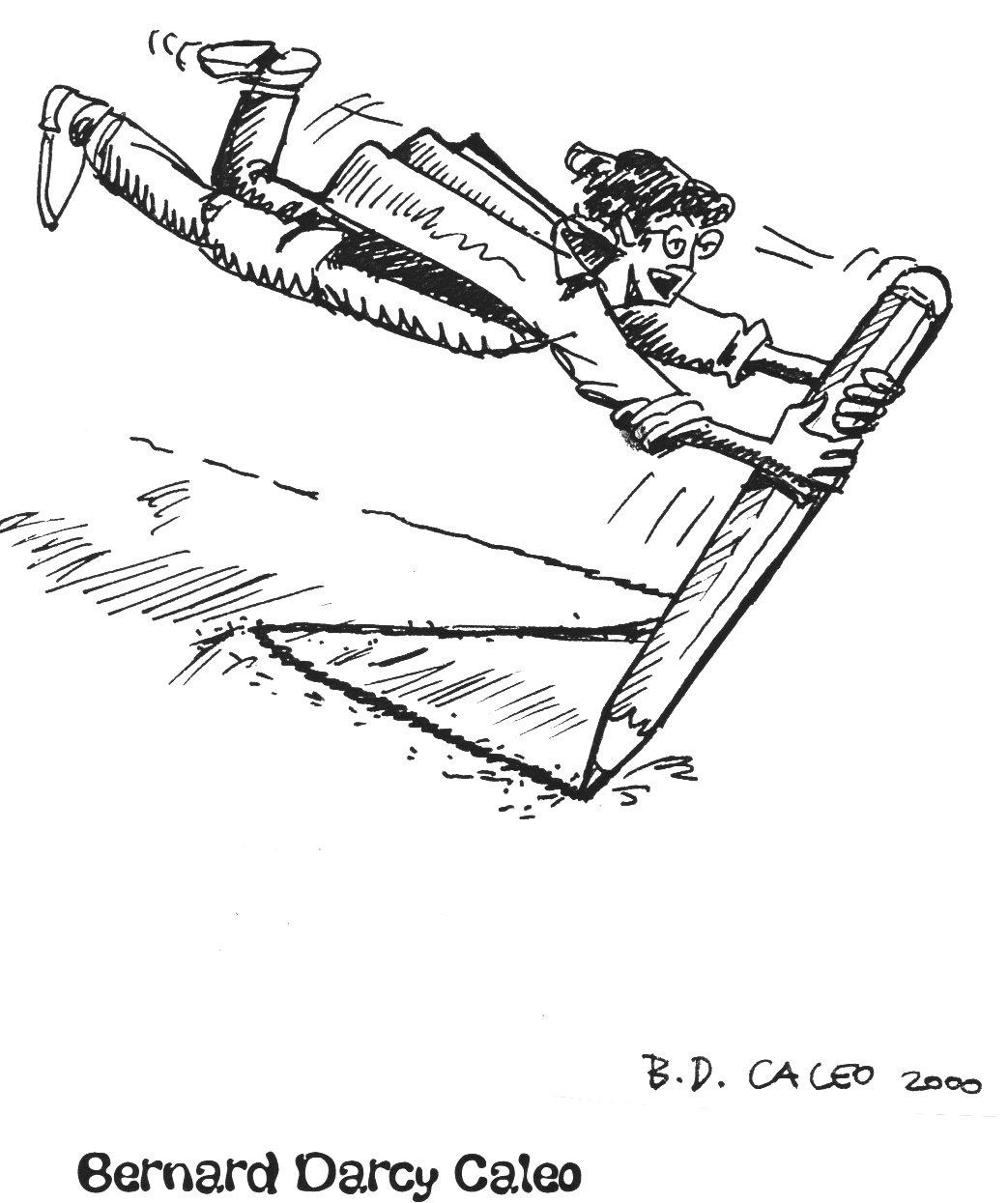
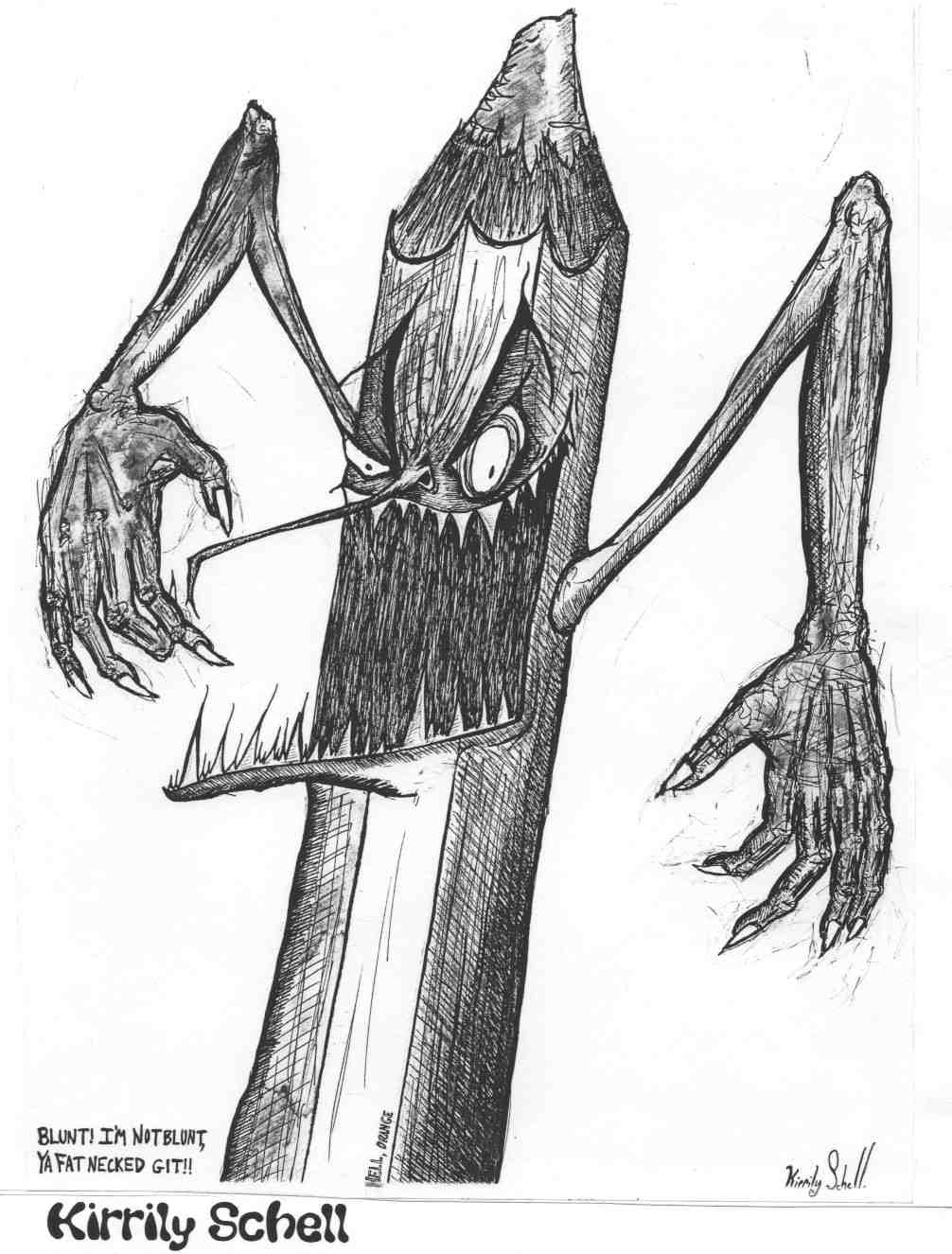
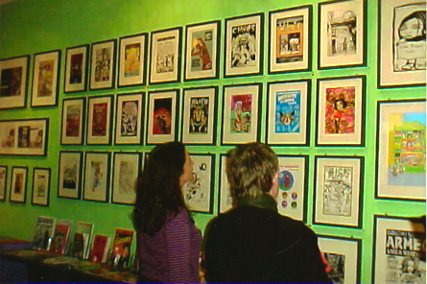
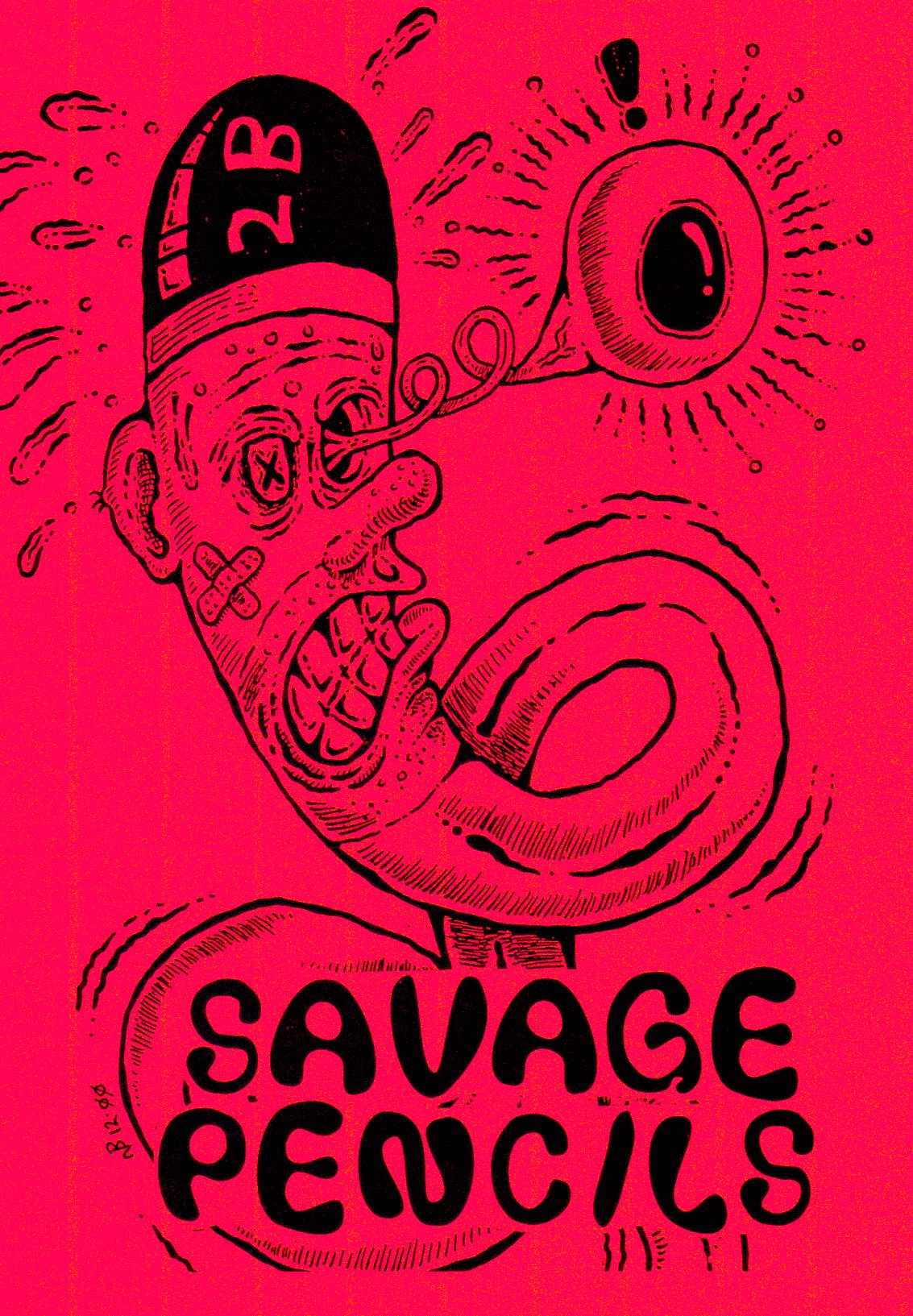
Savage Pencils was an exhibition of contemporary Australian comics cover art that I curated at Silicon Pulp Animation Gallery, Sydney in 2001. It featured original art by Paul Abstruse, Ray Ahn, Gerard Ashworth, Anita Bacic, Xander Black, Neale Blanden, Anna Brown, Bronson Boyd, Susan Butcher, Bernard Caleo, Dakanavar, Tim Danko, Anton Emdin, Michael Fikaris, Edo Fuijkschot, Louise Graber, Ben Hutchings, Scott Johnson, Gregory Mackay, Alex Major, Kieran Mangan, Daniel McKeown, Chris Mikul, Alice Mrongovius, John Murphy, Dillon Naylor, Linzee R. Nold, Mandy Ord, Jason Paulos, Q-Ray, Kirrily Schell, Jan Scherpenhuizen, Shags, Bernie Slater, Glenn Smith, Cipta Tanamas, Dean Tarjavaara, Matt Taylor, Ross Tesoriero, Tolley, Ryan Vella, Kevin Whitfield, Colin Wilson and Carol Wood.
The invitation designed by Glenn Smith.
The exhibition catalogue contained the essays: “The Broken Pencils of Southeast Asia” by International Journal of Comic Art editor John A. Lent, “Why the Australian Small Press Make Eskimo Comics” by Tim Danko, and my own paper “Sick Puppies With Pencils”.
The Neale Blanden illustration was also used as the exhibition catalogue cover.
As a playful idea for the catalogue I asked the artists to draw a ‘savage pencil’. Here is a selection. All art is the copyright of the respective creators.
Colin Wilson
Butcher and Wood aka the Pox Girls.
Louise Graber
Ross Tesoriero
Alice Mrongovius
Linzee R. Nold
Shags
Chris Mikul
Matt Taylor
Ben Hutchings
Tolley
Bernard Caleo
Ryan Vella
Kirrily Schell
The notion of collecting comics art is a recent but growing trend in Australia. This exhibition offered 50 works ranging from the mainstream to the the avant-garde, from 44 artists representing every State of Australia except the Northern Territory. Some of the cover art was displayed on the gallery’s website.
Exhibition installation view. (Photo by Louise Graber)
The exhibition catalogue with cut-up Neale Blanden illo on the cover.
The title for the exhibition was taken from the alias of Edwin Pouncey, an English comics creator of the early 1980s whose ‘punk’ style of graphics proved inspirational to alternative cartoonists. This show celebrated drawing, a precious commodity in an age of appropriation and scanning, and the creative expression that drawing is given in comics. Here the drawing was both art and pop culture trash and very affordible.
Massive thanks to the people at Silicon Pulp! What they have done for local creators of comics art is immense! And to the artists, whether you exhibited, attended the exhibition or just read my blog post on it, I would love to hear your thoughts. This is the eighth in a series of posts called Archives of Australian Comics History that document moments in the recent history of Australian comics, particularly alternative comics and the Australian Small Press. I started researching this subject in the late 1990s and it eventually led to my PhD thesis: Ph.D. Macquarie University, Division of Society, Culture, Media and Philosophy, A Study Of Contemporary Australian Alternative Comics 1992-2000 With Particular Reference To The Work Of Naylor, Smith, Danko And Ord, 2003. On completion of the research I donated the materials and comics I had collected to the National Library of Australia: Michael Hill Collection of Australian Comics.
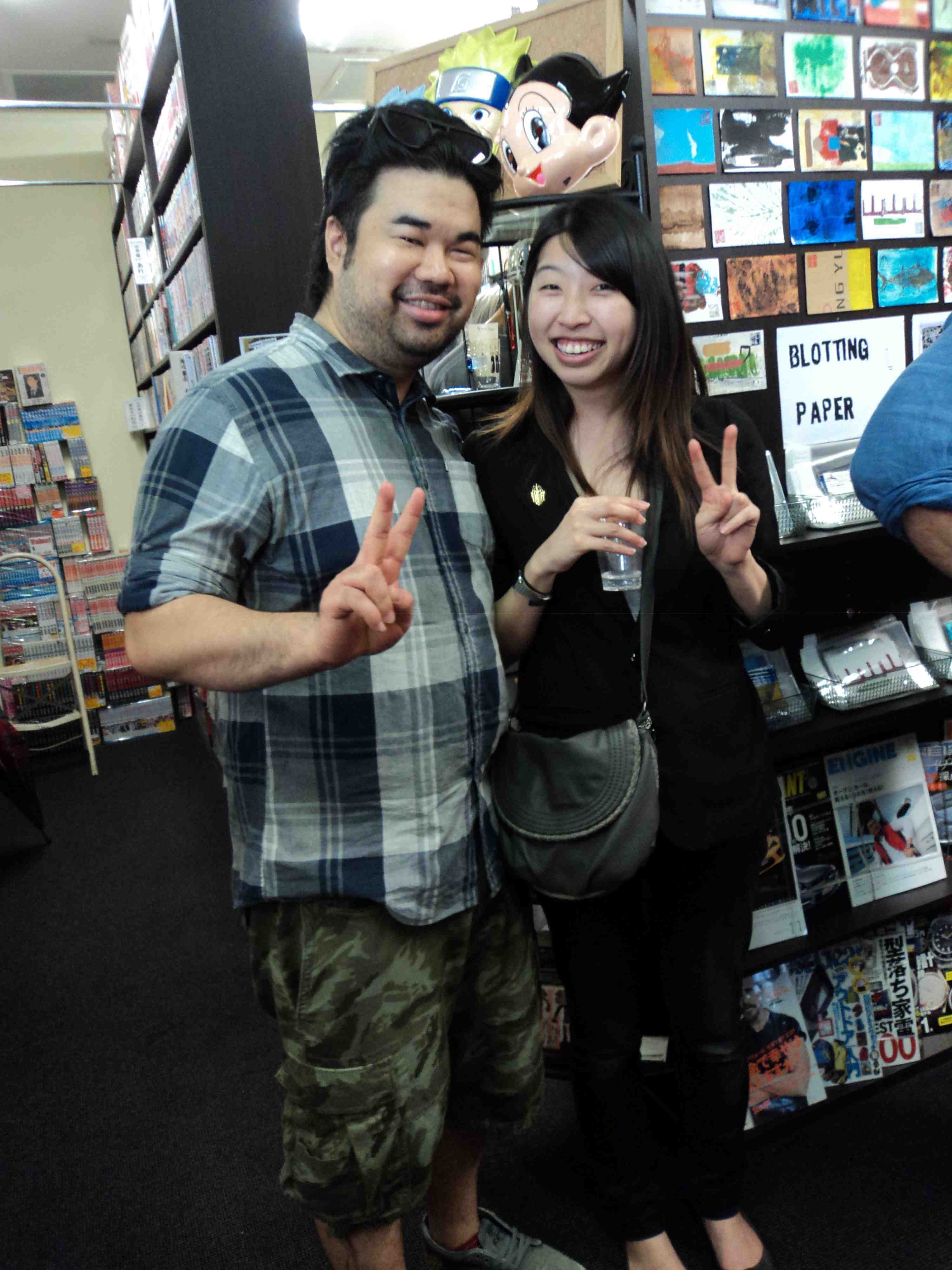
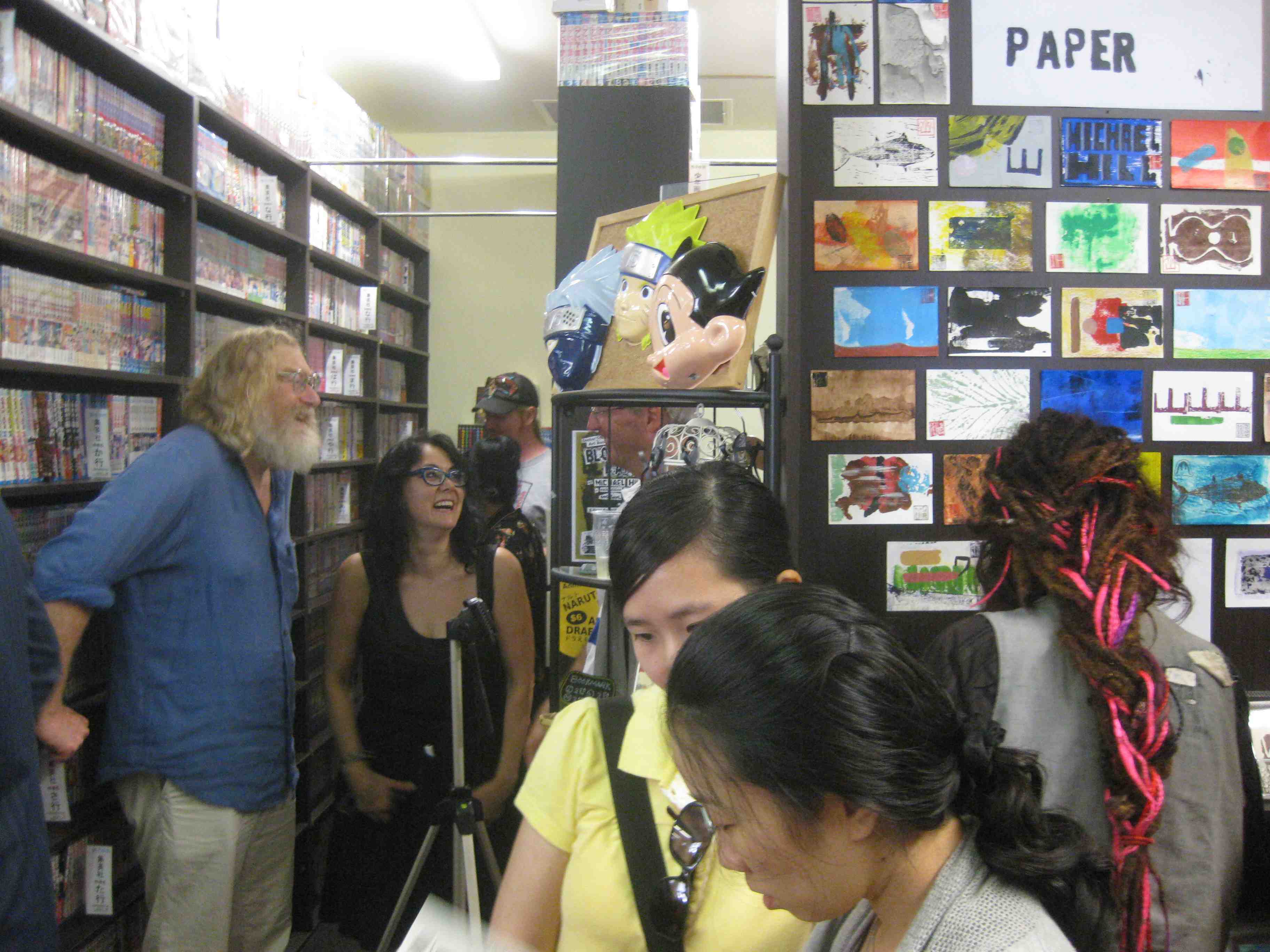
Returning to the shorter interval between posts again but for a good reason on this occasion. My artist book/comic Blotting Paper: The Recollected Graphical Impressions Of Doctor Comics was launched …at Hondarake Full of Books in Sydney in February, 2012. It was accompanied by an exhibition of my handmade art postcards and the printmaking tools used in their production. Having gained a reputation for researching comics art there I was attempting to create it. I was proud of my comic, its launch and the attendance of my friends and supporters.
My anime fish prints hanging overhead. (Photo by Sal Jones)
Australian comics legends Glenn Smith and Gerard Ashworth. (Photo by Louise Graber)
JMC Director of Animation Sean Callinan and Peregrine Besset creator Lewis P. Morley. (Photo by Louise Graber)
It Lives! CEO’s Nick and Liz. (Photo by Louise Graber)
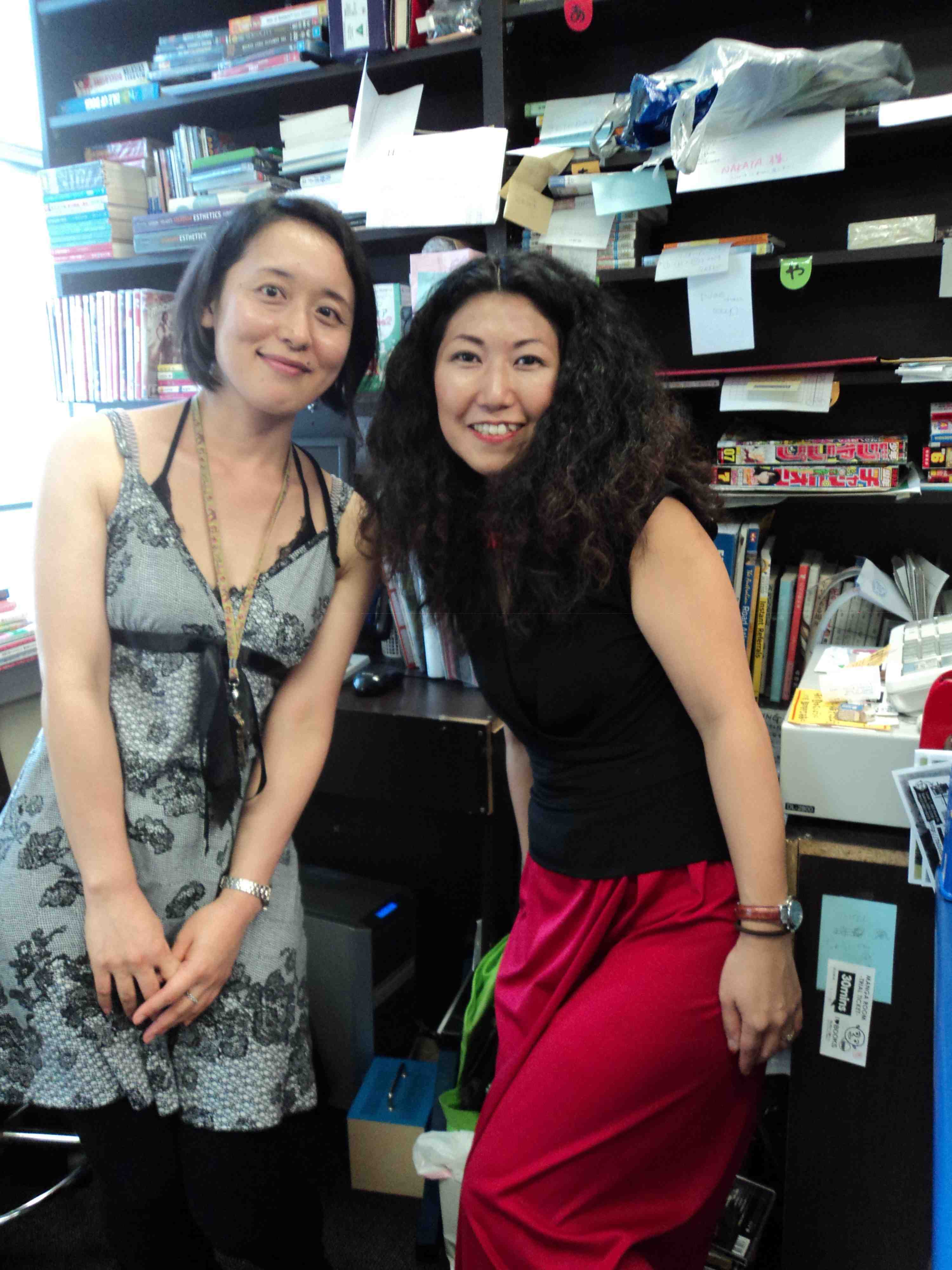
HONDARAKE Store’s fabulous owners Hisae and Tomoko. (Photo by Louise Graber)
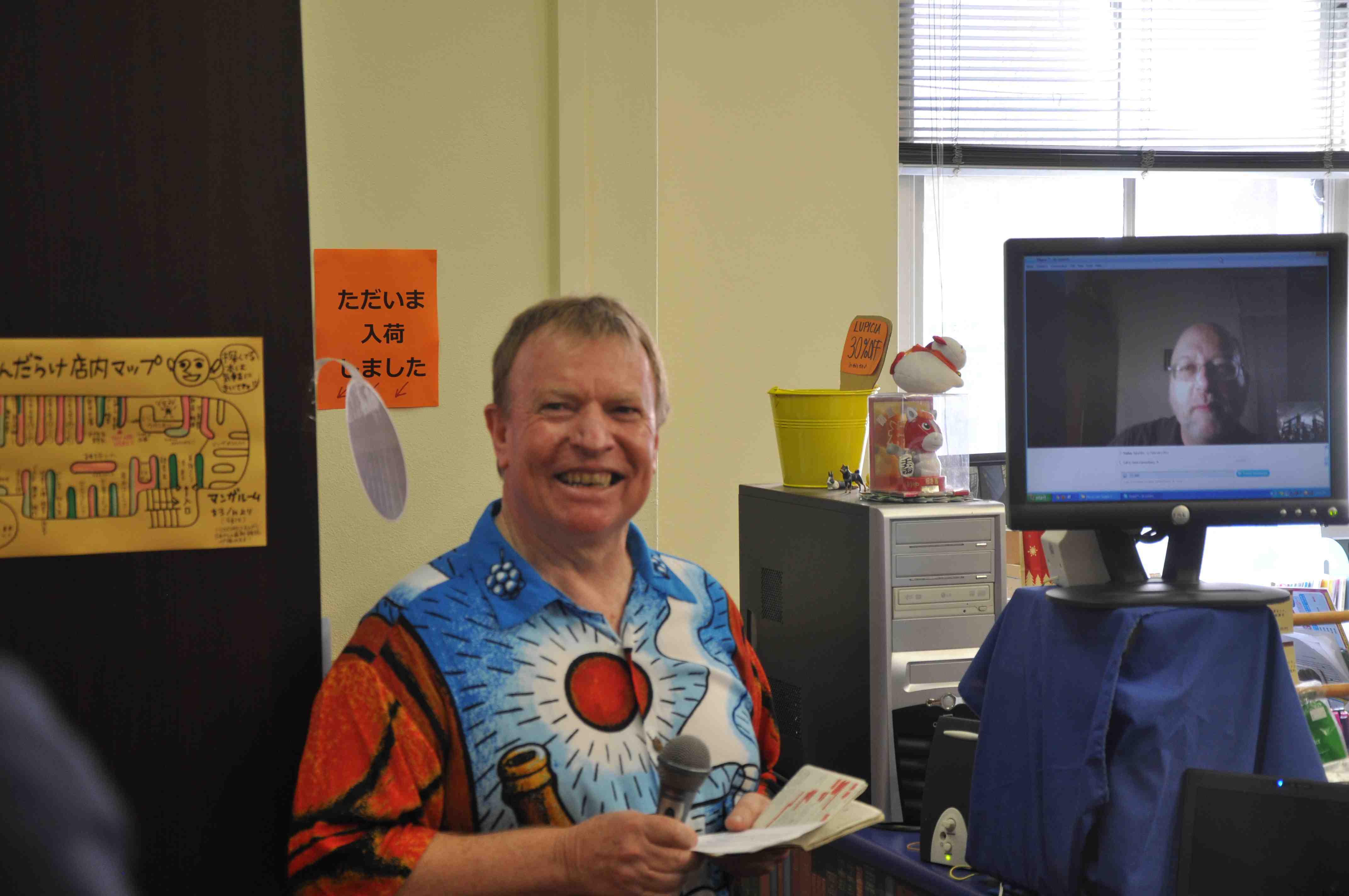
Dr. Michael Hill (a.k.a. Doctor Comics) in foreground enjoying Dr. Gene Kannenberg, Jr. (onscreen) who launched my comic and entertained with his witty matching of comics and beverages…in a live cross from New York. (Photo by Andrew Hawkins)
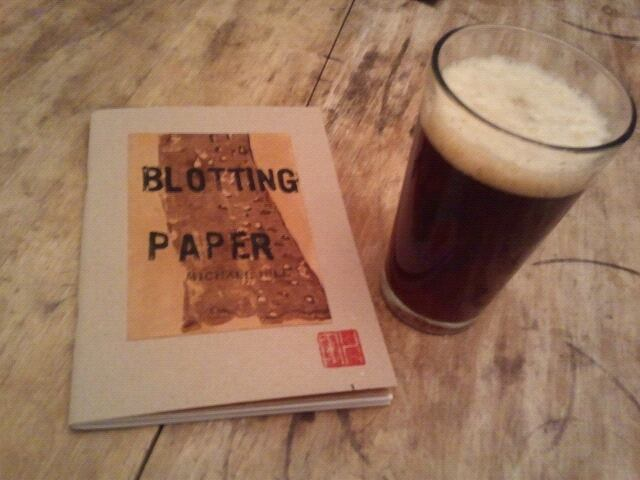
The book was launched by my colleague Gene Kannenberg, Jr. via Skype from the U.S.A. Noted comics historian, Kannenberg is director of ComicsResearch.org. former Chair of the International Comic Arts Festival…and the Comic Art & Comics Area of the Popular Culture Association…and author of 500 Essential Graphic Novels. He made a humorous speech and participated in a game of pairing comics with beer. What a great game! His matching including the work of creators Will Eisner, Lynda Barry, Hergé, Jack Kirby and Joost Swarte. Gene got a big response when he suggested black coffee with Steve Ditko…and Duff beer with Matt Groening, and an even bigger response when he brought his cat, Mr. Pickles, onscreen. Thank you Gene for the live TV launch! Thanks to my agent Andrew Hawkins for organising the event and store owners Hisae and Tomoko for hosting! Were you there? Send me your feedback, either about being at the launch or from reading this blog post. I would love to hear.
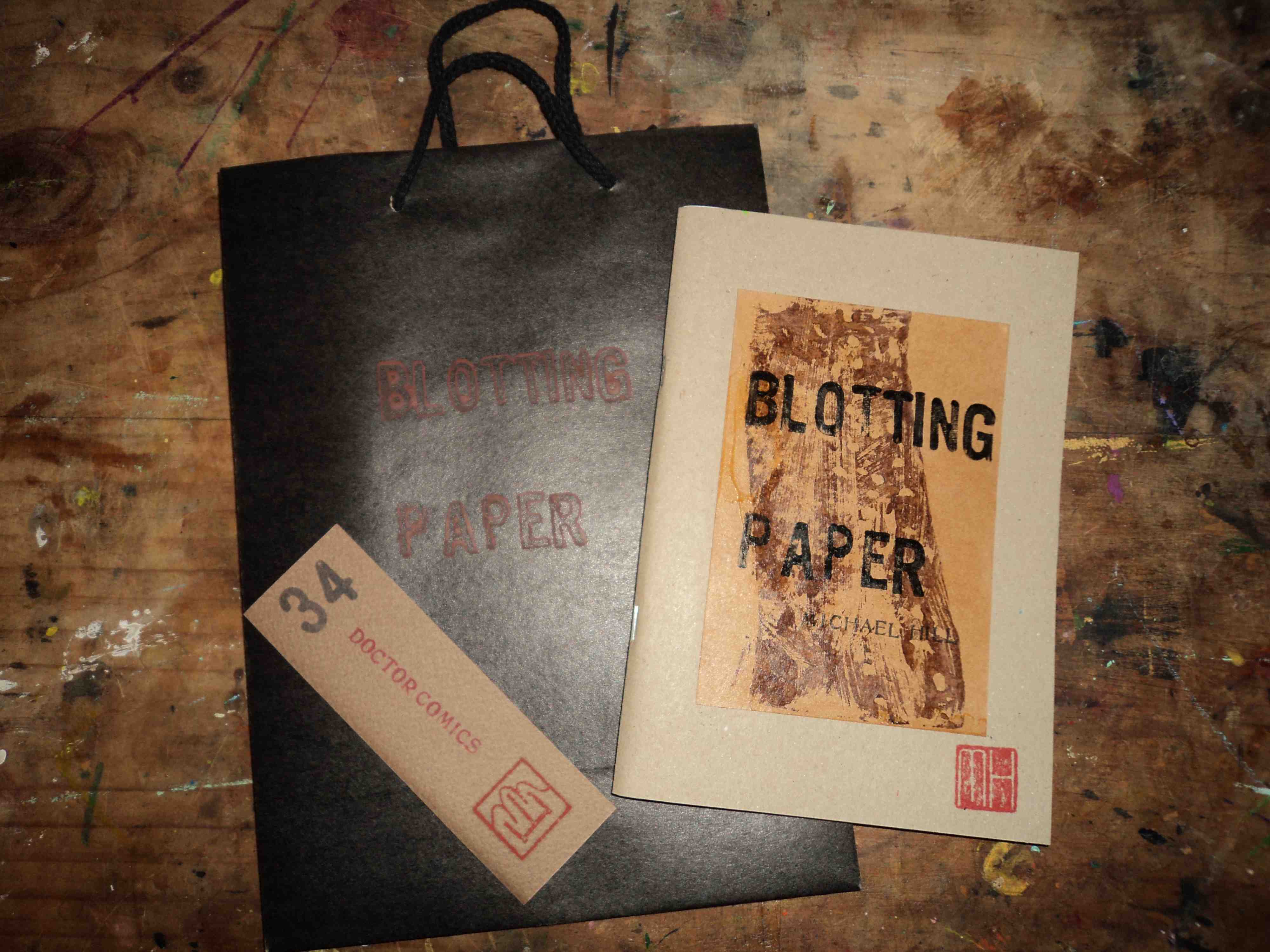
The limited edition numbered and signed book comes with an original print on the front cover (see photo above)…a numbered bookmark and printed bag (see photo of package below).
Hairstyles, postcards and masks about with Richard Black and Louise Graber amused in the aisle. (Photo by Harrison Hill)
Both the art book/comic and the postcards involved printmaking as an image-making technique. I employed the Japanese technique of woodblock printmaking in my first animation film around 20 years ago. I have continued to use Japanese influenced printmaking techniques ever since. I have been involved in the scholarly and research aspects of visual communication, more so than in production. This artist’s book and the accompanying exhibition marks a more focused return to the ‘making’ of images and visual projects.
Thirteen years ago the 14th International Exhibition of Drawings opened at the Museum of Modern Art in Rijeka, Croatia. It ran from 17th December 1998-20th March 1999. It was devoted to comics. I had been invited to contribute to the curation of the show…based on the research into comics art that I was undertaking at the time… following a referral from Professor Joan Kerr of Australian National University…I selected and sent 13 works by 14 creators…I also wrote an essay The Australian Underground. It was published in the exhibition catalogue in both Croatian and English…here is a short extract:..”In its own small way the underground comics community not only contributes to the visual cultural life of Australia but also to an understanding of it. It adds to the ongoing critique of Australian culture and provides a healthy and relatively unregulated creative outlet. From its position on the margins its critical viewpoint is expressed with great humour. ‘Taking the piss out of things’ would seem an appropriate and very Australian way of describing it.” (extract) Dr. Michael Hill
Cover of the exhibition catalogue. Design by Mirko Ilić, drawing by Davor Vrankić
The Comic Messiah by Q-Ray (Clint Cure), 1998, ink on paper.
Black Light Angels by Louise Graber, 1998, ink on paper.
Blackie’s last day by Tony Single, 1994, pencil, felt pen, ink on paper.
Upward + Onward by Damien Woods, technical pen and felt pen on photocopy paper.
Lightning Strike by Mandy Ord, 1998, ink on paper.
Radiation Sickness by Ross Tesoriero, 1997, ink on paper.
Ah-choo by Neale Blanden, 1997, combined technique on paper.
Jean and Rolly by Timothy John Danko, 1995, collage on paper.
Kurt Hurt’s Reasons to Draw Comix by Stuart Stratu, 1997, ink and whiteout on paper.
Francis Bear by Gregory Mackay, 1998, ink on paper.
Stranger Danger by Ryan Vella, 1997, ink on paper.
The False Impressionists by Bernard Caleo and Tolley, 1997, combined techniques on paper.
The Killer Foetus by Ben Hutchings, 1997, combined technique on paper.
It was most significant for my research into Australian comics art to be included in this international exhibition of drawings. In the meantime, I’m endeavouring to establish a minimum three week gap between posts. Perhaps I was a little too enthusiastic in my first year of blogging but I am working on improved scheduling. As always, I would love to hear your response to my posts. This post is the fifth in the series Archives of Australian Comics History…that document moments in the recent history of Australian comics… particularly alternative comics and the Australian Small Press. I started researching this subject in the late 1990s and it eventually led to my PhD thesis: Ph.D. Macquarie University, Division of Society, Culture, Media and Philosophy… A Study Of Contemporary Australian Alternative Comics 1992-2000 With Particular Reference To The Work Of Naylor, Smith, Danko And Ord, 2003. On completion of the research I donated the research materials and comics I had collected to the National Library of Australia, titled the Michael Hill Collection of Australian Comics
Since retiring from the university, having concluded my full-time academic career, I have enjoyed having a lot more free time….especially time to read and also to draw comics, listen to music, watch films and go for walks. It has been wonderful! I have also found more time to work on my art projects…printmaking, designing art postcards, creating comics…and doing the odd bit of blogging. I had previously enjoyed doing a bit of guest blogging. I enjoyed this and subsequently decided to start my own blog, posting reports on my research and comics creation. I initially even thought of having two blogs: one formal and critical, as in my academic research work…and the other more playful and creative, about the making of comics. Ultimately, I decided to merge these two approaches into a single interwoven blog that would be both informative and entertaining. So here is my first post…on the new, one and only, Doctor Comics blog. It will include posts on both the creation and critiquing of comics art particularly documenting the creation of my own comic. Many thanks to my excellent agent, Andrew Hawkins, for obtaining the Doctor Comics name tag, website and email…and for his arrangement of media interviews for me. It’s now time to get my website and blog up and running. I welcome feedback from readers of my blog.
Doctor Comics aka Dr. Michael Hill…happy to read, research and create comics. (Photo by Alison Van Hees).
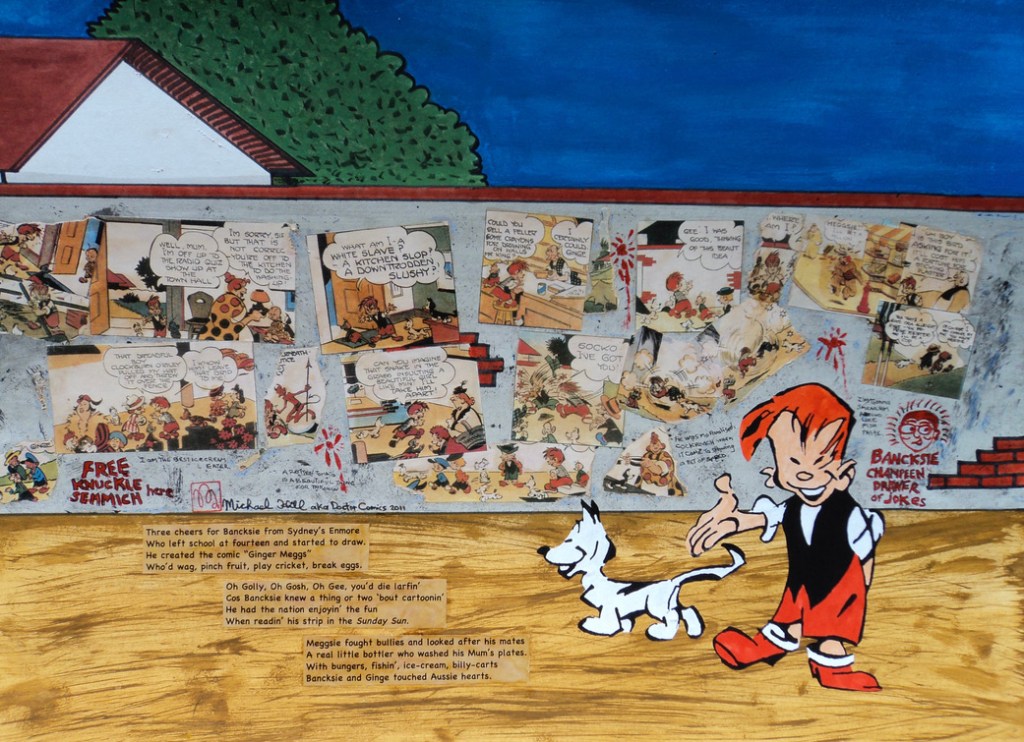
I want to begin my blog by declaring that I absolutely love both reading and creating comics. I have read, collected and studied comics since I was a child. Every Sunday morning after church, I would wait for the opportunity to read the comics section of the Sunday newspaper. My father had first reading rights. He began with the comics section before moving on to the sports pages. He didn’t like to separate the paper into sections, preferring to keep it all together…so the family had to wait till he had finished his complete reading of it. It was good to hear him laughing at the comics. He particularly loved The Potts by Jim Russell, whom I would meet years later at a comics convention in Sydney. He also loved Australian cartoonist Jimmy Bancks’s strip Adventures of Ginger Meggs. It was printed in glorious four tone colour (see my art tribute collage Bancksie Champion Drawer of Jokes, below). He also liked action comics, especially English war tales and American Wild West adventures. He had served as an Australian soldier in the Second World War. Whilst reading the war and western comic strips he would make the sounds of bombing raids and gunfights.
Once he finished his reading he left the newspaper for the rest of the family. That was when it got separated into sections. I was usually the first to follow his reading and, like him, I started with the comics section. Unlike him, I didn’t proceed to the Sports pages but stopped reading there. For me the comics were the highlight of the Sunday paper. News of the world, sporting results and weather reports did not match the joy of reading the comics for me. My mother would buy me a comic when I was ill and absent from school…especially when I was hospitalised to have my tonsils out. It was usually a Donald Duck or Mickey Mouse…sometimes a Denis The Menace. The graphic humour would soothe my illness. I got to know comics by their titles and characters and gradually learned the names of the creators e.g. comics artists Carl Barks and Hank Ketcham. So I can claim that my parents contributed to my developing love of comics.
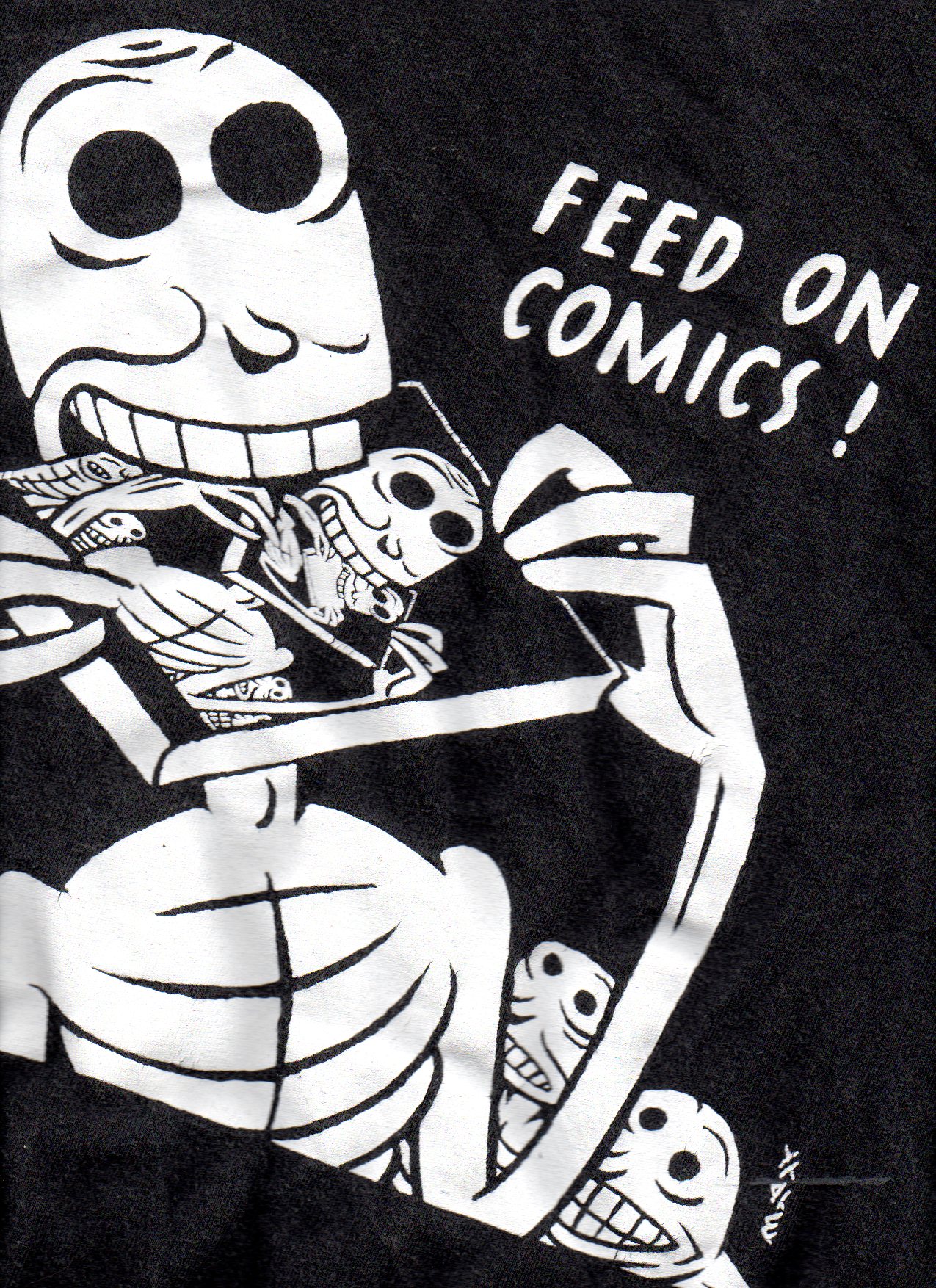
The FEED ON COMICS! T-shirt design by Max. Doctor Comics intends to follow this call on his Blog.
I also had two kind aunties who would regularly buy me comics weeklies in the 1960s…titles like BEANO or EAGLE. These were shipped to Australia from England and arrived approximately three months after their U.K. publication date. I suspect my interest in space travel, English football and cartoon animals arose from reading and collecting these “boys papers”. Throughout my teenage years I continued to read and collect comics. This continued in adulthood. Some of my friends thought it somewhat childish and that I should grow up and stop reading comics. No way! Never! Eventually I was no longer limited to reading comics after church, after homework or during periods of illness. I had left school, found a job, and left home. This enabled me to stop going to church, buy my own comics and read them in bed!
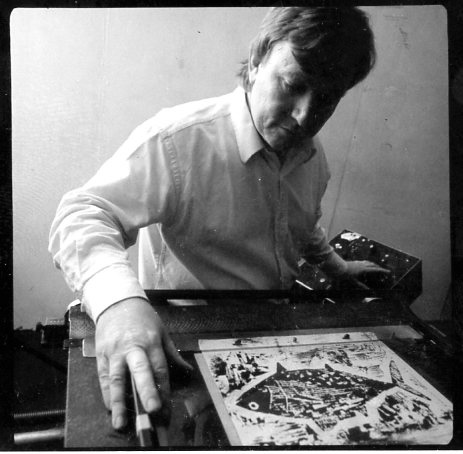
Animating my woodblock prints on the Oxberry animation stand at Sydney College of the Arts.
My interest in and enthusiasm for comics continued and reached another level at Sydney College of the Arts. As an academic in the Visual Communication Design program…I developed a more formal interest in studying and researching comics and animation. I also learned the technique of printmaking from a colleague…(see photo above…more details to come in future posts). I had always loved to draw and often received colour pencil and paint sets as Birthday and Xmas presents. I had had no art tuition in my primary and secondary schooling…but one year I was awarded the Religious Prize in Primary School that was probably attributed to my artistic skills. My teachers were Nuns. It was for a drawing I did of The Little Flower (Saint Teresa) floating up to Heaven on her death. I drew her literally as a flower. It was my unknowing introduction to visual metaphor. My drawing made the nuns cry! At the time I thought I had done something wrong, upsetting them, but the tears were apparently joyous! I wish I still had that drawing but the nuns ran off with it. In fact they never returned it! I never saw it again and my parents never ever saw it! Those nuns did seemingly compensate me, however, by awarding me the Religious Prize that year! The top student in my class and his parents complained to them on Speech Night (the Prize giving event)…saying “Unfair!..he only got a Credit in the subject but he won the prize!” They just didn’t know about that drawing…and the magic of art. Despite this so-called “injustice” I managed to keep my prize…although I did lose my art! My parents were very proud of my award. They had taught me to never challenge a teacher, especially a Nun. So I had to forget about asking them for the return of my drawing. This proved to be sound advice in the long term.
After Primary School with the Dominican Nuns I came up against the much tougher Christian Brothers in my Secondary education. Their chosen instrument of punishment and persuasion was “the strap!” This consisted of layers of leather strips, stitched together, with which they vigorously struck the student’s open palm. Each Brother had his own particular “strap” and technique of administration. Some preferred fast, repeated strokes from a short distance…whilst others preferred the delayed but vigorous downward stroke from a higher level. It proved more painful than the nuns’ short but hard cane tap. These were rigid disciplinarians with seemingly little interest in art. Any mathematics or science drawing or doodle on the edge of a page was met with a disapproving frown. No extra marks were awarded if you added an illustration to an essay…you might get away with a map in History but not a landscape in Geography…and definitely no art in a composition in English! These were considered an unnecessary waste of word space! Years later, however, I was to experience the joy of visual expression in art and design schools. They absolutely loved it there!
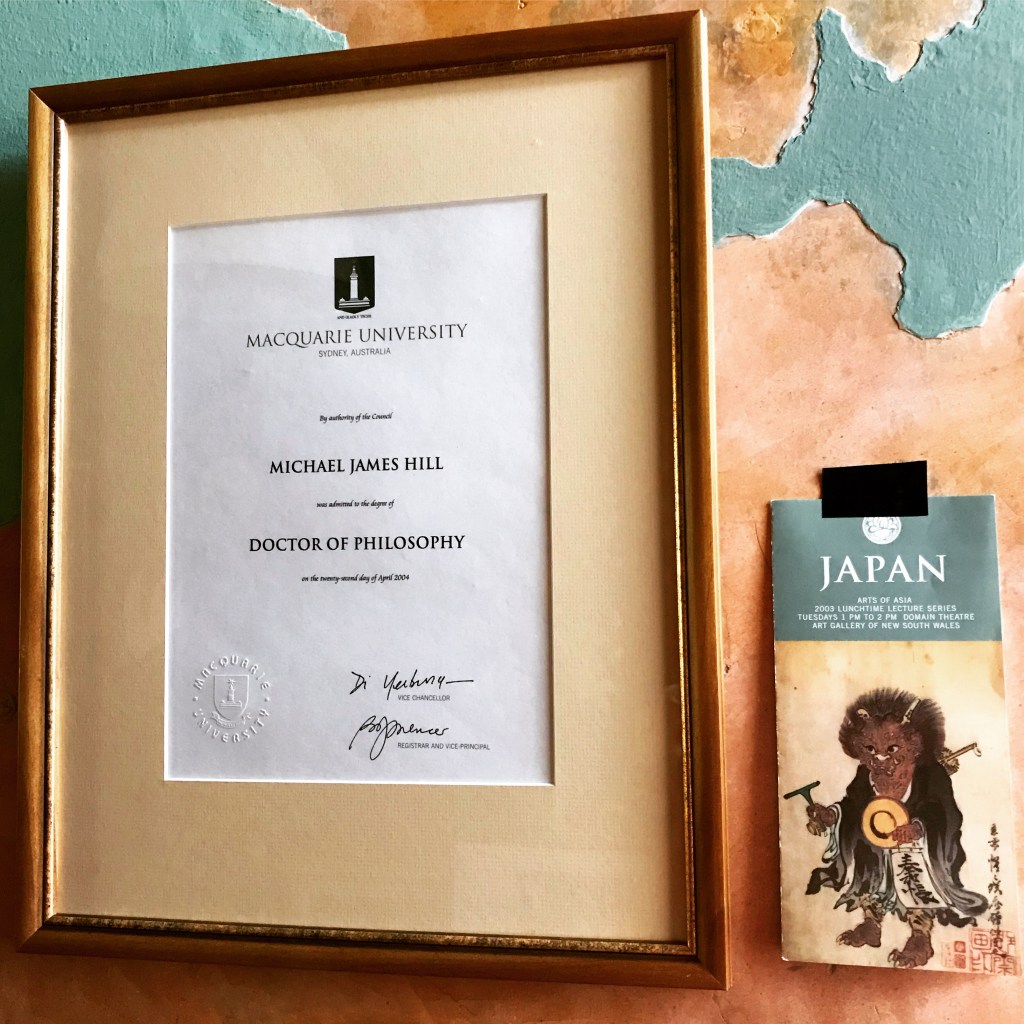
My PhD was awarded for my original research into Australian comics art and production. The accompanying brochure refers to my interest in Japanese art.
Since early adolescence I have been involved in comics art studies and research. First, through leisurely reading of the English comic strips from my aunties…followed by compulsive collecting…some review writing…all leading to the creation of my own comics. Later, working at an Art College I found that comics were considered a valid field of study and research. Oh joy! This ultimately led to my PhD for research into Australian ‘small press’ comics. That is where my alias arose. I’m known as Michael Hill, PhD (a.k.a Doctor Comics). I completed the doctorate in 2003 and acquired the alias in 2006. It was on a radio chat show that my agent, Andrew Hawkins, arranged for me to be interviewed. One caller said he wanted to talk to “that Doctor Comics guy!” To the amusement of listeners the announcer informed them that I actually had a PhD in “comics”! So instead of “Doctor in comics”…or “Doctor of comics”…it was strategically shortened and sharpened in focus toDoctor Comics. My agent formalised this with the registration of my doctorcomics@gmail.com email account and the doctorcomics.com website. This caught on in the local media and led to a chain of interviews.
My entry card to U.S.A. comics event THE EXPO 99…with the Brian Ralph illustration.
My intention with this blog is to document my reading, researching, critiquing, creation and celebration of comics art. This is expressed by the Feed On Comics! T-shirt by the artist MAX (see illustration above). I acquired it at the ICAF (International Comic Arts Festival) at Bethesda, Maryland, USA in 1999. I could not believe there was an academic conference on comics! Not only that…it was followed by a comics convention, the Small Press Expo! It turned out to be an inspiring event being both a conference and a convention. The academic conference was chaired by Gene Kannenberg, Jr., the “big guy” who enthusiastically led proceedings, to a gathering of like-minded souls, i.e. academics researching comics art. Gene made me feel very welcome. Amongst those who attended was Dr. John A. Lent who was selling the first issue of IJOCA, the International Journal of Comic Art Vol. 1, No. 1 Spring/Summer 1999, that he had produced and published as Editor-in-Chief. I became a member of the International Editorial Board of that journal, representing Australia. Other new comics colleagues I met at that event were Michael Rhode, Randy Duncan, Charles Hatfield…and Mike Kidson whose paper “William Hogarth: Printing Techniques and Comics” inspired my later graphic research into Hogarth and printmaking. That introduction to printmaking eventually led to my adoption of it as an artistic practice. Also in attendance were other comics art researchers…Pete Coogan, Pascal Lefèvre, Jeff Miller, Ana Merino, Jeff Williams, Mark Nevins, Guy Spielmann, and Joseph “Rusty” Witek. They were pleased to have another Australian attend (Spiros Tsaousis had attended the previous year). They even let me, as guest, choose the restaurant on the first day…I suggested “Mexican?” a novel choice for me, not familiar with the cuisine. They all smiled and took me to one of the many local Mexican restaurants. I have since, somewhat subliminally, associated dining on Mexican food with researching comics art!
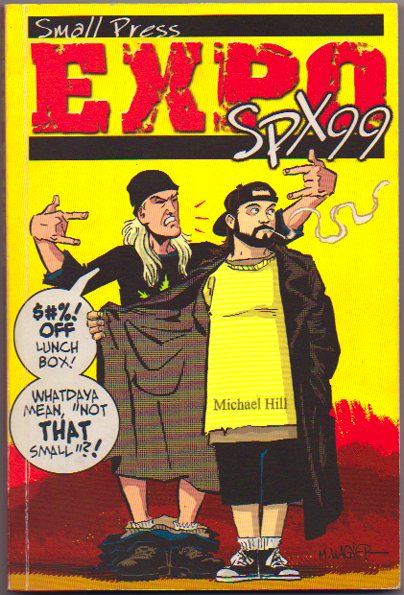
SPX99, my copy of the Small Press Expo program in Bethesda, Maryland, U.S.A., the first comics art conference I attended.
This conference gave me the reassurance to undertake the academic study and research of comics art. It also connected me with other academics from around the world who studied and researched comics art. This ultimately led me to the gaining of my PhD in comics studies. At that Bethesda conference, I made a presentation on Australian indie comics based on the research I had been doing. As the conference concluded the comics expo kicked off downstairs. This convention, known as the Small Press Expo, honoured indie comics (see my99 EXPO card above). I bought several comics and even sold some I had brought with me from Australian small press creators. I also met Gary Groth, “wow!” the guy who runs The Comics Journal…he seemed to be on the look out for “comics stuff”…and Neil Gaiman, “yes, him!”, in the lift, speaking in his dulcet English tone that was wonderful to hear! They, and many others that I had only read about, were in attendance, wandering around at the event. Comics art was what they studied, created, promoted, traded or researched! In the evening there was an award ceremony at which comics artist James Kochalka performed, surprisingly, absolutely naked! Amazing! Each category winner was awarded a brick, just like the one Ignatz threw at Krazy. I was most impressed and inspired by the level of comics art interest and the emerging philosophy surrounding it! The event celebrated both the study and creation of comics art. This has had ongoing resonance for me as I start this blog. I also intend continuing my reading, researching and writing about comics art.
Doctor Comictopus alias for Michael Hill a.k.a. Doctor Comics, designed by Michelle Park.
So there is my first post….a little lengthy perhaps…but I am off and running along the blogging trail and feeling very excited about it…and I welcome any comments and suggestions from readers of my blog, Michael.















































 Doctor Comics