This post profiles recent experiments in my creation and design of some ideas for art postcards whilst working in my studio and employing drawing, painting and printmaking techniques with experimental and uncertain outcomes. I love working in the studio and particularly in the post card production process, especially as it involves printmaking. I do small runs of prints, usually less than 50, although each card may go through the run multiple times depending on the number of layers, as indicated in some of the photos below.
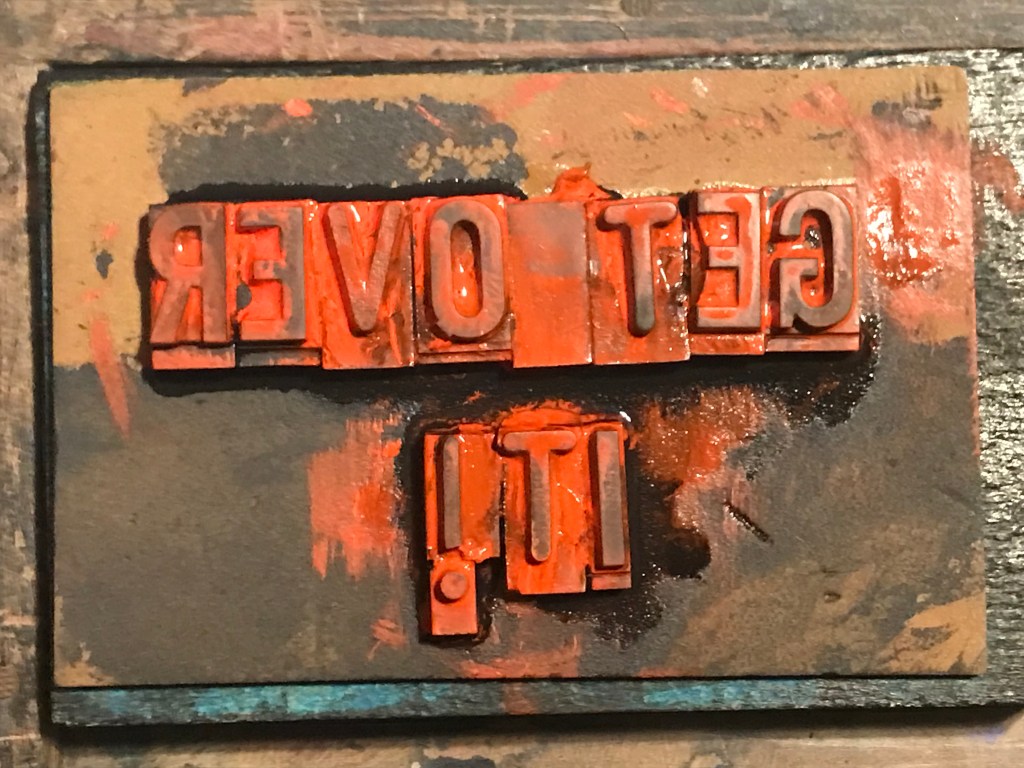
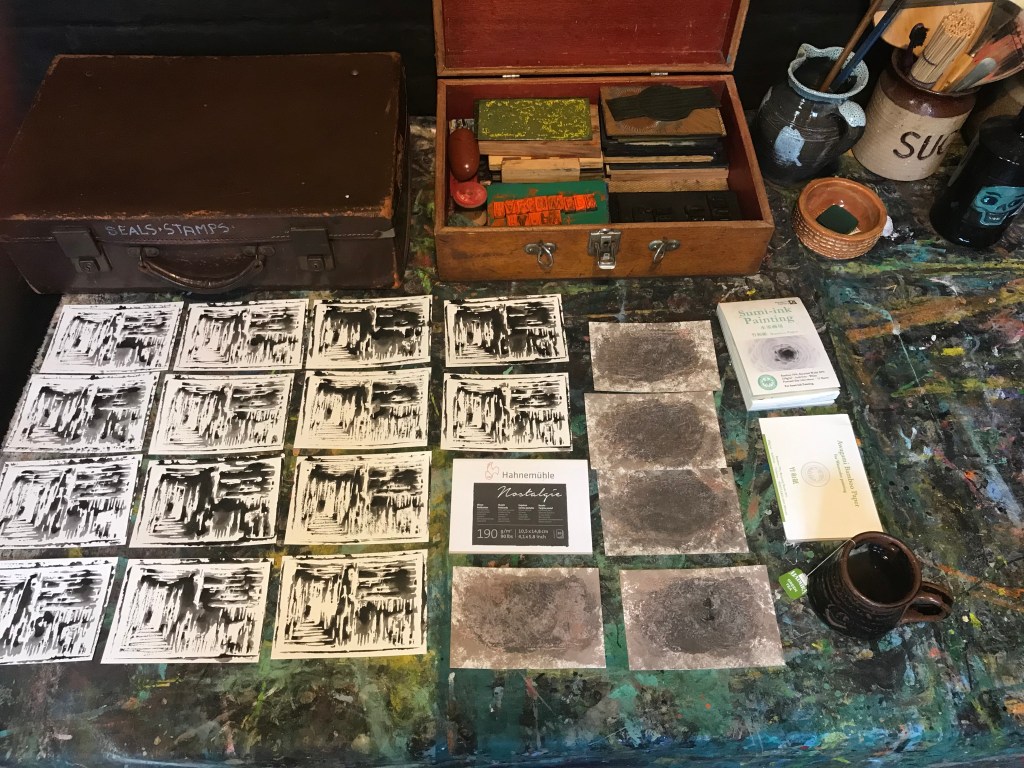
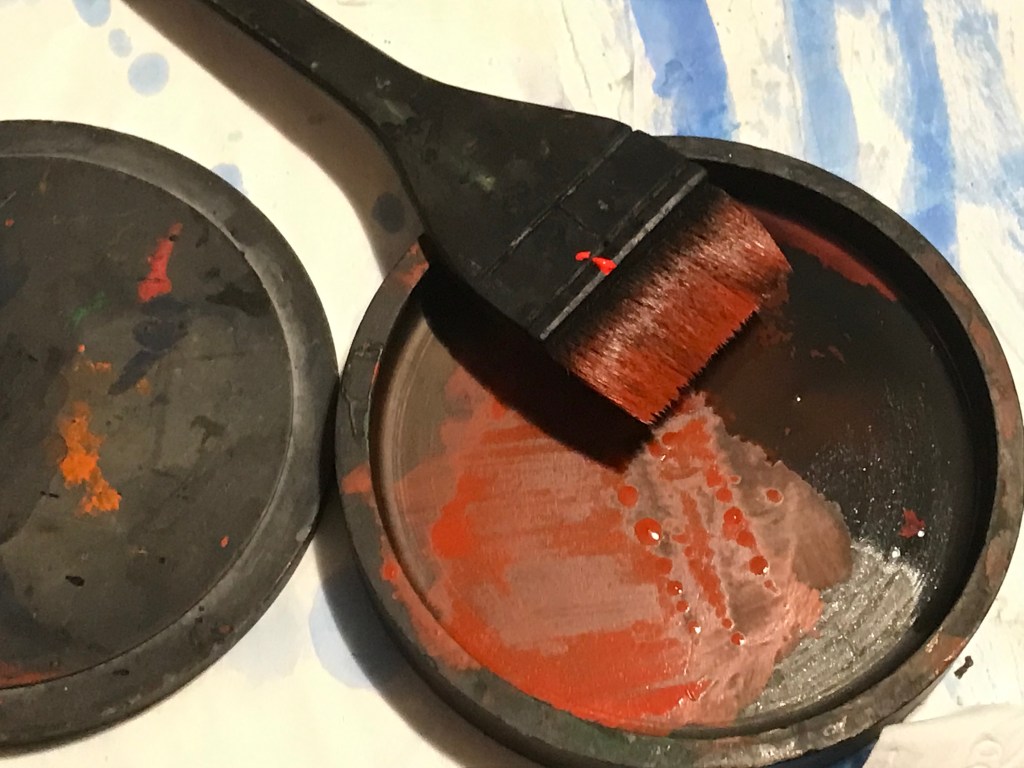
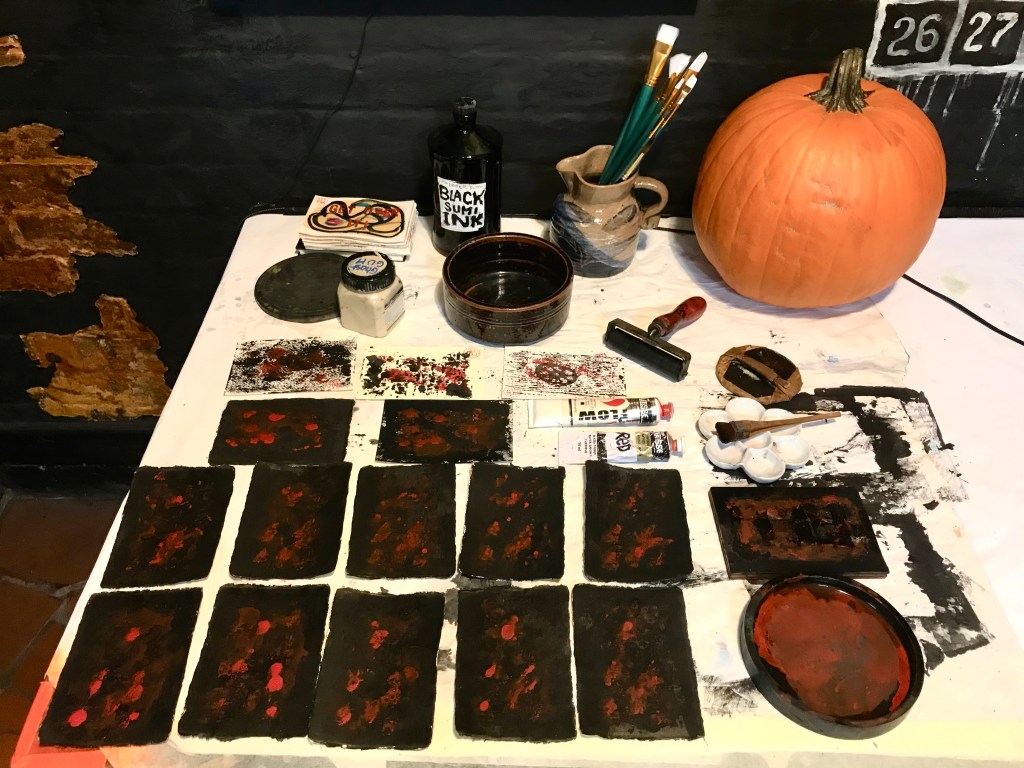
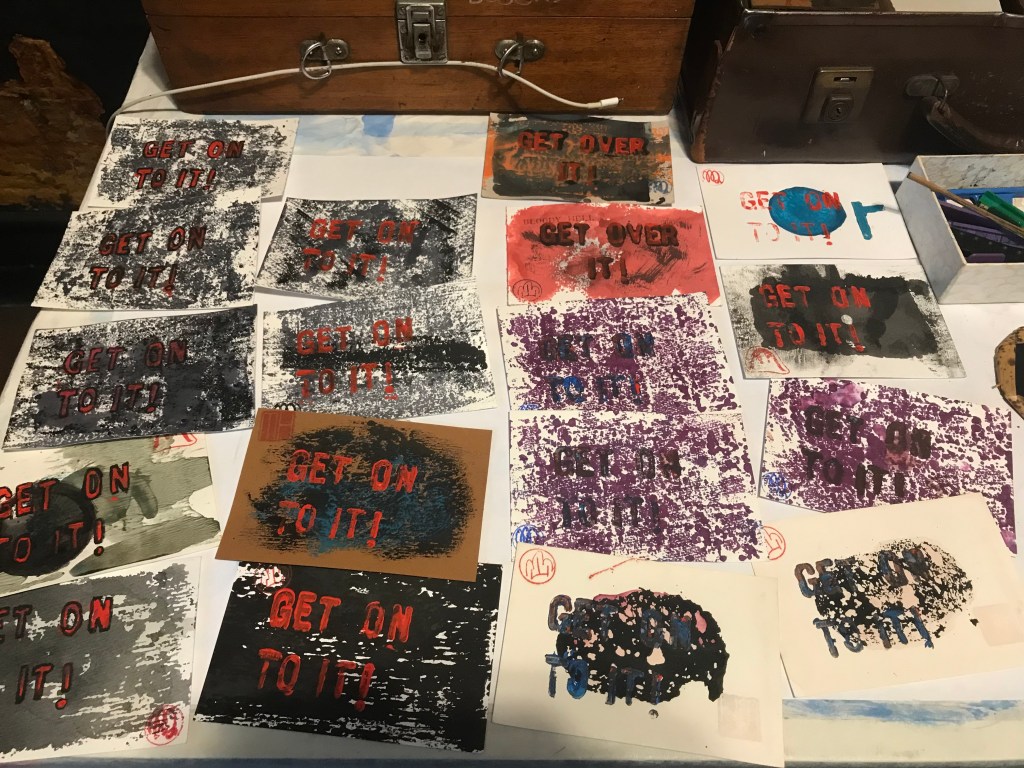
A rough sketch idea for the design of a postcard. This one remains at that draft stage.Type overlay for postcard that has already received a base layer(s). This one will be the top layer….perhaps?Two different designs with the one on the left having received its base layer whilst the one on the right has had two printed layers: base plus overcoat.Sumi ink dish being used as a paint pot with red ink and Hake brush.The black postcards in the foreground have had two print layers whilst the three cards alongside them have had three and the stack of post cards at the top left, having dried, have had four.The pumpkin just happened to visit the studio around Halloween time.A selection of different postcards most of which have had two runs through the printing process. Note also the addition of my artist stamp, at top left or bottom right, on some of the cards. As I have previously stated, making art postcards is one of my favourite artistic activities that I have been doing it for more than a decade. I also plan to do more posts on this topic.
(NOTE: Further additions and editing to this post are anticipated in the near future…including the completion of it!)
It has taken me some time to finish wrapping up production of this title but things are finally taking shape. The latest development in my comics creation and production scheduling is that two of my titles will now be merged. These two titles are my most recent project working title…The Cat Cooking Comics In Kappabashi and my longer, earlier work Blotting Paper: The Recollected Graphical Impressions of Doctor Comics. The former, that took the form of some of a sequel to the previous title,…now becomes an additional chapter…actually the final chapter of the Blotting Paper graphic novel. My initial thoughts were to make it a stand-alone comic…despite it having some connections to the main title by virtue of sharing some of the same characters…however, I have now opted for closure of the production period…and time to wrap it all up in one bundle. This means that The Cat Cooking Comics In Kappabashi will cease being a proposed stand alone comic title…and instead become a chapter title of Blotting Paper: The Recollected Graphical Impressions of Doctor Comics. Despite this manga merging, their blog posts that were completed with the different title of The Kappabashi Cat Nos. 1, 2 and 3…will remain as existing blog posts, retaining their original title and date and history, and accessibility on this site. Sorry about the changes but I hope that has clarified matters.
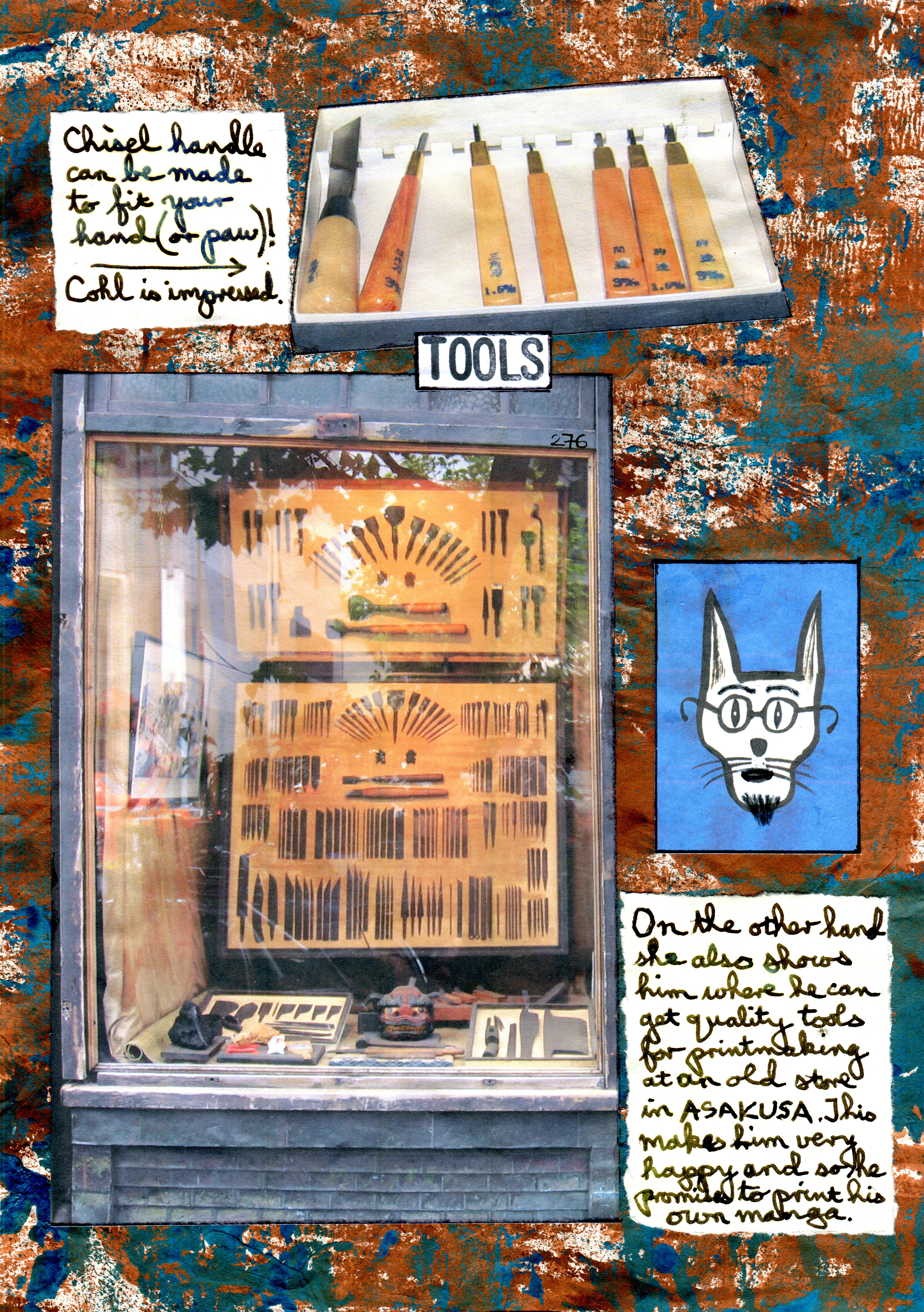
The above image shows a rough cover design of the proposed comic The Cat Cooking Comics In Kappabashi…that is now being merged with Blotting Paper: The Recollected Graphical Impressions of Doctor Comics as Chapter 6…the final chapter of the intended 300 page graphic novel. Although the Doctor Comics character does not appear in this chapter one of his cats, Cohl, does. Living in the Kappabashi area of Tokyo…Cohl learns the Japanese form of woodblock printmaking called sosaku hanga. This is the same method that Doc had employed…and demonstrated to his cats at their home in Sydney whilst making a series of creative prints. This edit wraps things up in terms of the story. In this final chapter Cohl becomes, as the title of that chapter infers, The Cat Cooking Comics In Kappabashi.Wherever he was at this time, I am certain that Doc would have been impressed and offered his enthusiastic support.
Above, a page from Blotting Paper: The Recollected Graphical Impressions of Doctor Comics showing Doc at work making woodblock prints…an act that Cohl would have observed on several occasions back in Sydney when Doc and the cats lived together…and that would have possibly inspired Cohl to take up printmaking on his arrival in Japan.
Yet another page from The Cat Cooking Comics In Kappabashi…now Chapter 6 of Blotting Paper: The Recollected Graphical Impressions of Doctor Comics…showing Cohl’s artistic development with his manga mixing…his printmaking and his creative layout of prints…with panels and pages from the randomly found manga during his travels in Tokyo.
I hope these edits will bring these separate units together under the one title of…Blotting Paper: The Recollected Graphical Impressions Of Doctor Comics. It seems the best solution at the moment.
Continuing my blogging with another post profiling the design and production of my art postcards. This time I am showing the process stage…rather than the finished outcome that has been shown in preceding POSTCARD posts. Generally the postcards are given multiple layers of graphic treatment,…whether through painting or printmaking or a combination of the two. In this post I have displayed two examples of the first stage of printmaking,…and two with a second layer, from a series of cards of different editions over the years. These images have been taken from the design and printing of the base layer or layers of the image…prior to adding overlays, colour, embellishment and logos. The photos show the first, or first two layers of a printmaking run…establishing the base layer, or two base layers (one base layer plus one overlay). Within a print run the initial layer will be the first of more layers…perhaps two, three, four or more, that will follow.
Perhaps the most interesting aspect at this stage of the printmaking to discern…is the noting of differences in the design of the cards of the same edition. Although the completed print run of cards will carry the same title…no two cards will be exactly alike due to variations in the printed layers. This makes me a renegade printmaker. In my work there are no exact duplicates…and in that sense, all of the cards may technically referred to as monoprints i.e. not identical despite the whole batch carrying the same title. At the end of the print run following the addition of more layers…this difference will remain discernible, possibly even more so. All of the finished cards despite minor differences from each other, will share the same nomenclature and date of production.
Here is another set of postcards following the design and printing of the base layer. The variation and difference in appearance of these cards, from the same batch and print run, is already discernible.
This batch has had two passes across the print table…the base layer followed by a second coating or overlay…as can be seen in the photograph. The two layers of ink that can be perceived are a base layer in blue-black…and a second that has been overlaid with a bluish-purple tint. The ink-stained wooden block used for printing the layers is located at the bottom right of the photograph. In the printmaking process the block is inked and the blank cards laid face down on it…then pressed into/against the ink, then left, wet side up, to dry.
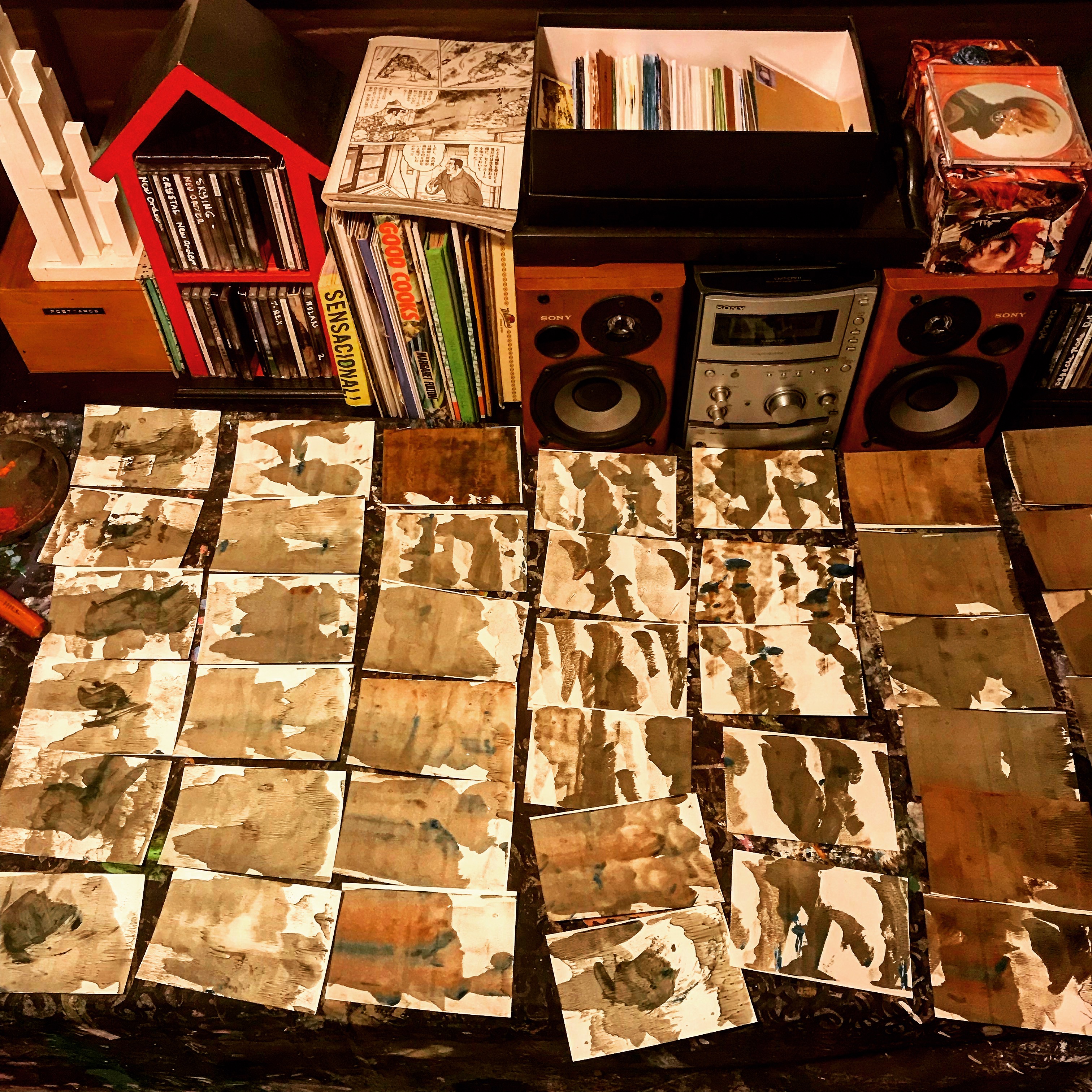
This batch displays a range in base layer design, almost as if it has been altered during the run. This can happen but in this case…there are three distinct base designs in play using a similar tone and hue of ink. That has resulted in three separate series of postcards. Note the musical accompaniment to the printmaking process, David Bowie’s LOW on this occasion. I like to stand right up close to the speakers. I find listening to music whilst working is both calming and inspiring.
Finally, here is a set of printed postcards with a lot of variation in the base layer of the cards…both in terms of pattern shape and intensity. Despite their differences the cards in this set will be regarded as “a series”…and carry the same batch title.
NOTE: These photos were taken over a period of several years…and document the establishment of a work methodology that I follow in my practice…with one or two subsequent improvements. I thought it would be interesting to show how my procedure developed. I am considering doing further posts on other aspects of the design, production and printing my art postcards.
Although not initially included in my published posts I wish to add further details of my background story…how I arrived at my present moment celebrating and researching comics art…acquiring my DOCTOR COMICS moniker…detailing aspects of my teaching, research and passage from technical work into academia…and subsequent research, publishing and the writing and presenting of conference papers based on that research…as well as a series of supplementary creative projects.
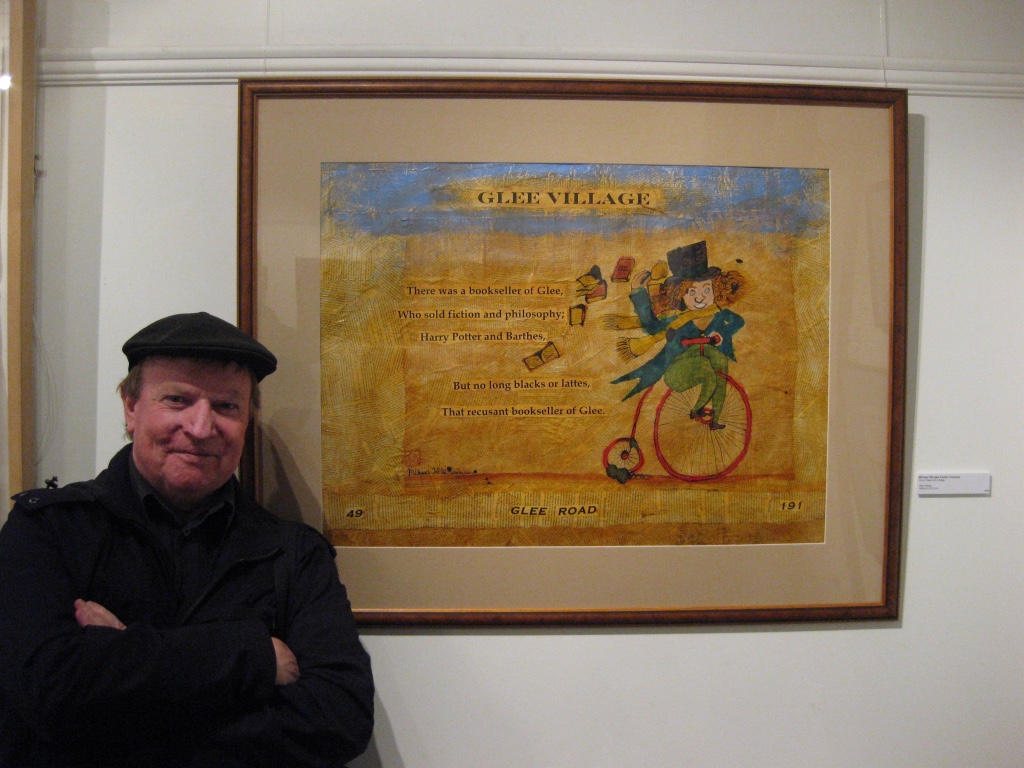
Doctor Michael Hill a.k.a. Doctor Comics (Photo by Alison Van Hees).
ACADEMIC QUALIFICATIONS
PROFILE: Subsequent to my artistic work in theatre and film, I have nearly 30 years tertiary experience in academia. This involved teaching, research, publication, course design, management and direction…plus consultation, working within the art and design and humanities disciplines…at both undergraduate and postgraduate levels and on both a local and international basis.
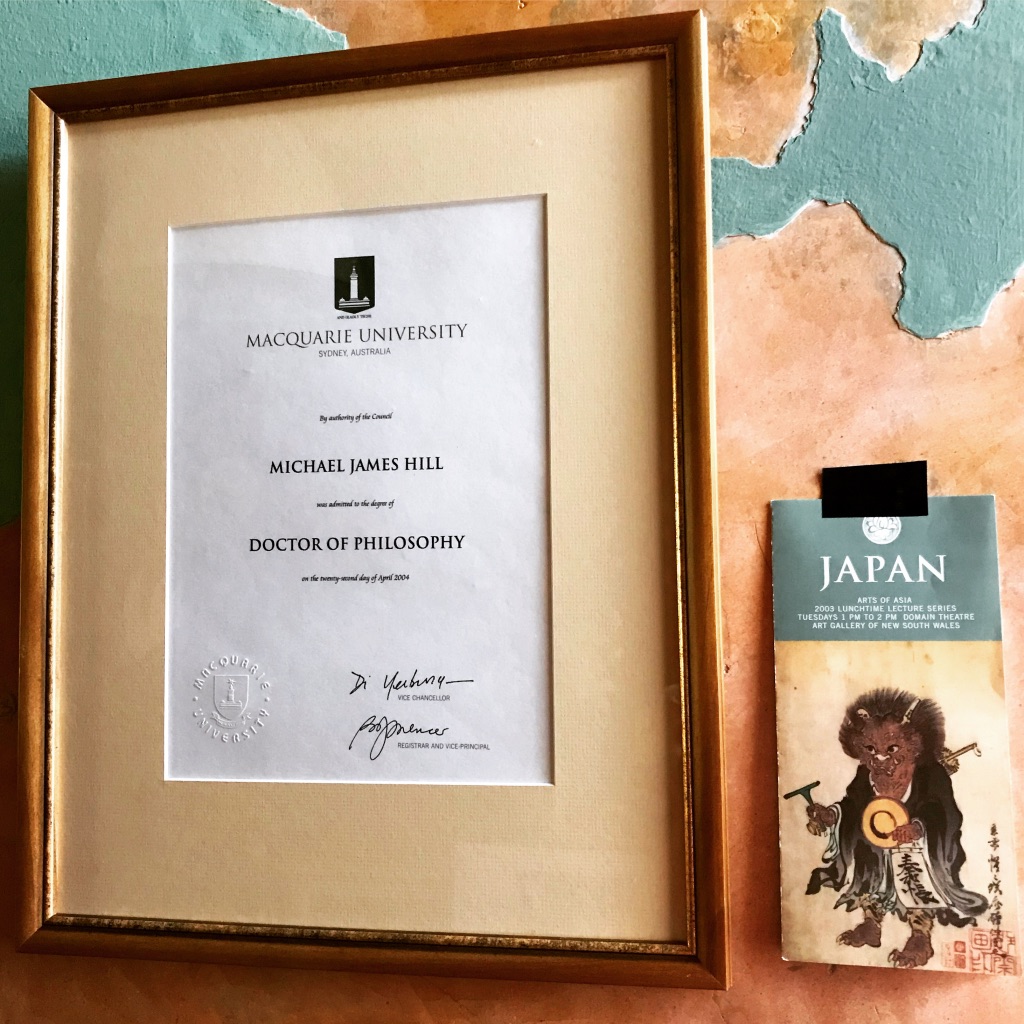
My Ph.D by virtue of the thesis:…A Study Of Contemporary Australian Alternative Comics 1992-2000 With Particular Reference To The Work Of Naylor, Smith, Danko And Ord…Division Of Society, Culture, Media And Philosophy, Macquarie University, 2003.
On completion of my Ph.D. at Macquarie University in Sydney I donated my collection of comics art research materials…including my collection of more than 500 comics…to the National Library of Australia, as the Michael Hill Collection of Australian Comics.
Master of Arts by virtue of the thesis…Slave To The Rhythm: Animation At The Service Of The Popular Music Industry…Faculty of Humanities And Social Sciences, University Of Technology, Sydney, 1995. Graduate Diploma in Media, Australian Film and Television School, 1986.
Certificate in Group Work, South Australian Institute of Technology.
ACADEMIC POSITIONS
Faculty of Design, Architecture and Building: University of Technology, Sydney…as Lecturer in Film and Video, Visual Communication Department, Faculty of Design
UNIVERSITY OF TECHNOLOGY, SYDNEY
Course Design and Management
Co-creator and first Director of the Master of Animation Course, spread across three Faculties of the university.
Director of Postgraduate Design
Director of Visual Communication Design Department
SYDNEY COLLEGE OF THE ARTS
Lecturer in Film and Video
Technical Officer in Art and Design
RESEARCH
In the comics art area and previously in the fields of film, video and theatre. Australian representative on the International Editorial Board of the International Journal Of Comic Art, 2000 to present, 2025.
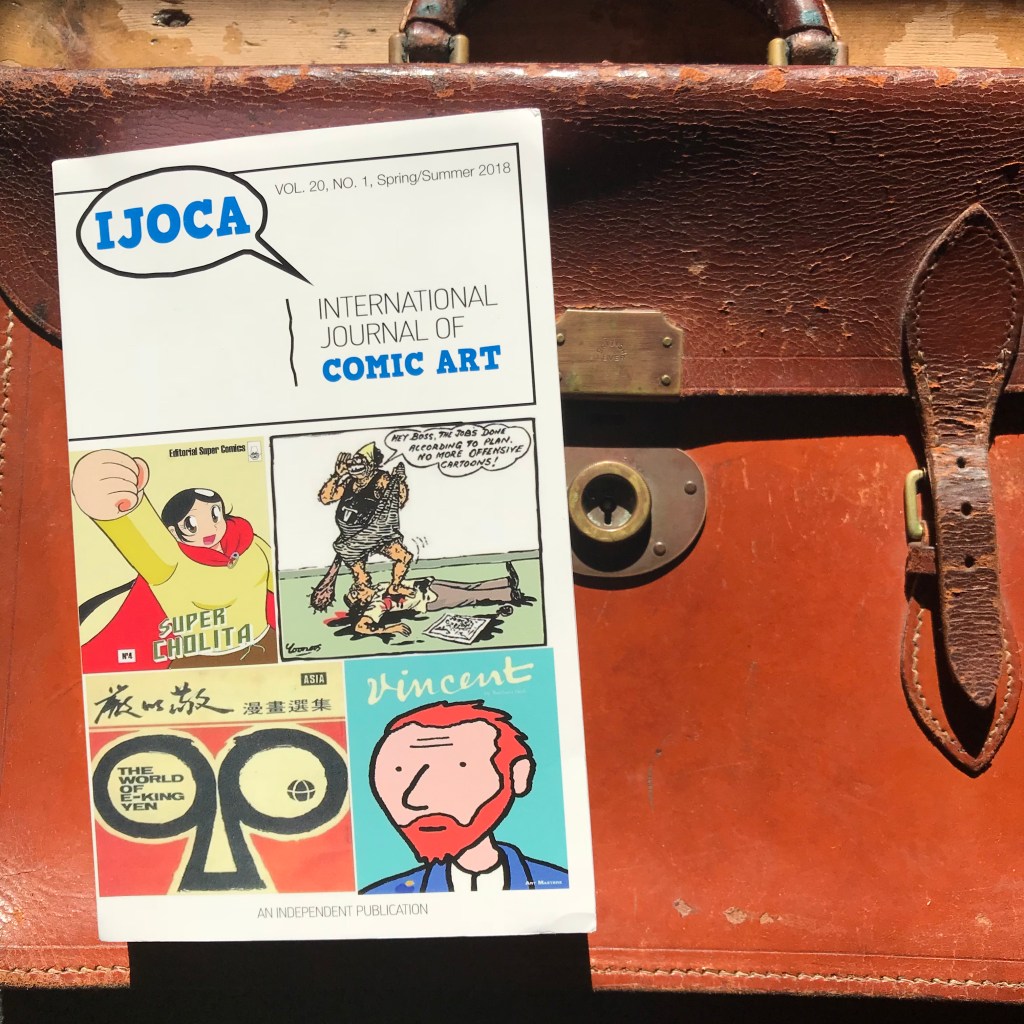
An issue of the International Journal Of Comic Art…I always carry the current issue in my brief case.
PUBLICATIONS
List of published articles on comics art. (NOTE: Work in progress: details to be added.)
PRESENTATIONS
Lectures, Tutorials and Panel Participation-multiple, local and international. (NOTE: Work in progress: details to be added.)
EXHIBITIONS
Participating in Group show on comics theme at KNOT GALLERY, Sydney.
(NOTE: Work in progress: details to be added.)
AWARDS
(NOTE: Work in progress: details to be added.)
CREATIVE WORKS
My design work, an animation storyboard, was selected for and exhibited at the International Design Exhibition in Osaka ’87.Professional involvement in Fashion Industry in the role of fashion video director…this was one of many I made for the fashion designer Katie Pye and others.A conceptual illustration of mine for the academic design journal FORM/WORK.
(NOTE: Work in progress: further details may be added.)
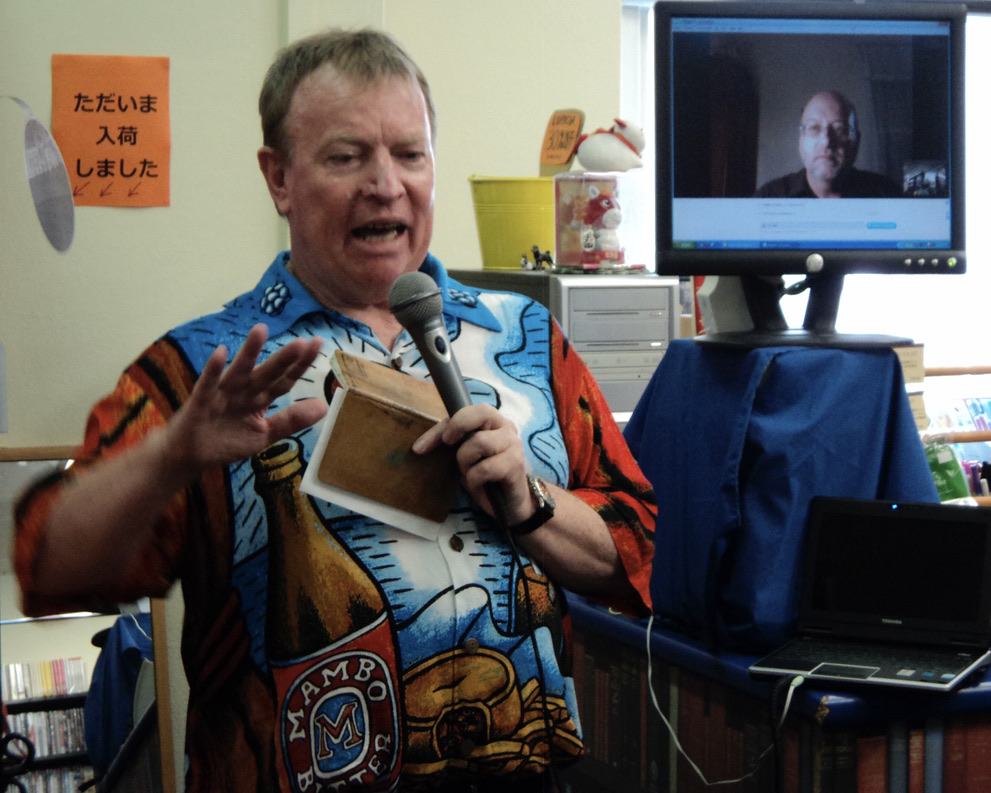
My cover illustration on design theory for an issue of the academic journal FORM/WORK.Poster for launch of first issue of my comic BLOTTING PAPER: The Recollected Graphical Impressions Of Doctor Comics… and exhibition of creative prints at Hondarake Bookshop in Sydney.My exhibition was launched by Gene Kannenberg, Jr. on a live cross from New York.
(NOTE: Work in progress: further details may be added.)
The bookshop launch took place under a canopy of torn wood-block prints…that I had made for my experimental animation Toxic Fish that was screened at the Art Gallery of NSW.
(NOTE: Work in progress: further details may be added.)
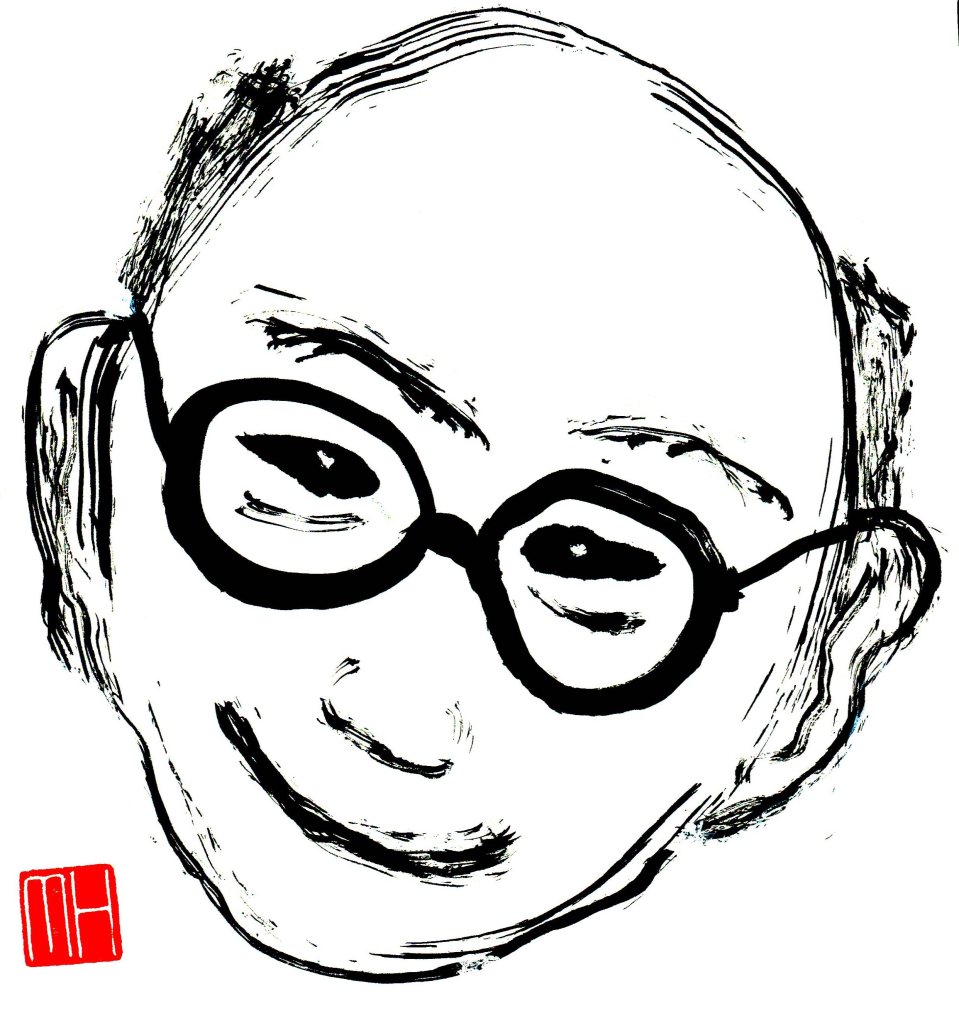
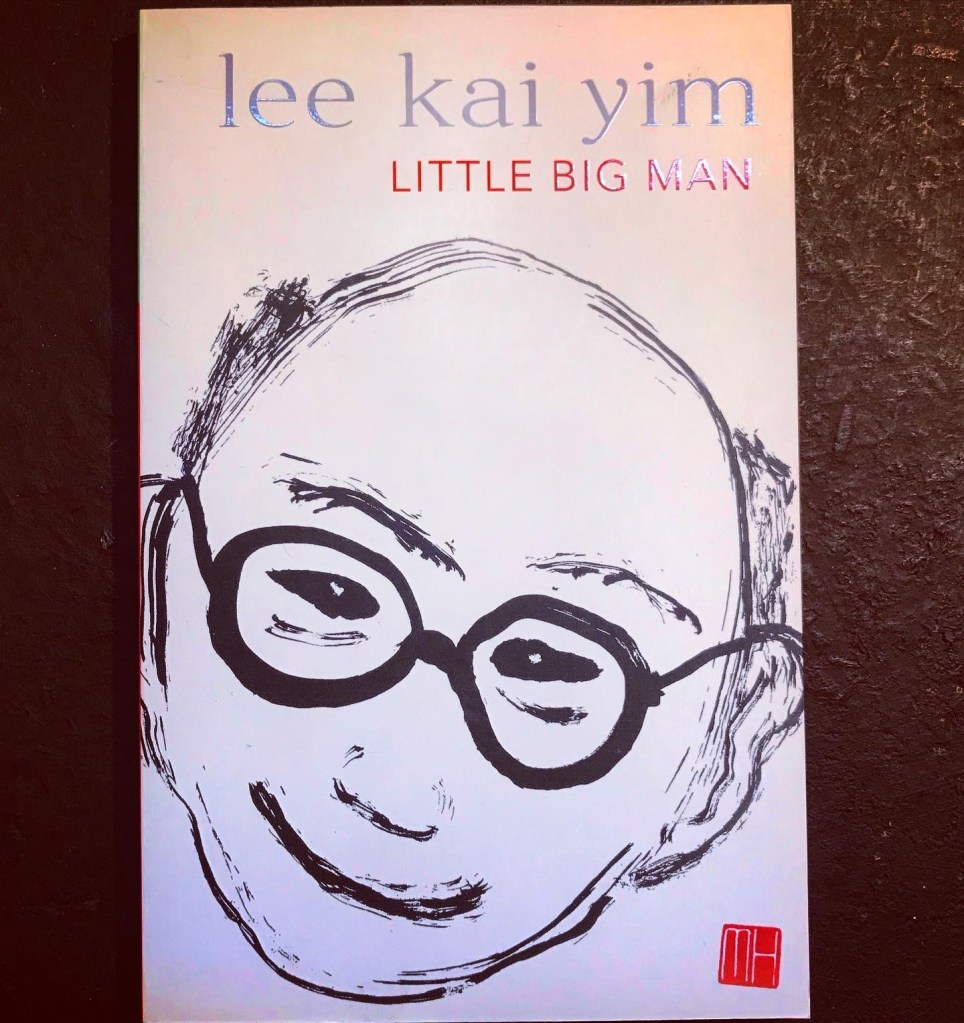
My calligraphic brush painting portrait of Professor Stephen Lee for the cover of his biography.My illustration on the cover of the book.
(NOTE: Work in progress: further details may be added.)
FILM
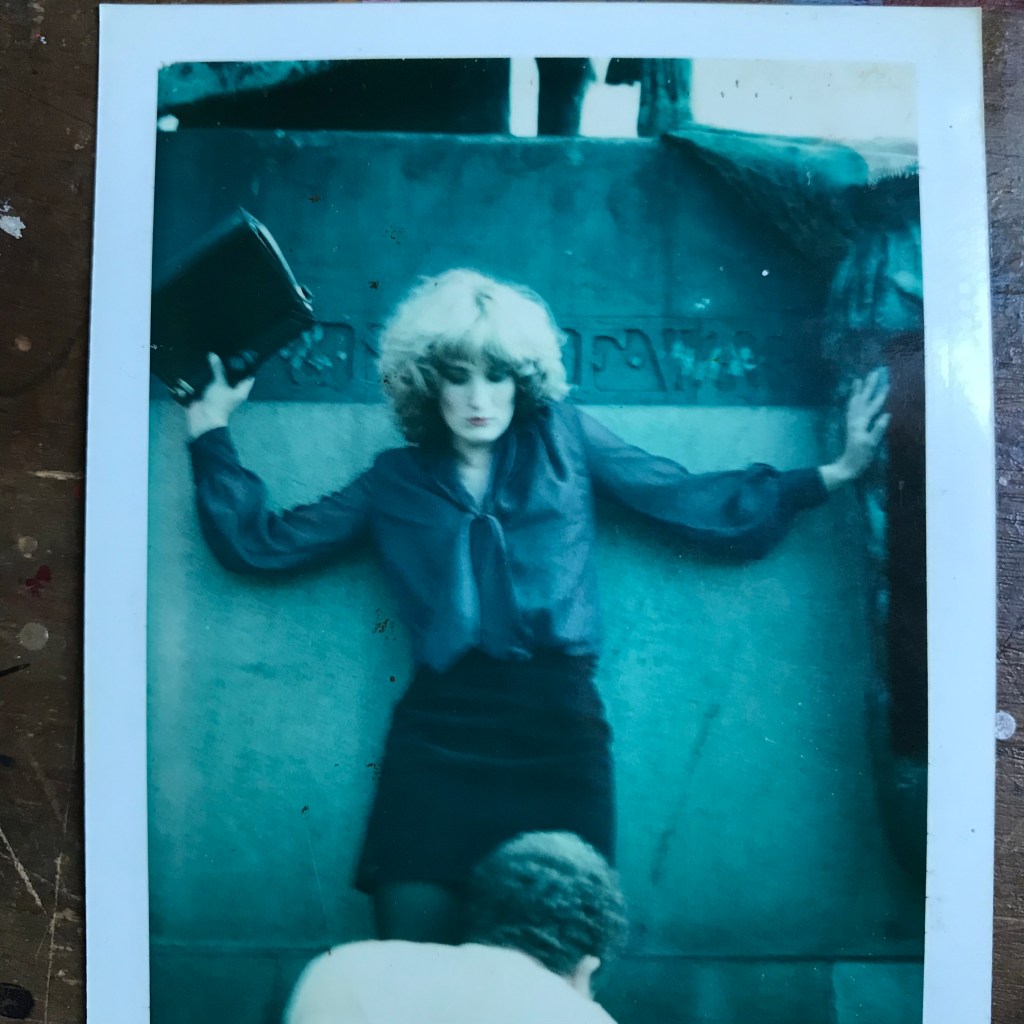
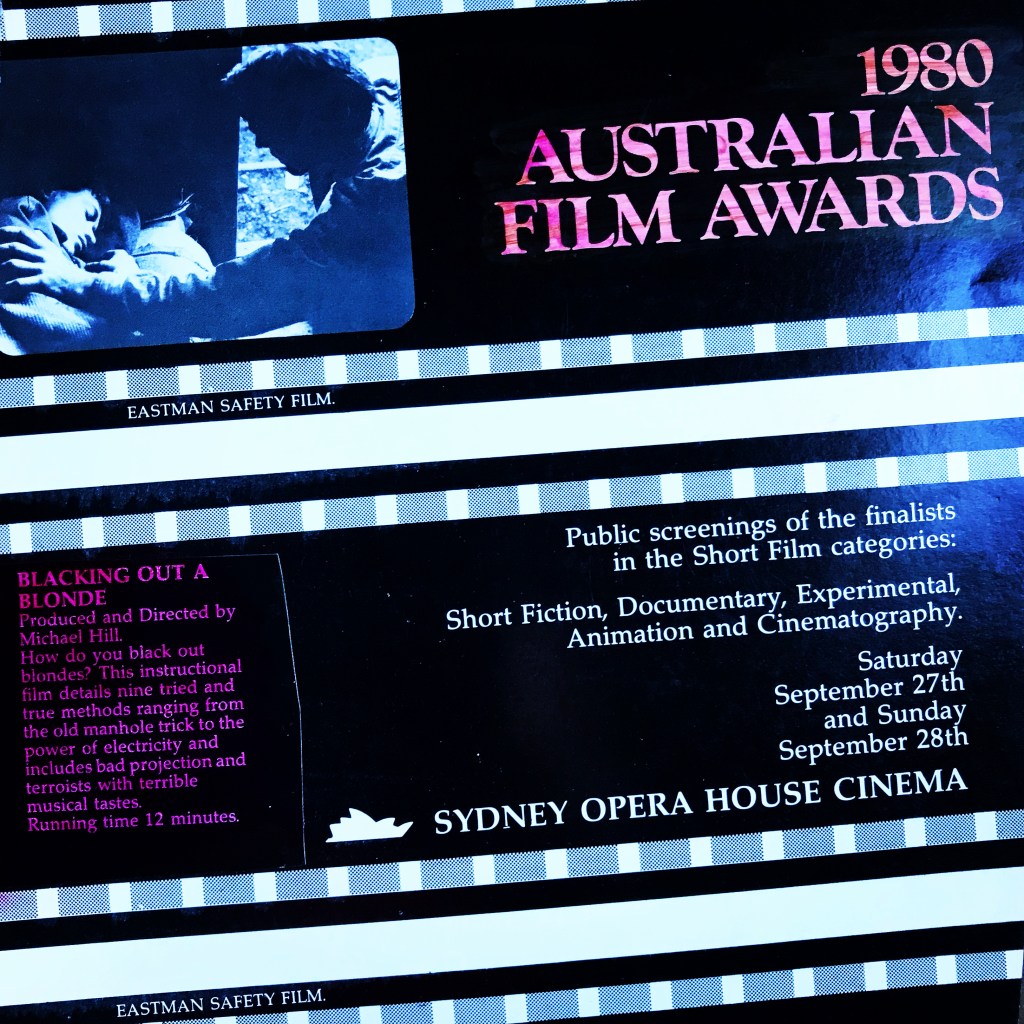
I have made a few independent art films…this is one of them, BLACKING OUT A BLONDE…screened at the Sydney Film Festival and the 1980 Australian Film Awards…that’s Jane Campion playing one of the many blondes in my film. She’s not too happy about the guy trying to kiss her on the knee…so she is going to whack him on the head with her bag!My film BLACKING OUT A BLONDE was screened at the Sydney Opera House..in competition for the 1980 Australian Film Awards!
(NOTE: Work in progress: further details may be added.)
IN THE STUDIO
A postcard printmaking session in the small studio…
(NOTE: This is a work in progress: further images and details to be added.)
THEATRE
That’s me front and centre, kneeling and bowing to Romulus in a Sheridan Theatre production directed by Colin Ballantyne.
Initially, back in the day, I thought I was headed for a career in theatre. I enrolled in some drama classes in Adelaide at the Sheridan Theatre…but quickly realised that I would rather work in production than in acting and performance. Anyway those acting classes led to a walk-on part in the play ROMULUS THE GREAT…by Swiss playwright Friedrich Durrenmatt…(that is me down on my knee in the photo above…there is an umlaut in his name but I can’t quite work out how to insert it)…that was staged as part of the 1968? Adelaide Festival of Arts. After that I concentrated on writing and direction…directing and co-writing the play ENTH with Des Rutherford and subsequently both writing and directing the play BECOMING. These two productions received good reviews…that got me into NIDA, the National Institute of Dramatic Art, in the Production Course in Sydney. This led to jobs in professional theatre in Sydney. Then I headed off to London, as you do, thinking I would work in theatre in London…but at the time of my arrival there were around 12,000 stage workers unemployed…so I ended up seeking temporary work through a an employment agency…and ended up on an assembly line at the GEC factory in Wembley. This helped me pay my rent…anyway by the end of the week I was promoted to the head of the row…noting and filling in gaps in the assembly caused by lax workers…who were slow to respond to the passing unit on the conveyor belt or who has simply fallen asleep. Talking about sleep I had set my alarm for 4.30 a.m. to get from South Kensington to Wembley for the 6.00 a.m. start. Little did I know that within a month I would be working at Harrods selling refrigerators…and the walk from my home base in South Kensington to Harrods only took around 20 minutes! And I met a few famous actors who wanted to buy a fridge. Then I was transferred to the Toy Department for the busy Summer Sales season where I was much happier. And I met a few more famous actors who wanted to buy toys for boys and girls. But I didn’t stay there long. I had registered with an employment agency for temporary work. First stop was a betting shop where I was board boy…writing up the names of the horses for each race…and then the results and winning dividends. I was up and down all afternoon taking advantage of the white board with my felt tipped pen…doing the odd little doodle and drawing of cartoon horses with whipping jockeys. It was fun…but didn’t pay so well…not nearly as much as what settlers got…the ones who worked out payments for winning bets…this was way before computers. It turned out…that as I had the mathematical skills…I was able to change my job in the betting shop to that of a settler. Better pay! Hooray!
(NOTE: Work in progress: further details to be added.)
(APOLOGIES: The addition of further details to this and some other of my posts is on my TO DO list. I am slowly making progress with this and I thank you for your patience! Michael)
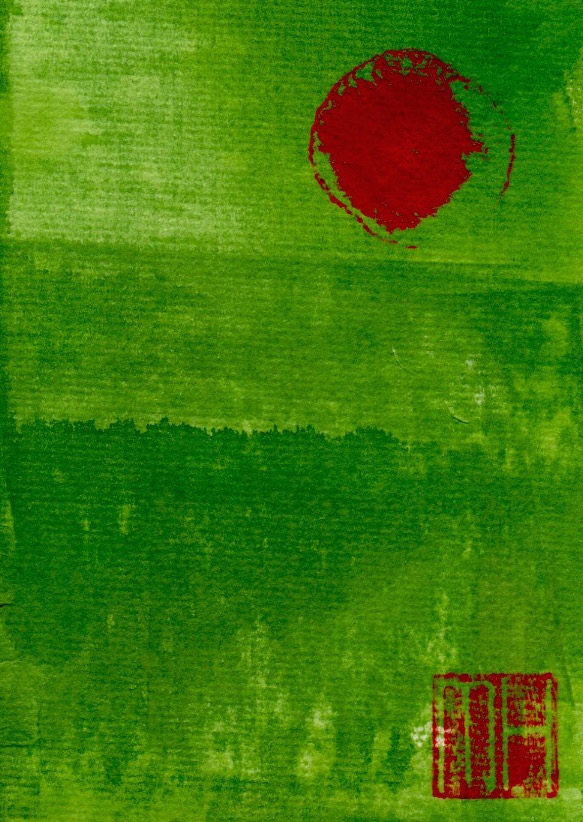
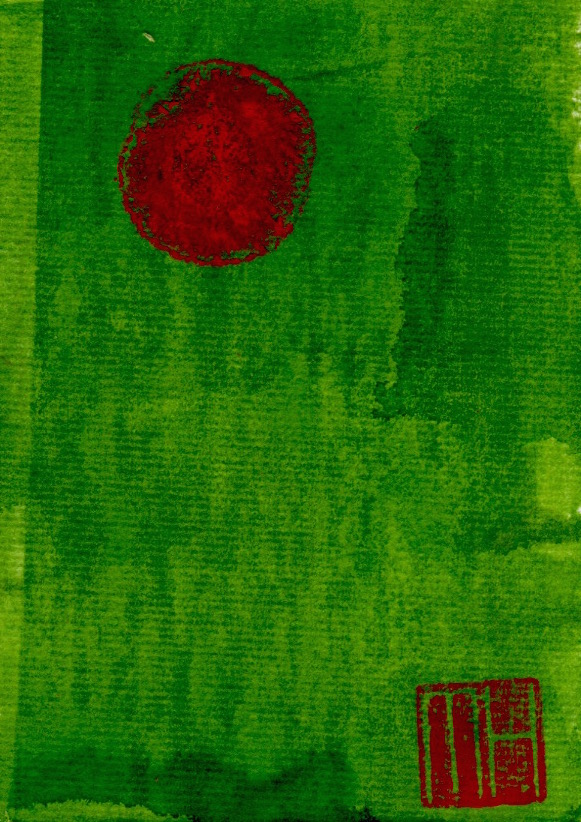
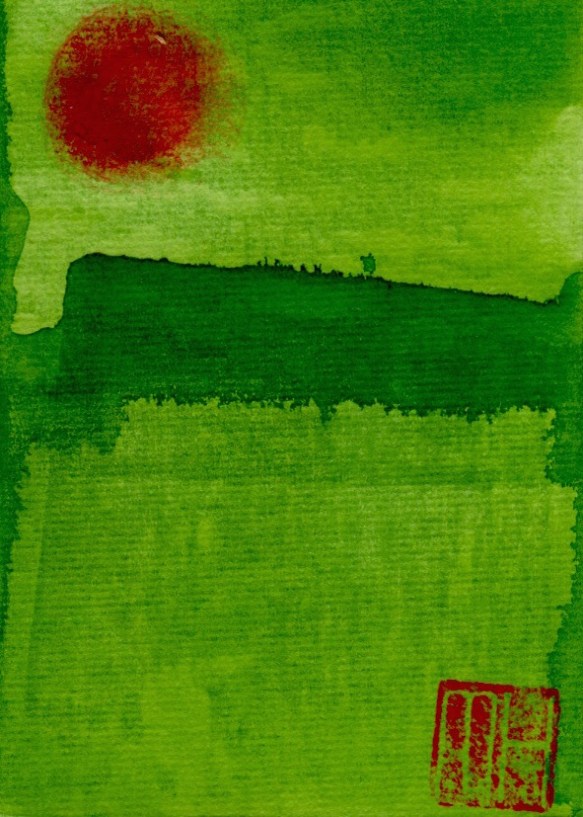
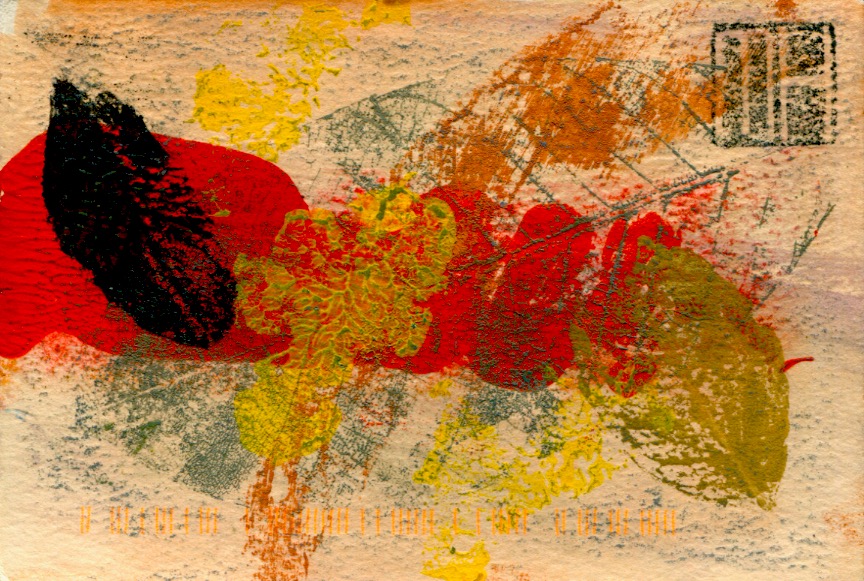
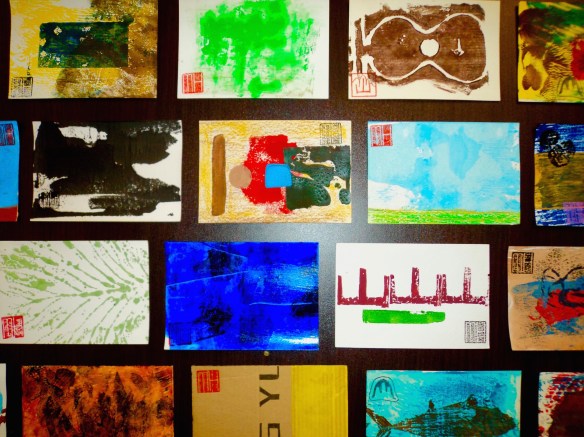
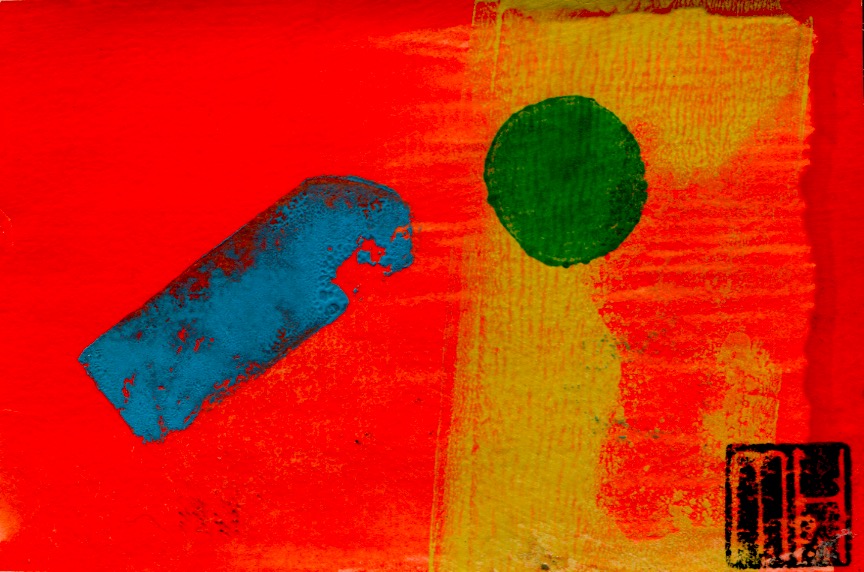
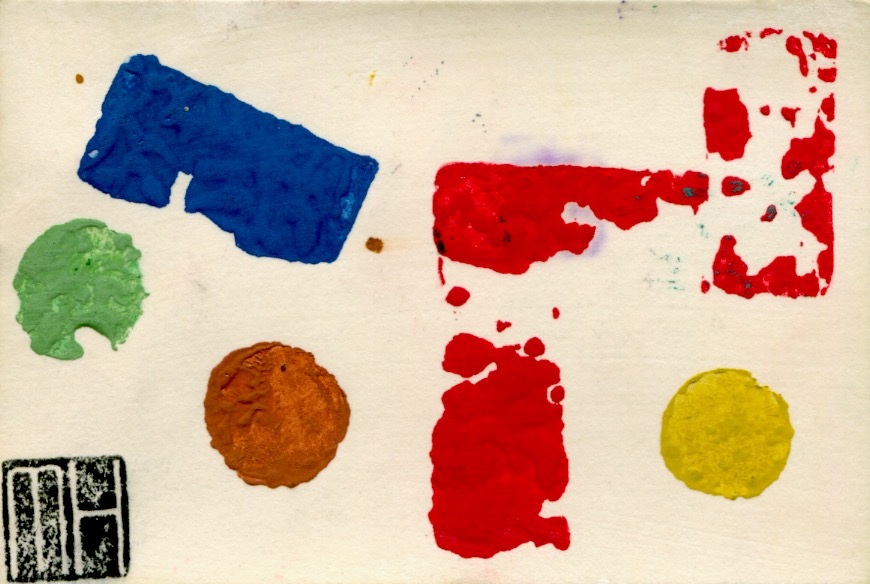
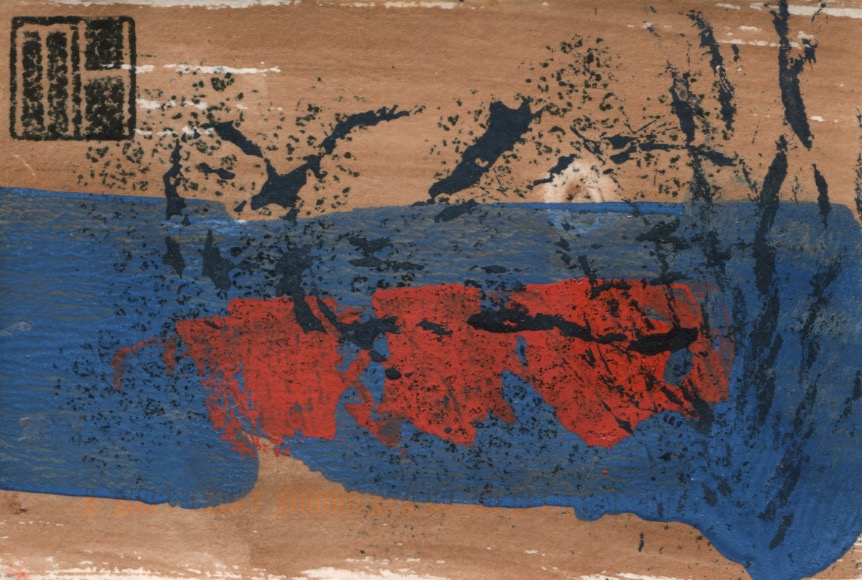
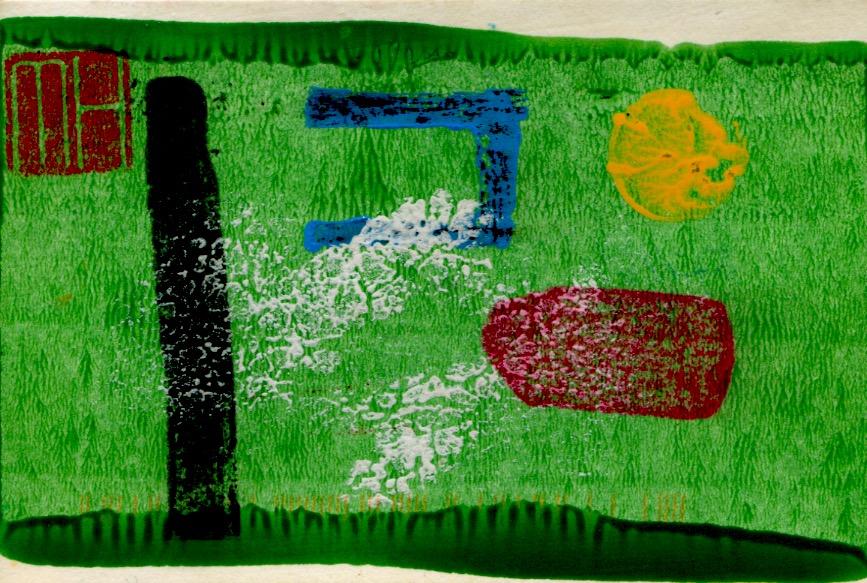
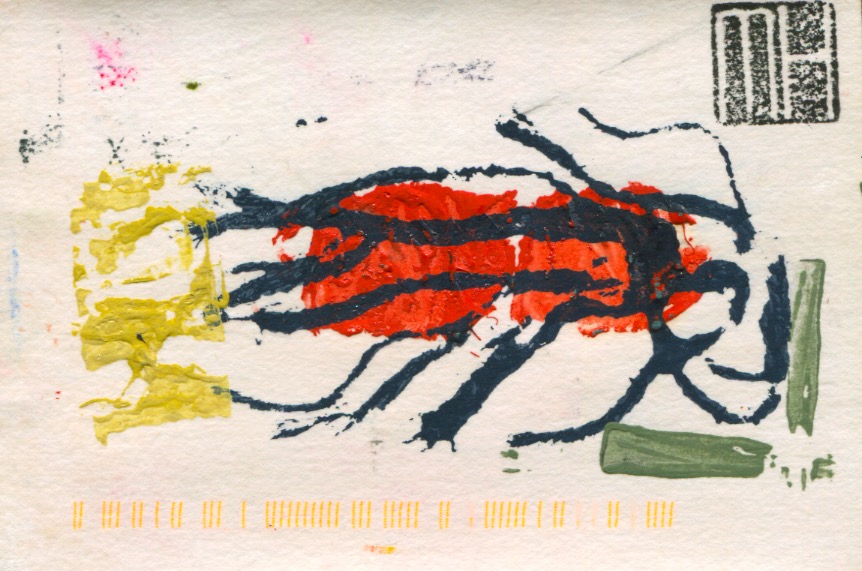
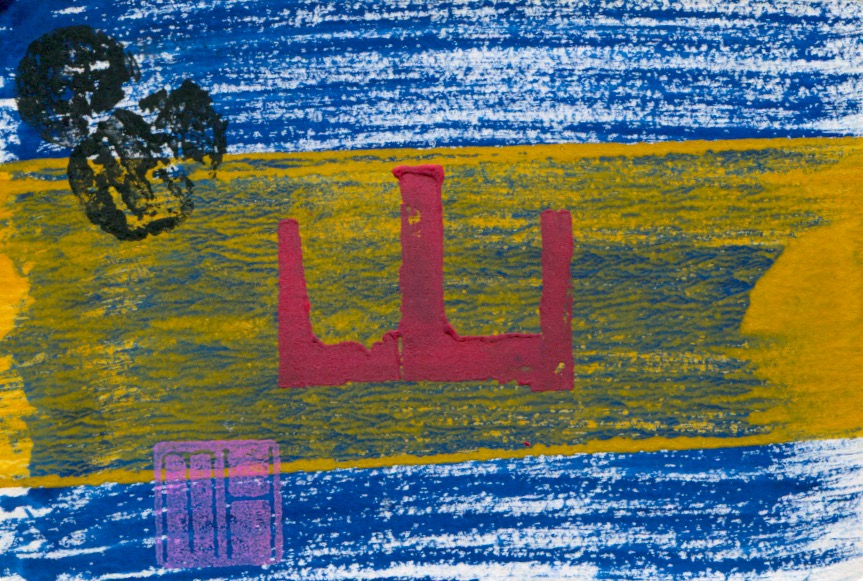
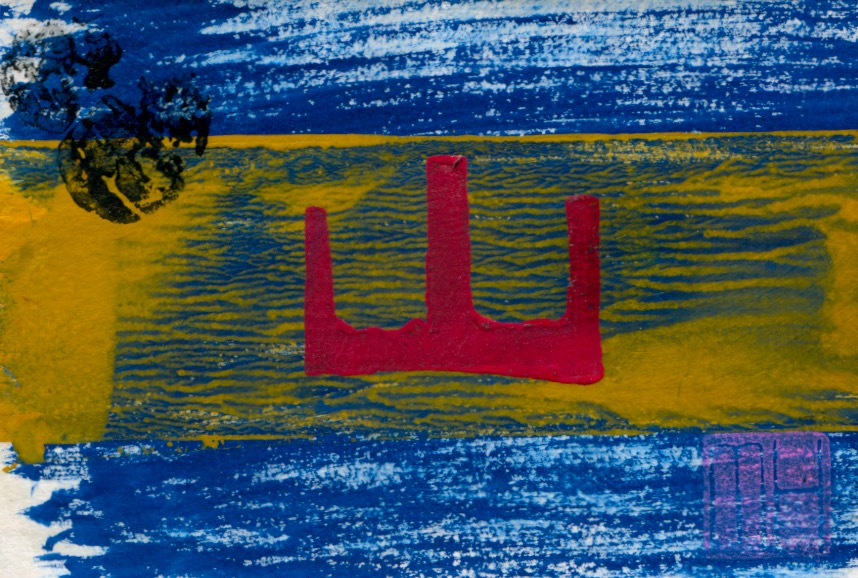
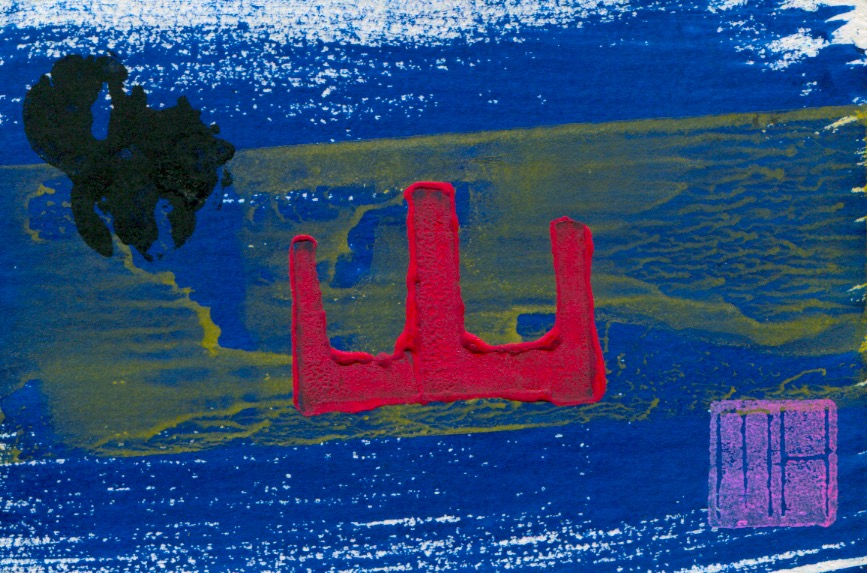
Continuing the profiling of my art postcards…here are some recent examples of on various themes. These cards are hand-printed, created from a combination of drawing and printmaking in low print run editions. Once I finished a session it meant the end of that particular batch. I would not repeat the design or reprint it. Cards in an edition are all original prints…similar in design but classified as mono prints as there are no exact duplicates. They fall within the standard postcard size dimensions of 10cm x 15cm or a near approximate. More information about this project can be found on the four previous POSTCARD posts…see the links below at the bottom of this post.
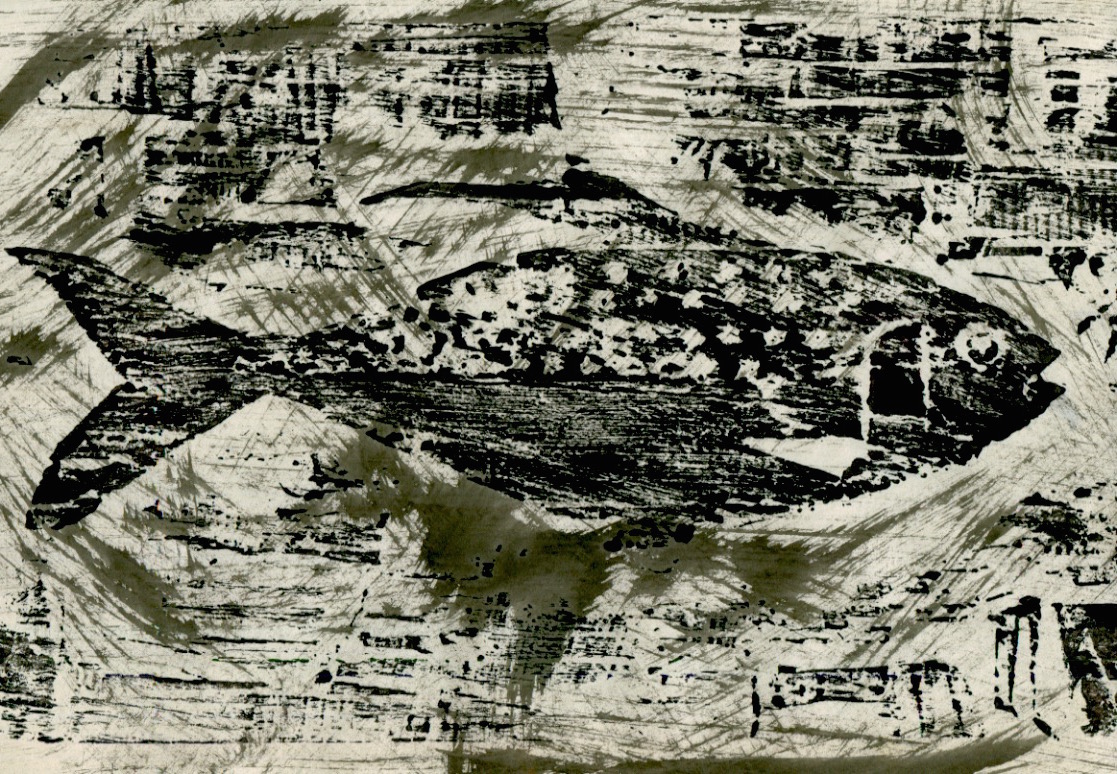
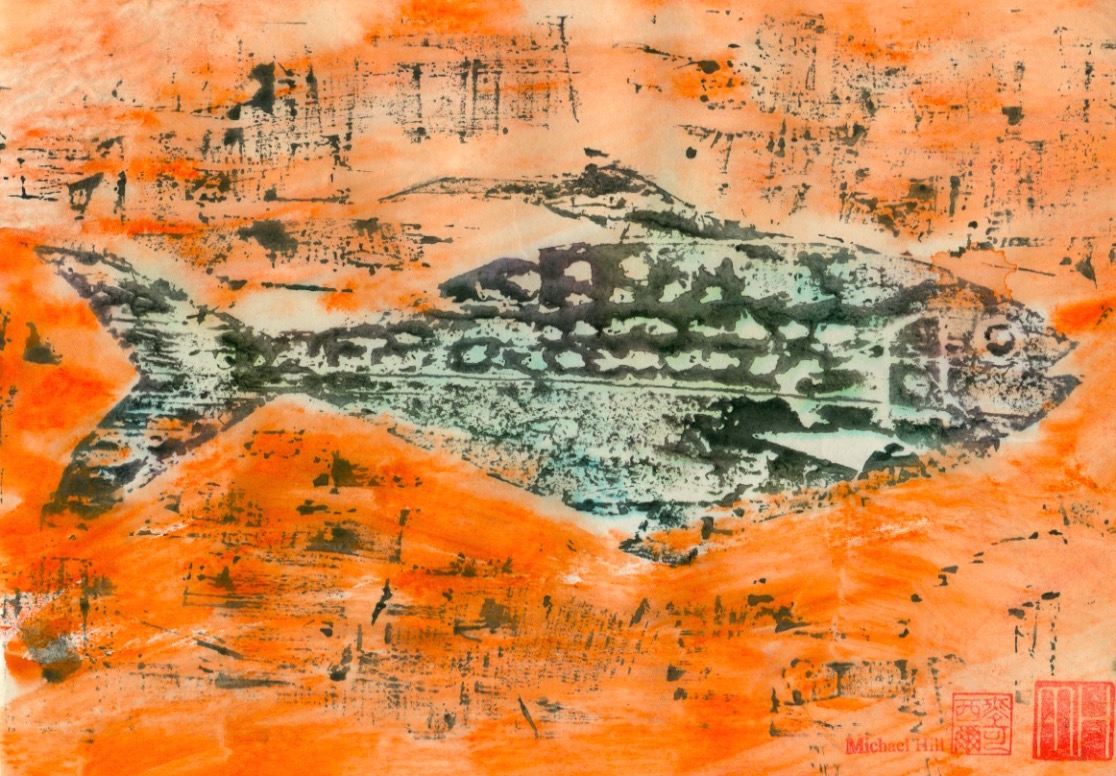
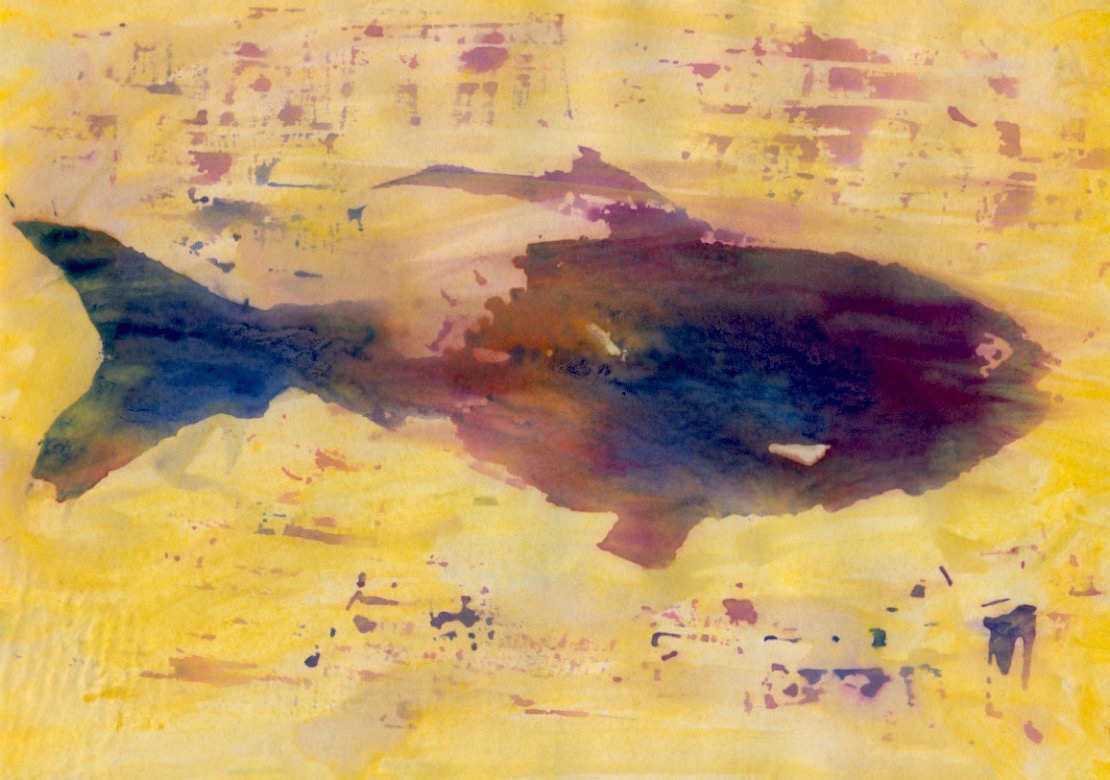
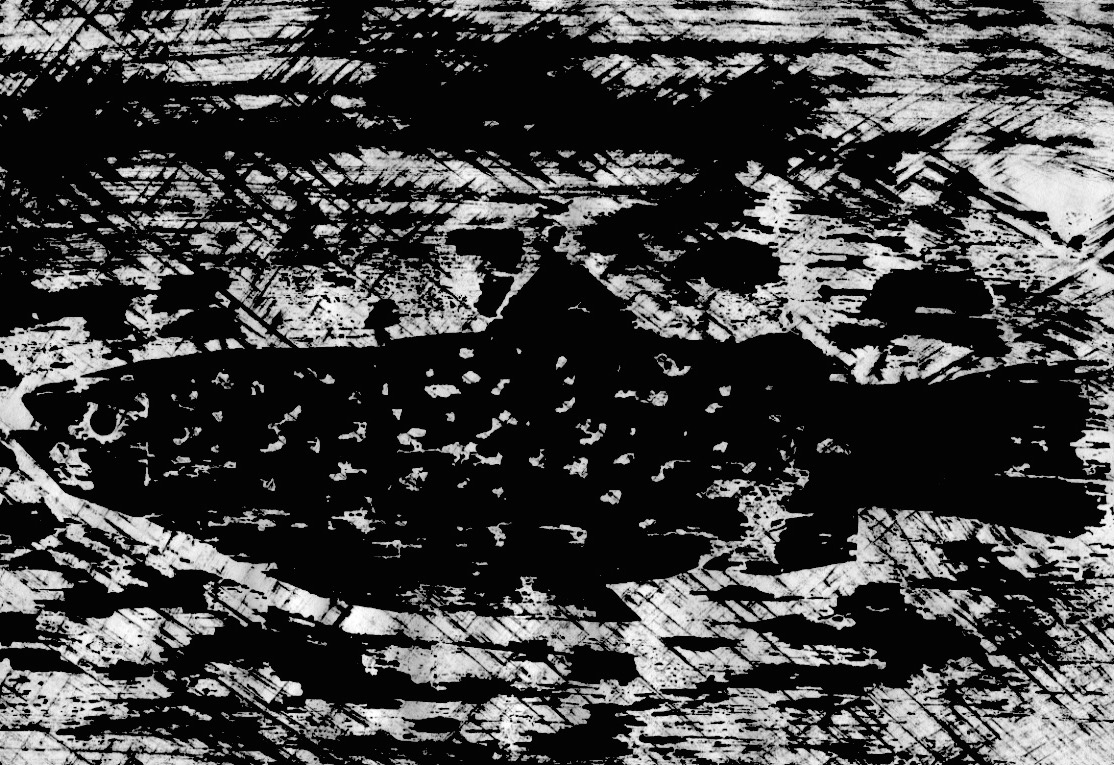
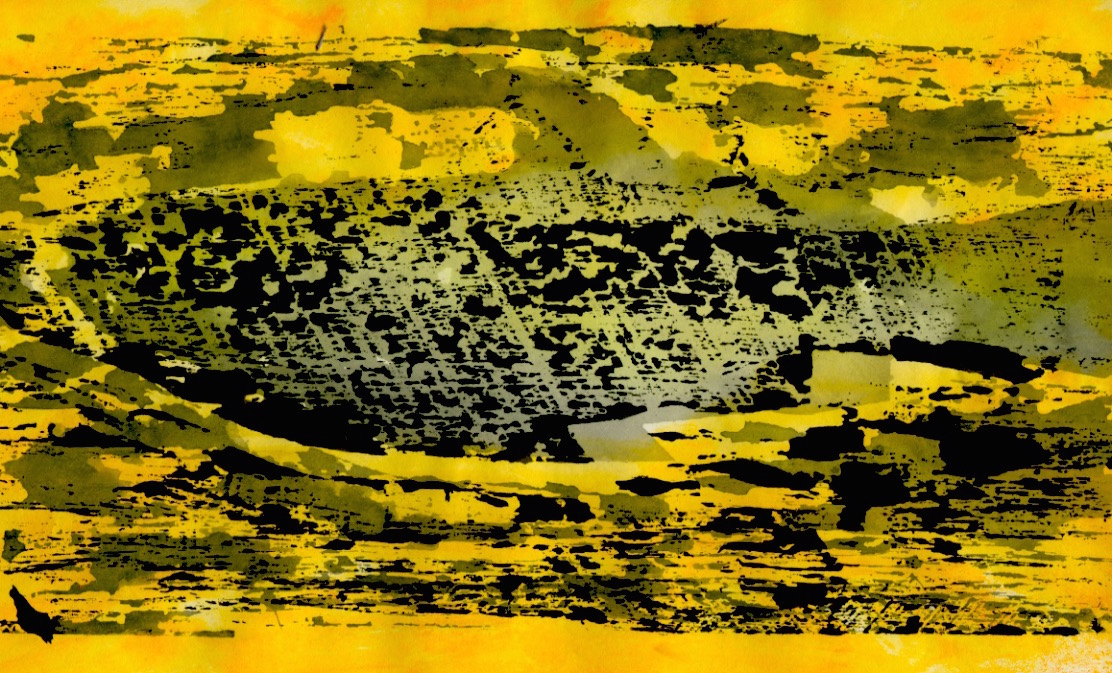
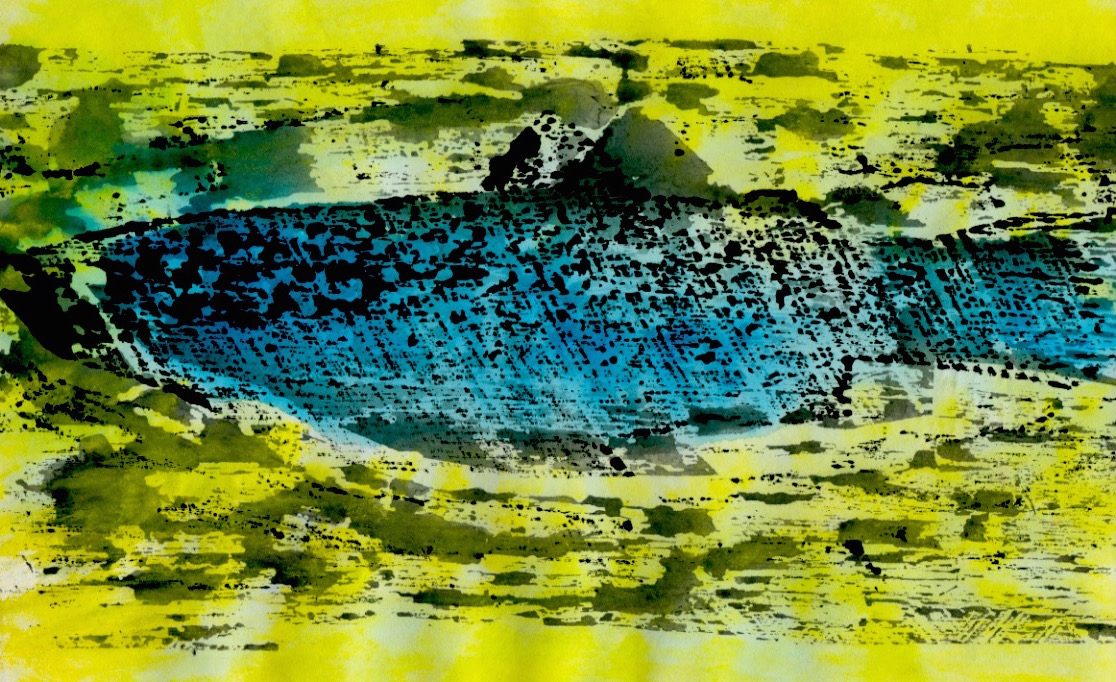
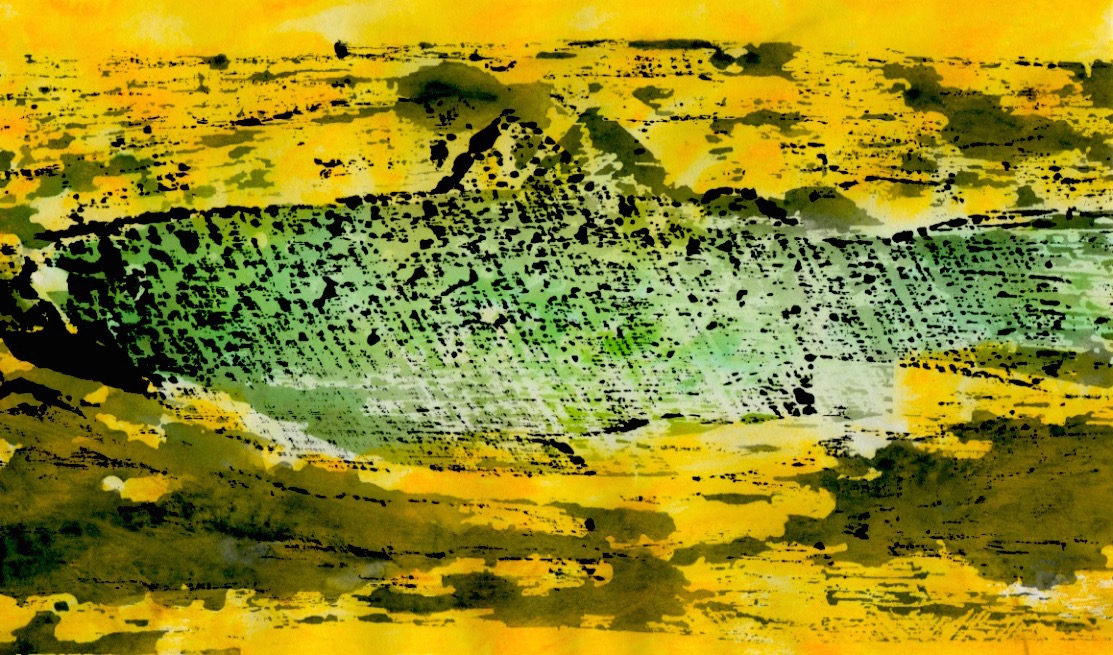
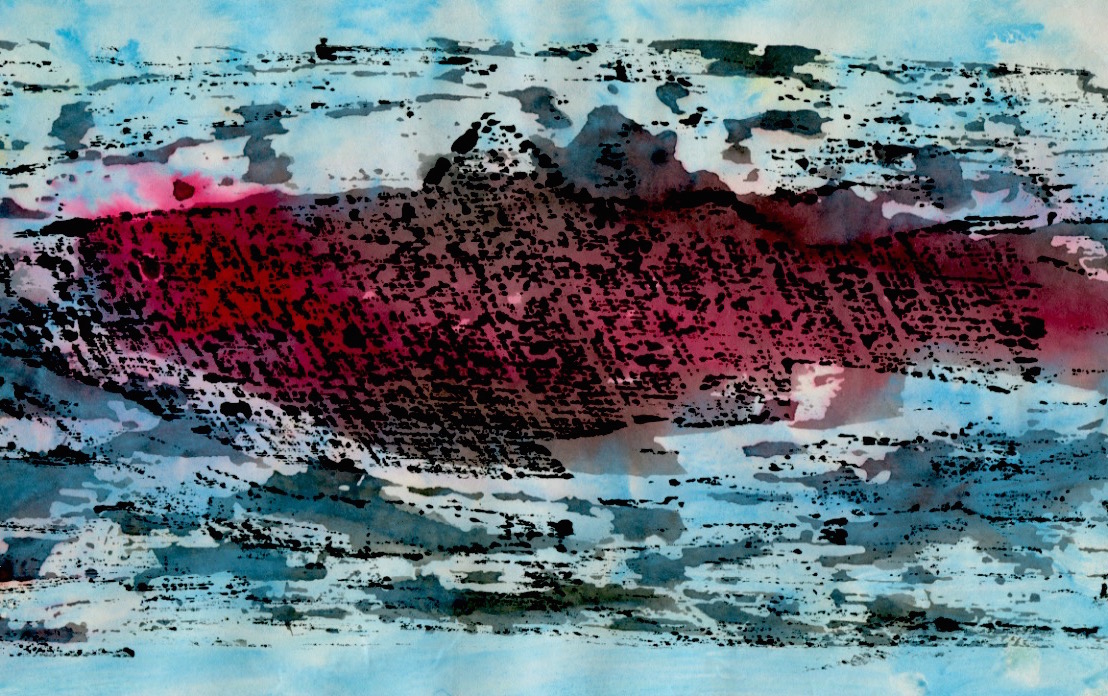
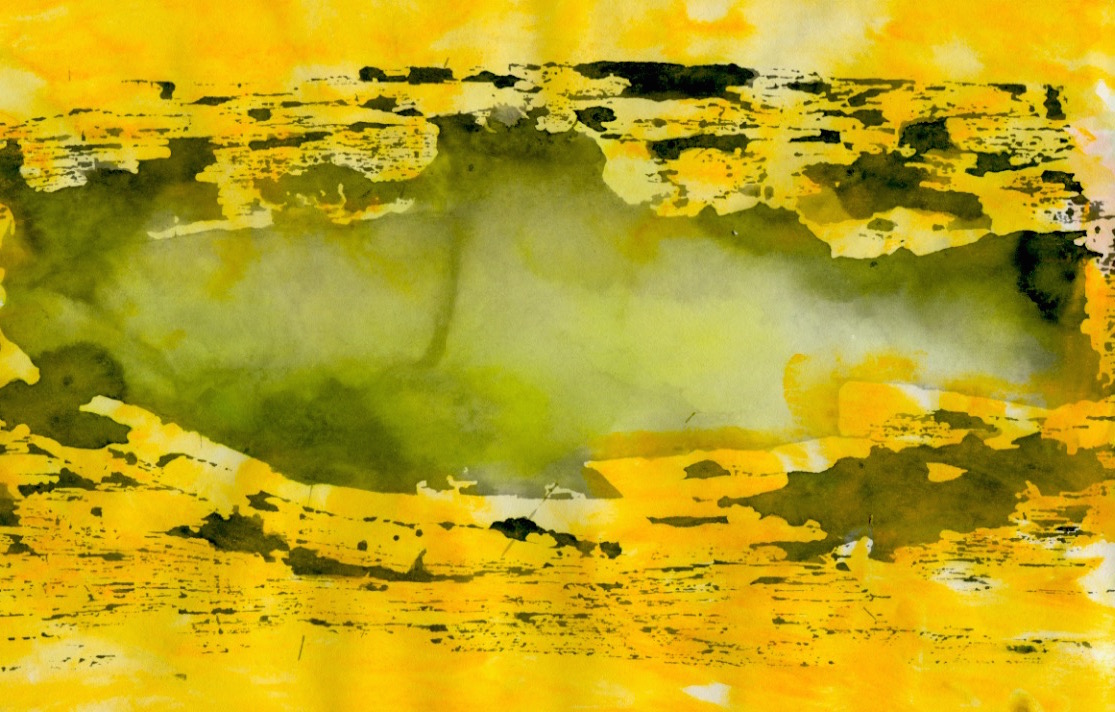
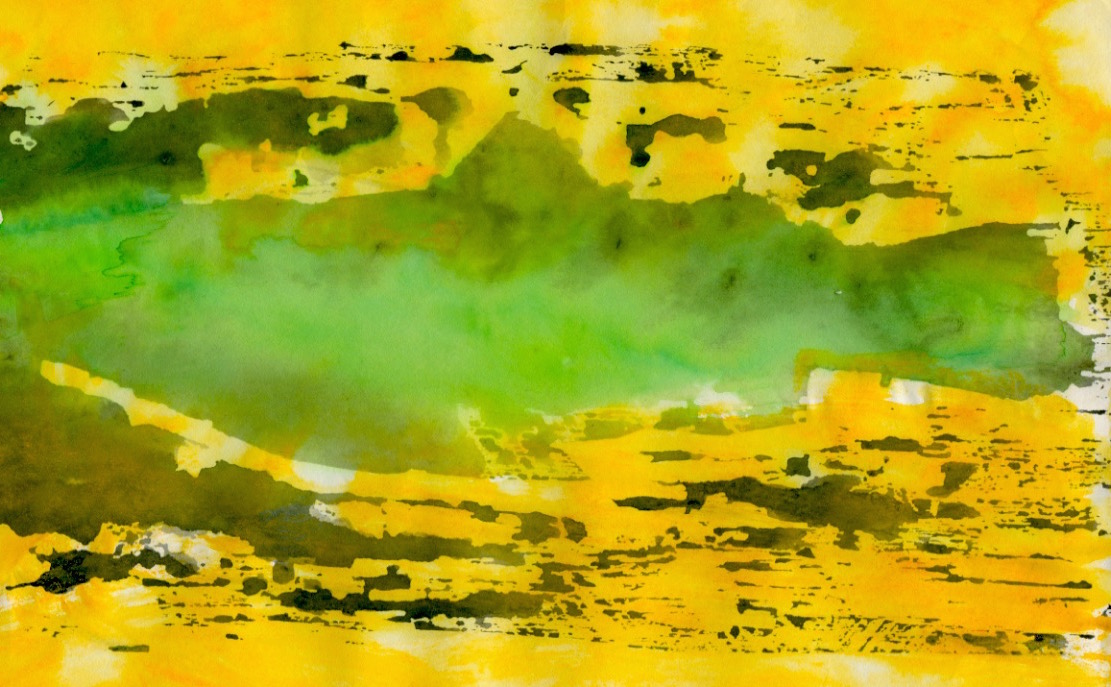
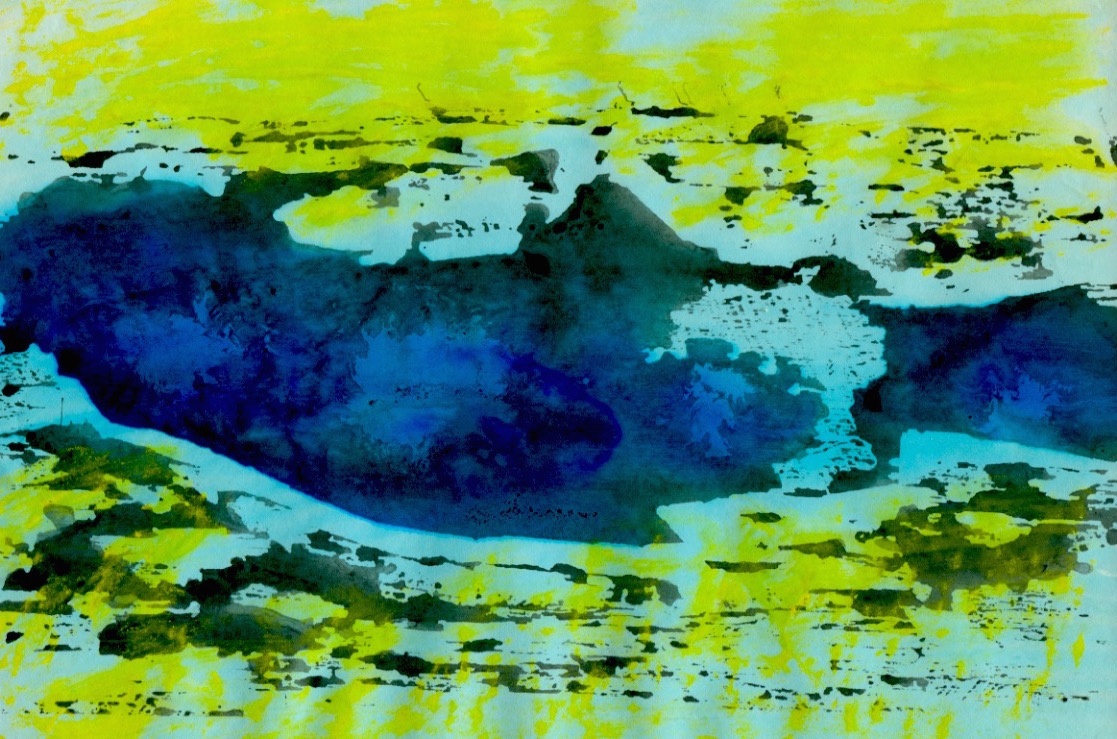
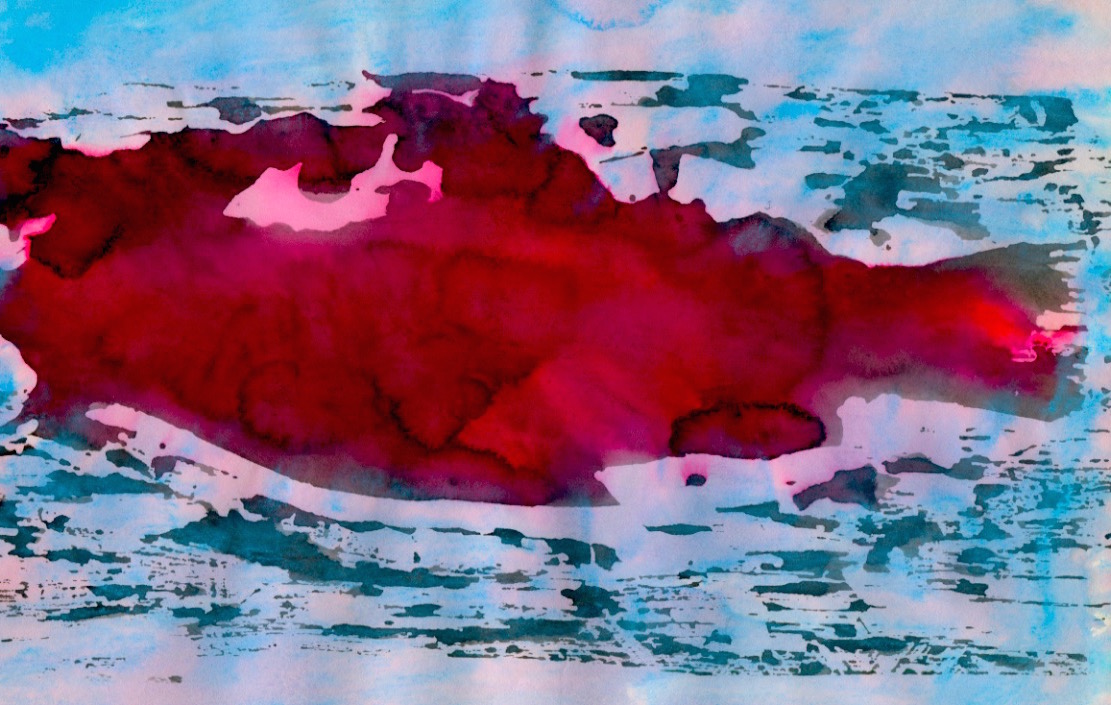
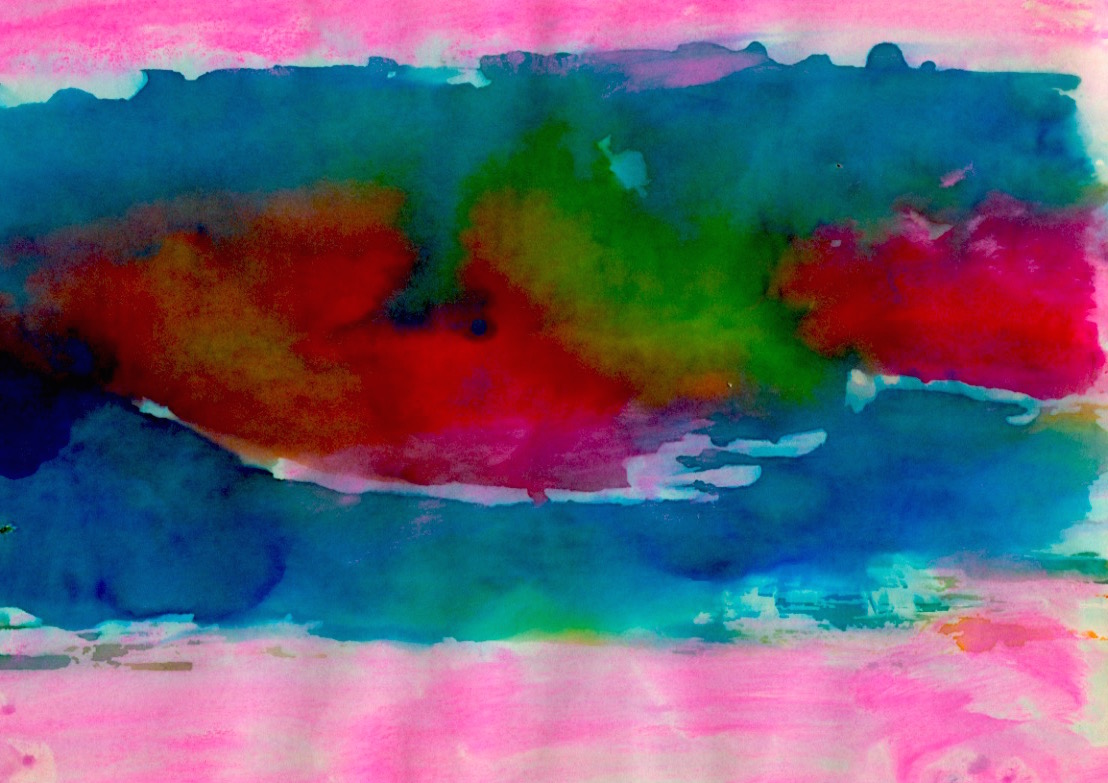
This is the third post based on the fish prints I made using woodblock printmaking techniques…for the experimental animated film Toxic Fish. The fish in this sequence is the Kohada or Gizzard Shad. Its static shape on the woodblock contrasts with the flooding of coloured toxins around it.
Making overlay textural effect inking of a sequence of prints on the floor of the studio…for inclusion as frames in the animation. (Photo by Louise Graber).
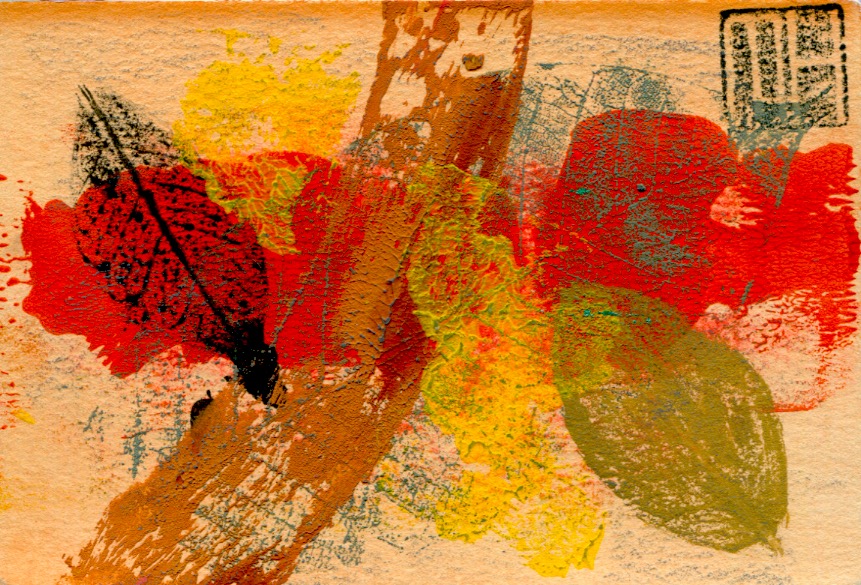
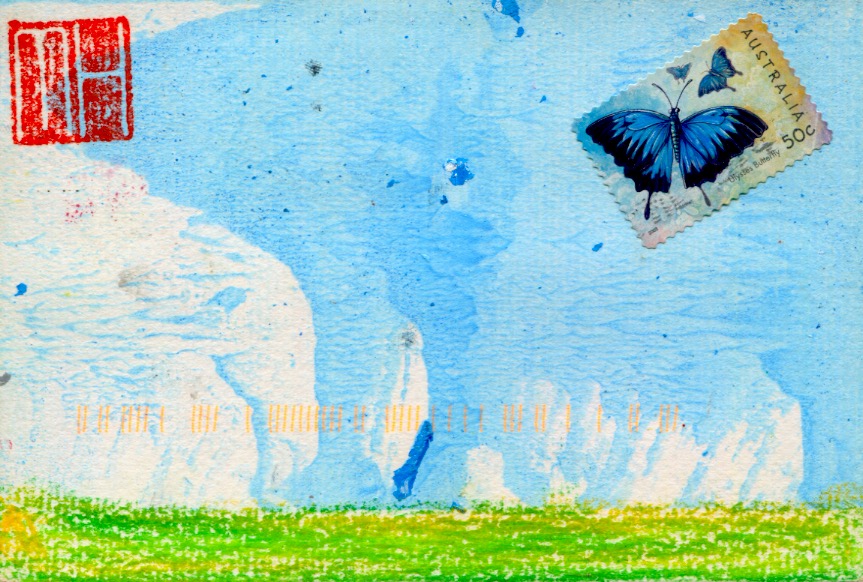
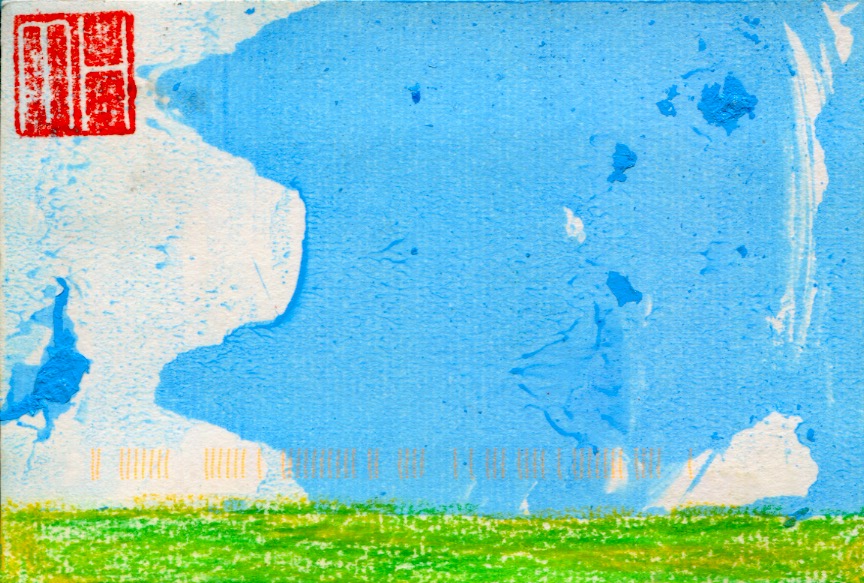
Continuing the profiling of my art postcards here are some early ones from the years 2007-2009 on the theme of The Seasons. These cards were hand-printed, created from a combination of drawing and printmaking in low print run editions. Once I finished a session it was the end of that particular batch and I would discontinue using the design. Cards in an edition are all original prints, named monoprints, i.e. the cards look similar in design and together form a series with no exact duplicates, but variations…thus the label of monoprints. The cards fall within the standard postcard size dimensions of 10cm x 15cm. The horizontal band of vertical orange print marks visible on some cards come courtesy of Australia Post…my cards were stamped on the surface with a code as part of the postal process. Consequently I began to post my cards in an envelope. More information about this project is contained on the three previous POSTCARD posts (see the links below).
This is the second post in my series of fish prints created using the woodblock printmaking method…for my experimental animated film titled Toxic Fish. Dramatically, after ocean fish are poisoned their bodies swell up, die and disintegrate. The static shape of the fish from the woodblock design starts firm before being flooded by toxins. It then falls apart to illustrate this. The method I employed was to gradually over-ink the block. This resulted in details being dampened into puddles…definition and sharpness were blurred and reduced into a dramatic sequence of atrophy.
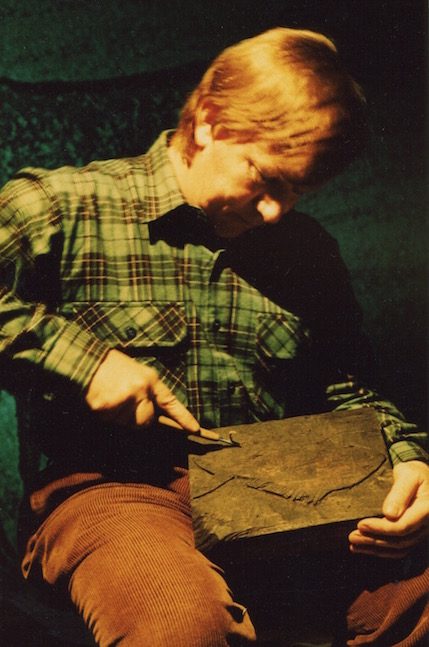
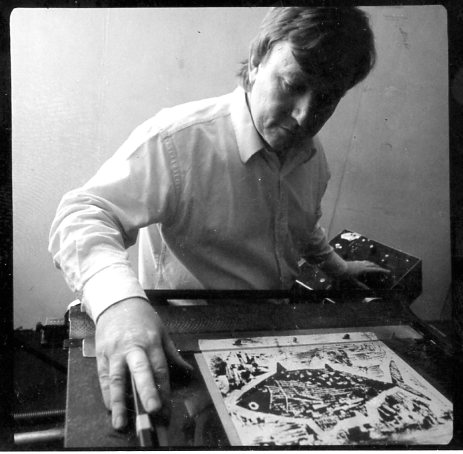
Below is a photo of me carving one of the blocks using a Japanese chisel. I must add that this is not the recommended way to of doing it! It has been posed for a photograph and shows a compromised pose of the process for promotional purposes. The woodblock carving process is done on a fixed bench with one carving away from, not towards, one’s body.
This post continues the profiling of production of my hand-made art postcards in limited editions… featuring more examples from the Abstract series…and as previously stated each postcard is an original…a monotype, similar in design but not an exact duplicate of any other card.
Cards in an edition are all original prints…similar in design but with no exact duplicates…as can be seen in the following four examples from the Abstract No-14 series. These cards were all made in the same batch…during the same printmaking session…however, variations in colour, texture and positioning of compositional elements can be detected.
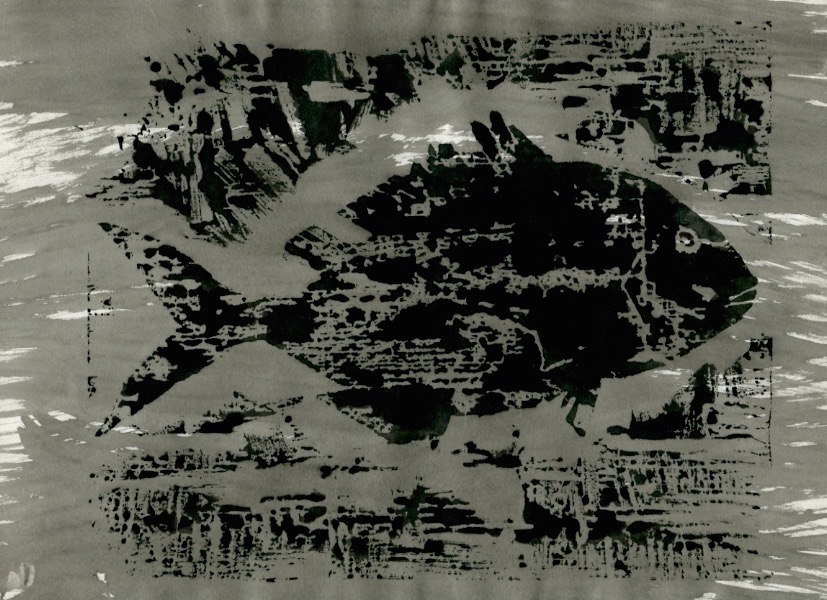
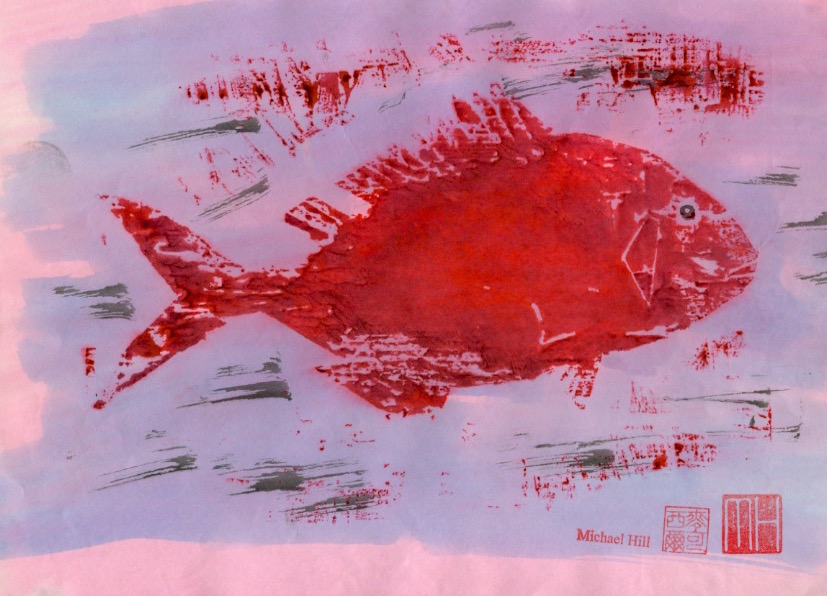
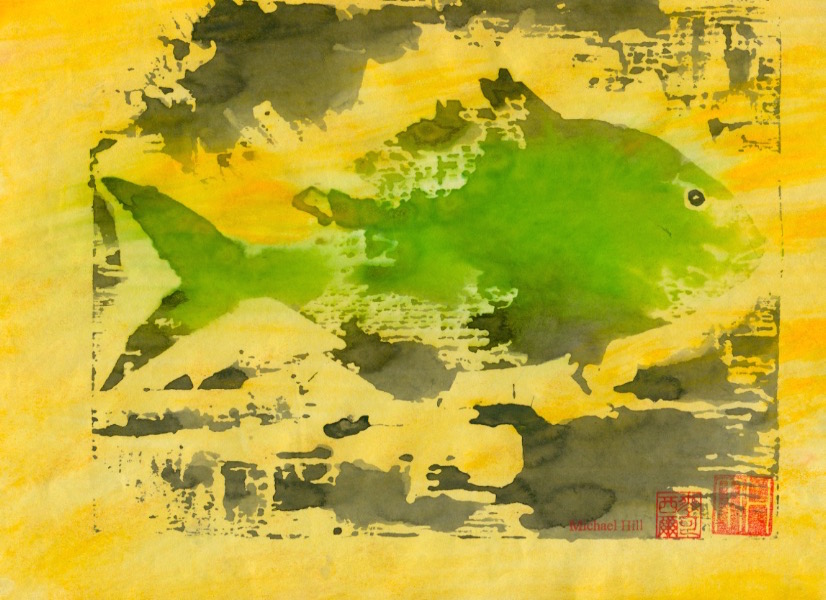
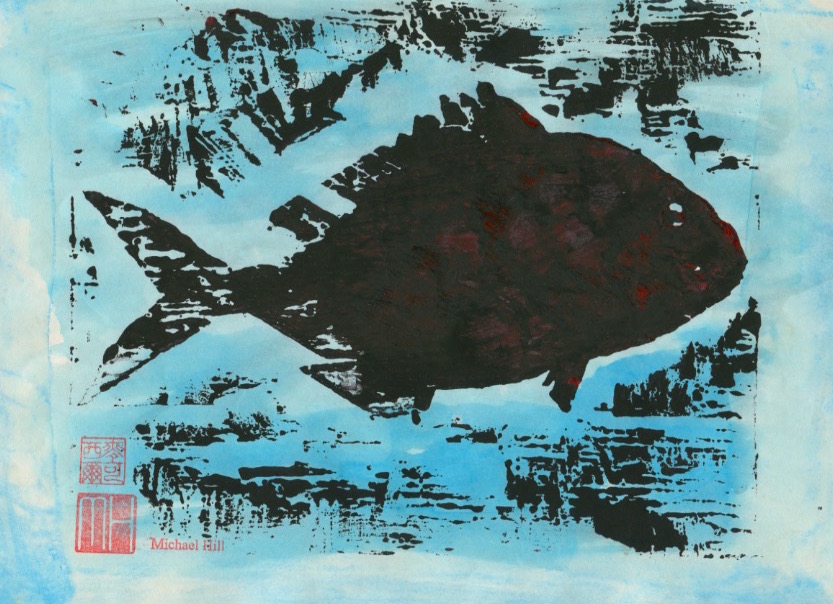
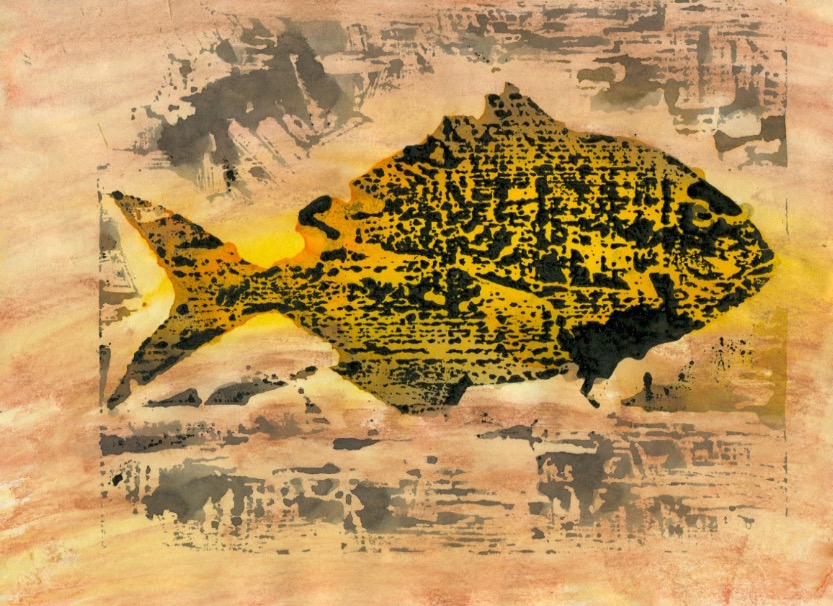
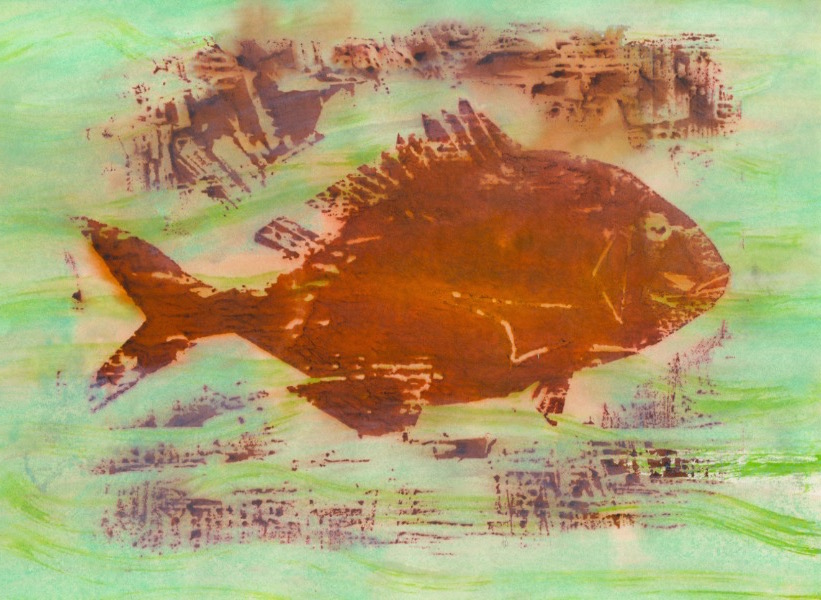
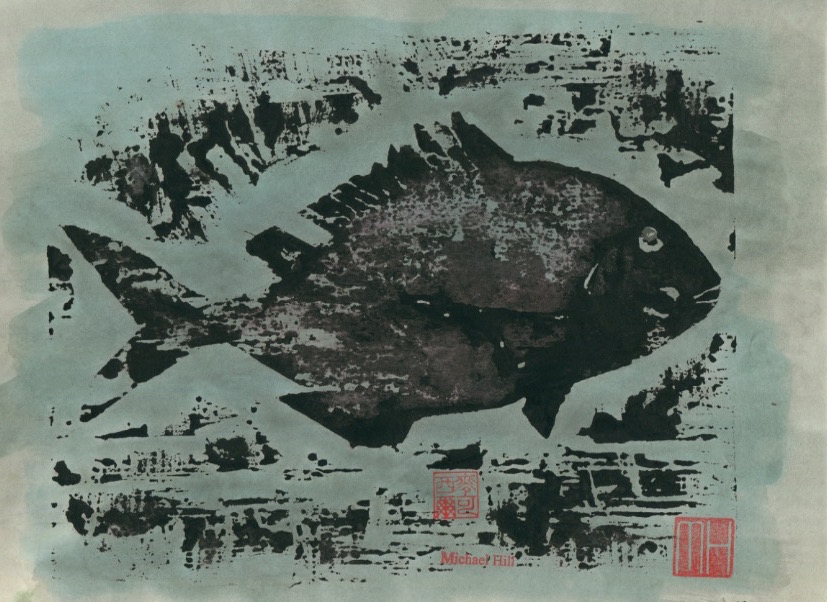
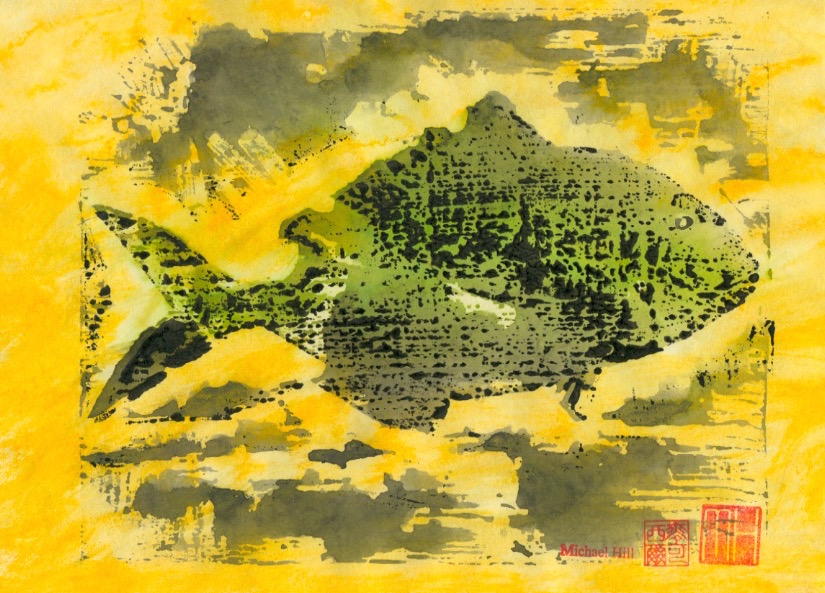
This series of posts will profile a collection of creative prints that I have made, beginning with a series of fish. I used the woodblock printmaking method with variations in inking to make monoprints so that the prints produced could also be used in animation sequences. Six species of fish were featured, the first of which is the Japanese Tai or sea bream. I was very attracted to the idea of working in both animation and printmaking at the time but found it difficult to sustain both in the available time and ultimately had to choose between the two. I found the solution in combining both mediums. Animation’s enormous need for artwork could be more speedily met by using the printmaking medium. I was doubly happy but have since settled on making comics which falls in the space located somewhere in-between and requires a lot less artwork.




























 Doctor Comics