Tag: visual diary

BLOTTING PAPER The Comic: Production Report No.11

Art, Blotting Paper, Comics March 21, 2013

This post continues reportage of the production of my artist book/comic Blotting Paper: The Recollected Graphical Impressions Of Doctor Comics.  It describes the use of printmaking in the image-making process, including the creation of landscapes of subconscious terrain.
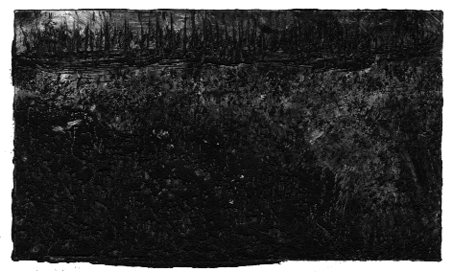
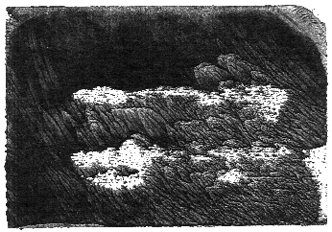
Dark glade-first impression. (Monoprint-© 2008 Michael Hill)
Dark glade-first impression (monoprint-© 2008 Dr. Michael Hill a.k.a. Doctor Comics)

Doctor Comics finds himself in a shadowy landscape during an intense dream experience. I have tried to express the inky and murky feel of this etheric place he traverses. To achieve this I made a series of monochromatic monoprints.
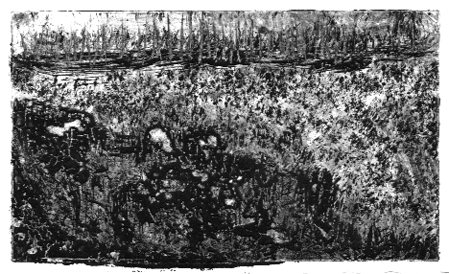
Dark glade-second impression. (Monoprint-© 2008 Michael Hill)
Dark glade-second impression (monoprint-© 2008 Dr. Michael Hill a.k.a. Doctor Comics)

This landscape can be seen more clearly as more light is added to each successive image. Despite the extra light he still finds it hard to trace his way through.

Dark glade-third impression. (Monoprint-© 2008 Michael Hill)
Dark glade-third impression (monoprint-© 2008 Dr. Michael Hill a.k.a. Doctor Comics)

These prints were made using an etching process. It was a novel method of printmaking that involved exposure of the design to a light sensitive plate. This process marked the lines on a gelatin coated metal plate. The plate was then rubbed with a stiff brush under running water to carve the lines. This process is known as solar plate etching.
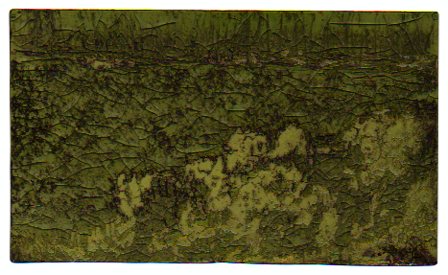
Dark glade-the etching plate following exposure to sunlight and wetbrush. (Design-© 2008 Michael Hill)
Dark glade-the etching plate after exposure to sunlight and wet brushing. (Design-© 2008 Dr. Michael Hill a.k.a. Doctor Comics)
The inky black lake scene (Monoprint-© 2011 Michael Hill)
The inky black lake scene (monoprint-©2011 Dr. Michael Hill a.k.a. Doctor Comics)

A deliberate ‘blotting’ effect was obtained from pressing a saturated inked block onto highly absorbent blank paper. This was for a scene from the second issue. After printing, the paper was peeled off the block carefully to avoid tearing. This was due to the combination of the wet inked areas and the paper’s soft, tissue texture.
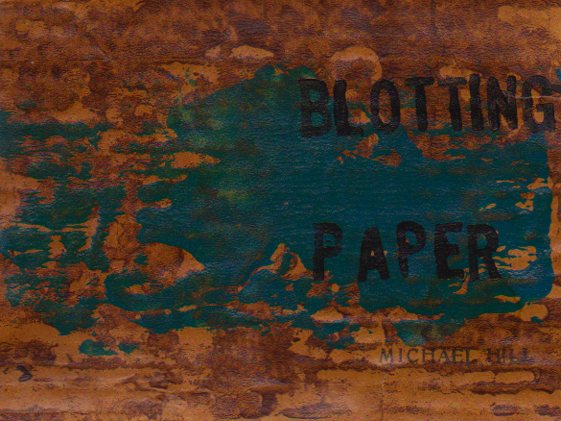
Proposed cover or insert (Monoprint-© 2011 Michael Hill)
Proposed cover or insert (monoprint-©2011 Dr. Michael Hill a.k.a. Doctor Comics)

This unused print from the first issue remains a possible cover or insert in the second issue.
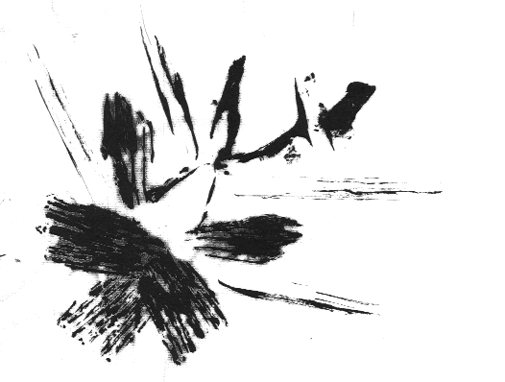
Fish tail print (Monoprint-© 2011 Michael Hill)
Fish tail print (monoprint-©2011 Dr. Michael Hill a.k.a. Doctor Comics)

Tails and fins of a cooked fish were inked and printed for some of the images used in Chapter 1. This approach was inspired by the Japanese sosaku hanga printmaking method. That involves inkable flat objects employed as ‘blocks’ as an alternative to woodblocks. The resultant graphic effect is shown in the print above. Photos of the image-making process involved in making that print are below.

Printing the fish tails (Monoprint-© 2008 Michael Hill)
Printing the fish tails (Photos by Louise Graber)
Proposed back cover print (Monoprint-© 2010 Michael Hill)
Proposed back cover print (monoprint-©2010 Dr. Michael Hill a.k.a. Doctor Comics)

Another unused print, above, from the first issue is a possible inclusion as a postcard insert in this issue. It was constructed from a combination of woodblock and object prints. I know I seem to be pushing the printmaking cart here but it has really got me going. I would love to hear of your experiences of printmaking, if you have done that, Michael.

(All text, photos and artwork-©2013 Dr. Michael Hill).

BLOTTING PAPER The Comic: Production Report No.10

Art, Blotting Paper, Comics December 23, 2012

This is a further report on the production of my graphic novel Blotting Paper. This post focuses on print layers used to create the cover design. Planned for the first issue but not used until the second here are some images of the printmaking procedure.

Uninked title block drying in the sun-© 2011 Michael Hill.
Uninked title block drying in the sun-© 2011 Dr. Michael Hill a.k.a. Doctor Comics.

The type was assembled in reverse so that it read the right way when printed. A plywood block was used as a base and the rubber letters glued onto it.

Background texture formed the first print layer-© 2011 Michael Hill.
Background texture formed the first print layer-© 2011 Dr. Michael Hill a.k.a. Doctor Comics.


Colour overlay on background-© 2011 Michael Hill.
A blue overlay was printed on the background to form the second layer-© 2011 Dr. Michael Hill a.k.a. Doctor Comics.

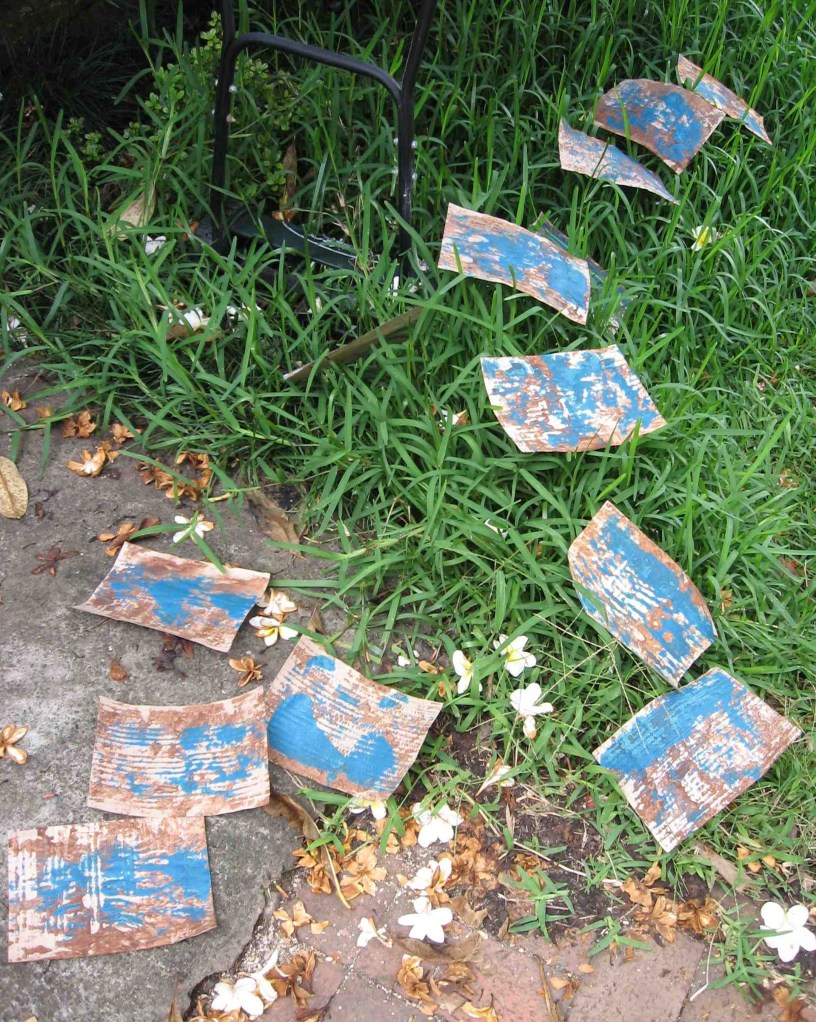
Working in a small studio I had no bench space for drying. Letting the prints dry outside on the ground in the Spring sunshine proved a fast way to obtain the dryness. The prints were vulnerable to a breeze and were blown into the grass and garden.

Prints on the grass.
Prints on the grass making a run for it–© 2011 Dr. Michael Hill a.k.a. Doctor Comics.

I didn’t mind if some of these wind blown wet prints landed face down on the grass and were smudged.

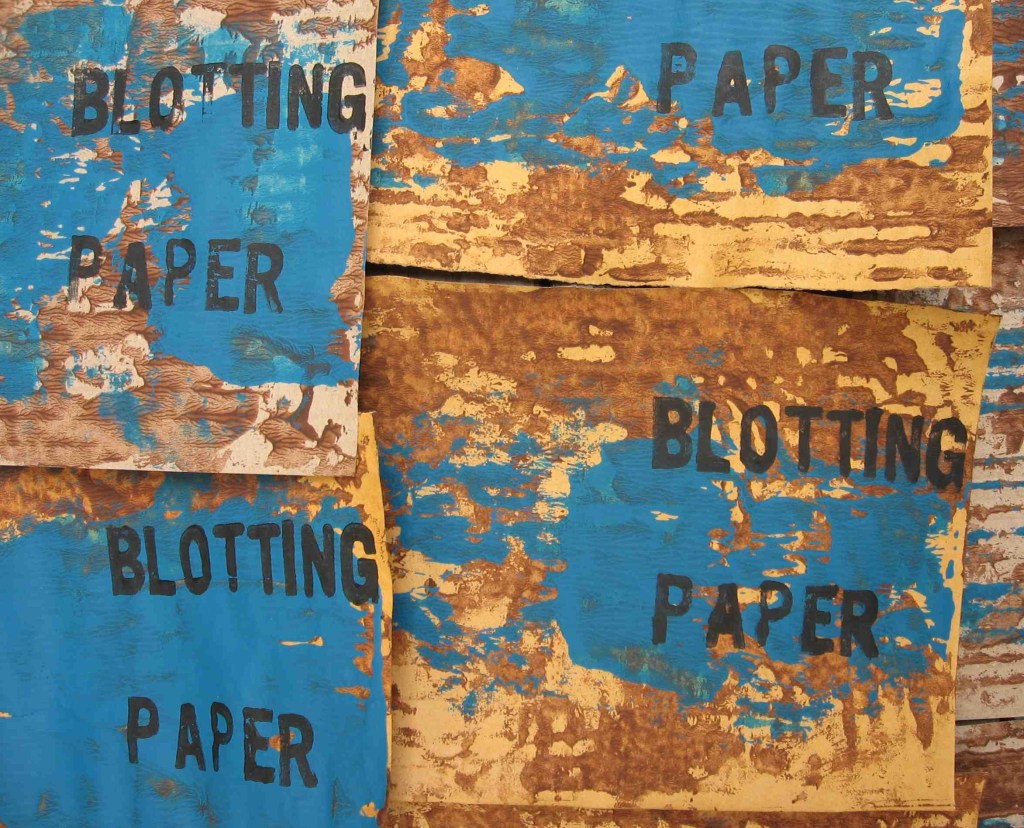
Typographic design of title on overlay and background-© 2011 Michael Hill.
Title design printed on overlay and background-© 2011 Dr. Michael Hill a.k.a. Doctor Comics.

The final stage involved printing the type over the blue overlay and brown background.

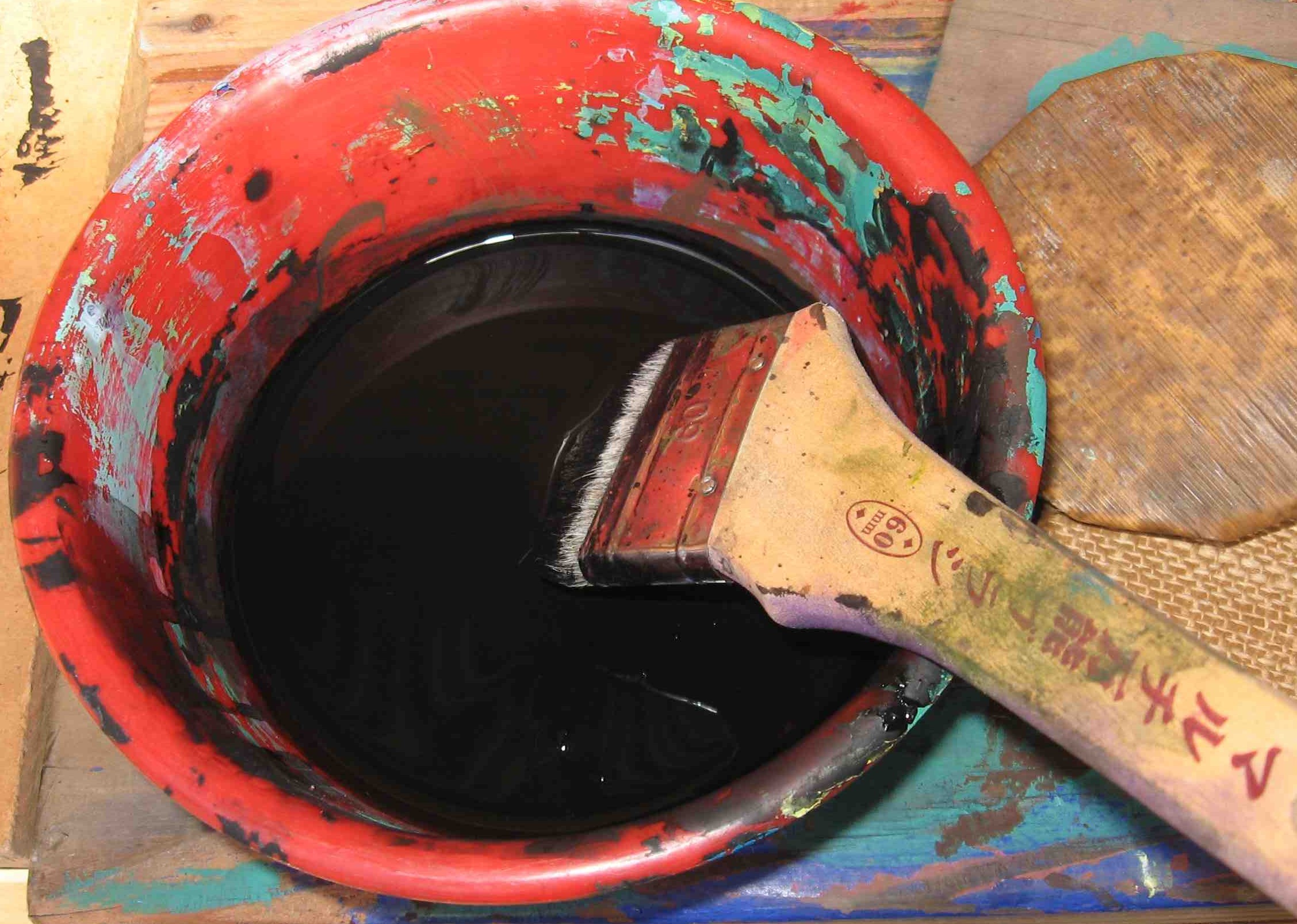
A bowl of sumi ink and a brush
A bowl of sumi ink, a brush and a bamboo baren. (Photo by Dr. Michael Hill a.k.a. Doctor Comics)

Following the Japanese creative print approach of using sumi ink enabled me to obtain solid blacks. The ink was brushed onto the block. Then the paper was placed face-down onto this and rubbed with a bamboo baren to make firm contact.

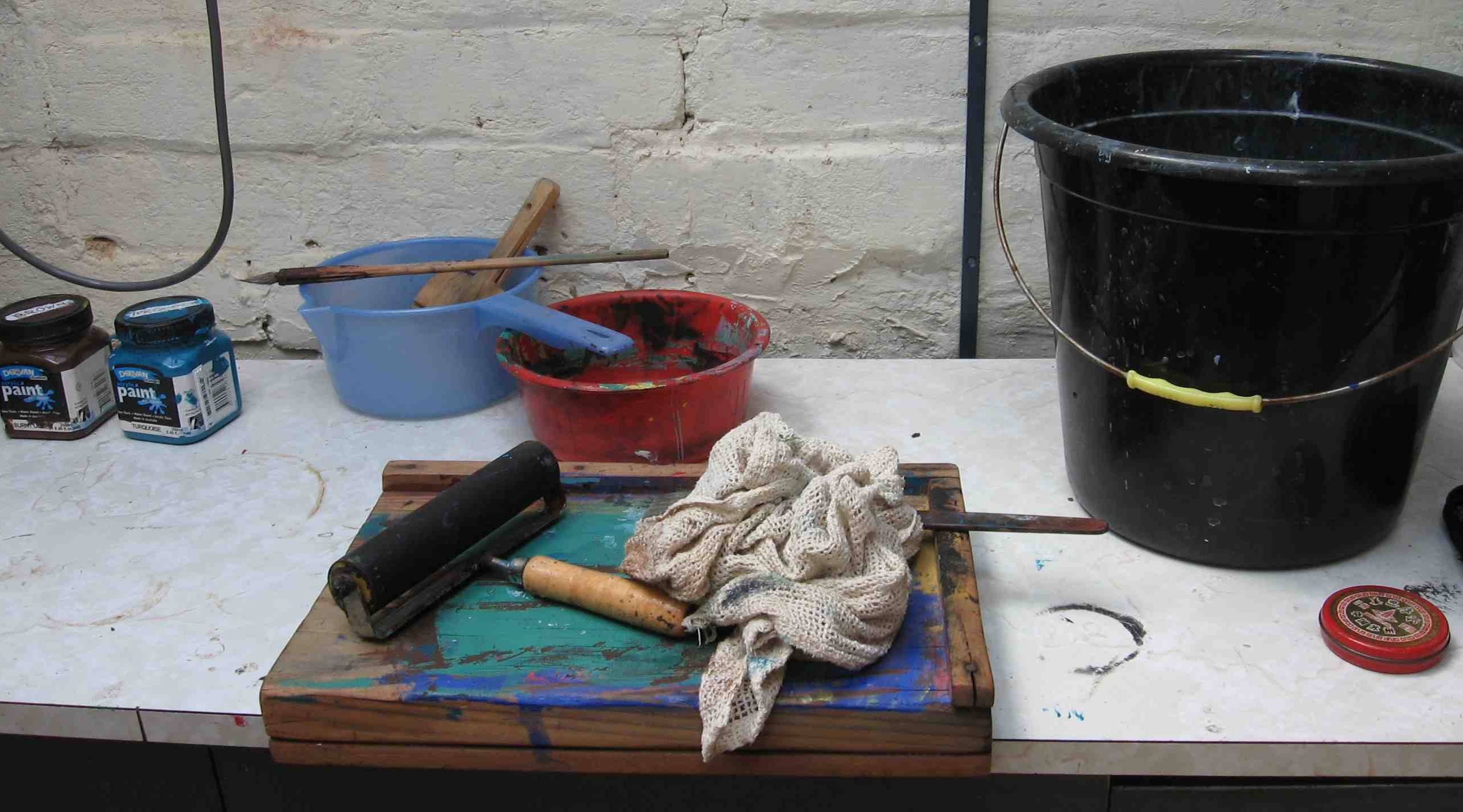
Bench hook and roller on studio bench.
Bench hook, roller, rag and bucket on studio bench. (Photo by Dr. Michael Hill a.k.a. Doctor Comics)

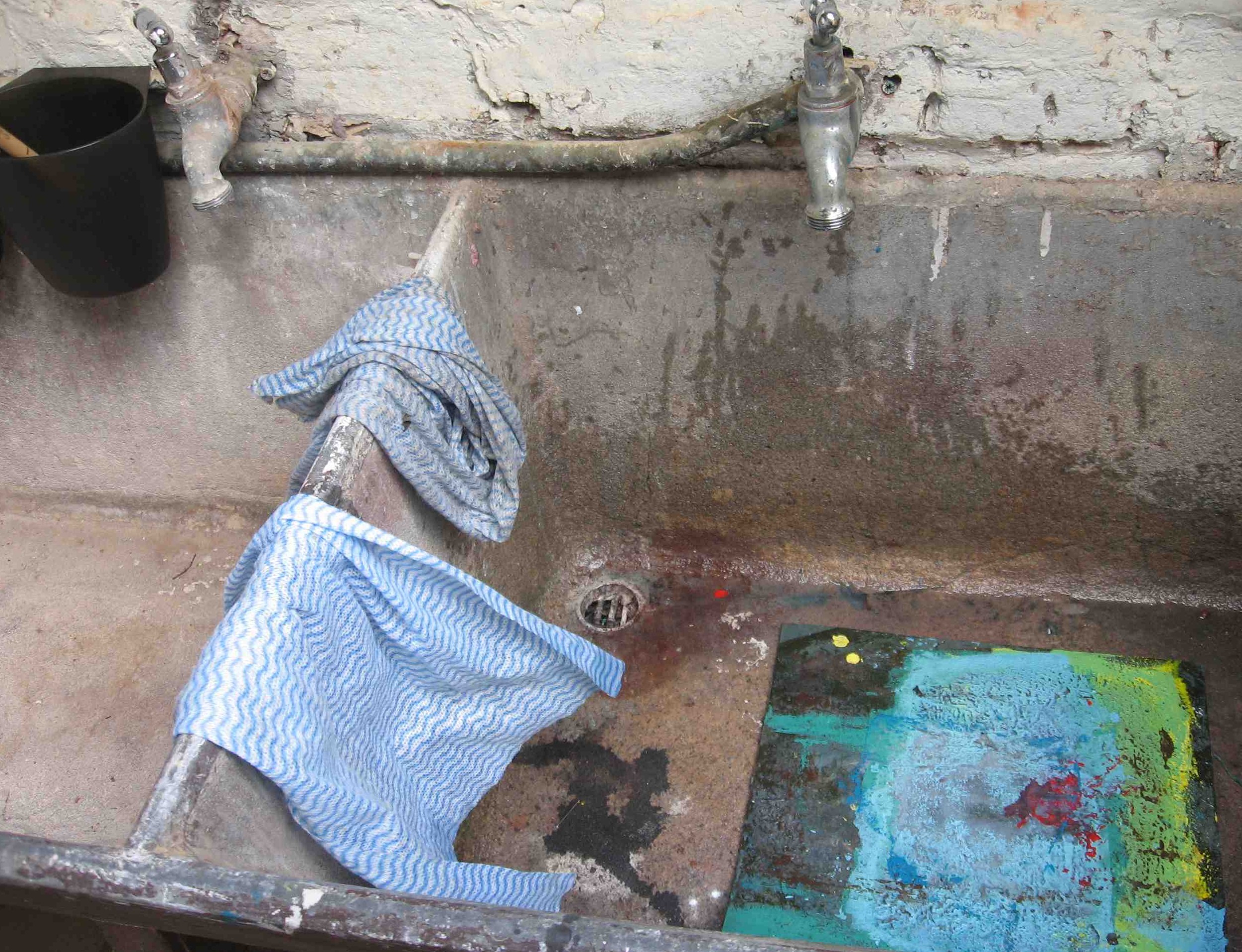
Materials used included ink, rags, cloth, plus water for washing the blocks, brushes and hands.

Water, cloths, sink and block.
Water, cloths, sink and lino block. (Photo by Dr. Michael Hill a.k.a. Doctor Comics)

Despite the implied reference to woodblocks in Japanese print techniques the wood may be replaced by other materials. These include vegetables, fruit, leaves, rubber and other objects that are sufficiently flat to be inked and pressed onto paper. The creative print (sosaku hanga) approach places the emphasis on the act of making the print. It’s a joy! Please let me know if you share the joy of printmaking…or wish to make any comments about this post and blog, Michael.

Printmaking attire.
Ink-stained printmaking attire. (Photo by Dr. Michael Hill a.k.a. Doctor Comics)

(All text, photos and artwork-©2012 Dr. Michael Hill a.k.a. Doctor Comics).

BLOTTING PAPER The Comic: Production Report No.9

Art, Blotting Paper, Comics August 21, 2012

Work continues on the production of the second chapter of my artist book/comic…Blotting Paper: The Recollected Graphical Impressions Of Doctor Comics. This report looks back at two of the main characters from the first chapter, the feline characters Cohl and Busch. These are funny animal characters that belong to Doctor Comics.

The cats in my Blotting Paper comic. (Felt pen drawing-©2012 Dr. Michael Hill a.k.a. Doctor Comics)

These feline characters Cohl and Busch are named after famous cartoonists of mine Émile Cohl and Wilhelm Busch. They live in the apartment with Doctor Comics as his companions. They l-o-v-e fish! They also know about comics, as much and possibly more than their owner, the so called Doctor Comics. In lecturing mode Doctor Comics has been known to channel Cohl! That cat is incredibly well read but with a distinct bias toward bandes dessinées.

The subconscious landscape. (Monotype print-©2012 Dr. Michael Hill a.k.a. Doctor Comics)

Printmaking is playing a formidable role in the design of the spirits, ghosts and apparitions in this chapter. I am experimenting with sequential prints. This is a hangover from my animation days when I utilised the technique to generate large volumes of artwork.

Dreaming time. (Monotype print-©2012 Dr. Michael Hill a.k.a. Doctor Comics)
Monotype print in sumi ink of etheric body. (© 2012 Michael Hill)

Monotype print in sumi ink of etheric body. (© 2012 Dr. Michael Hill a.k.a. Doctor Comics)

In this chapter the Doctor Comics character is teleported into the supernatural world via a dream experience. To obtain a shadowy landscape for some ethereal figures he encounters, sumi-ink blots have been soaked on soft paper. Over and under-inking the blocks has resulted in intense black or under-inked white patches on the printed paper.

Monotype print in sumi ink of etheric body. (© 2012 Dr. Michael Hill a.k.a. Doctor Comics)

This dream sequence occurs toward the end of the chapter. There Doctor Comics confronts fearful looking ghostly figures that step out from the background. The monotype printing method and the use of sumi ink enabled the making of experimental images with a restricted palette. The incorporeal characters were manifested and embodied in this manner. Examples of these are in the monoprints of the etheric body and the shadowy phantoms above and below this paragraph.

Monotype print in sumi ink of shadowy phantom. (© 2012 Dr. Michael Hill a.k.a. Doctor Comics)

And it’s not all ghostly material. There are also some amusing moments of Doctor Comics buying graphic novels, interacting with his cats and cooking.

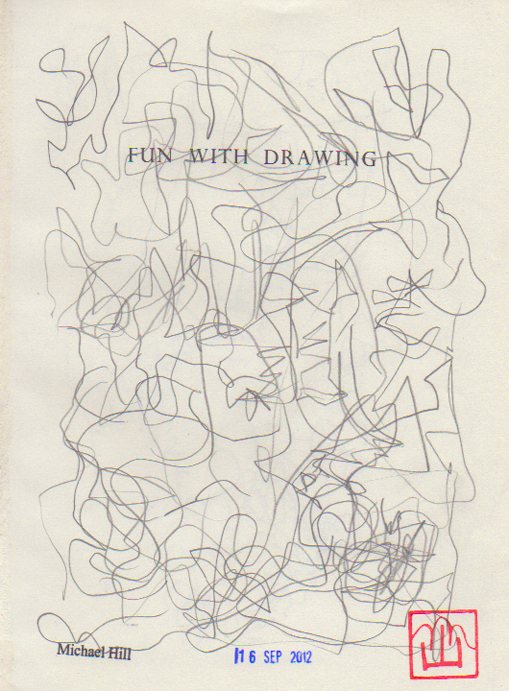
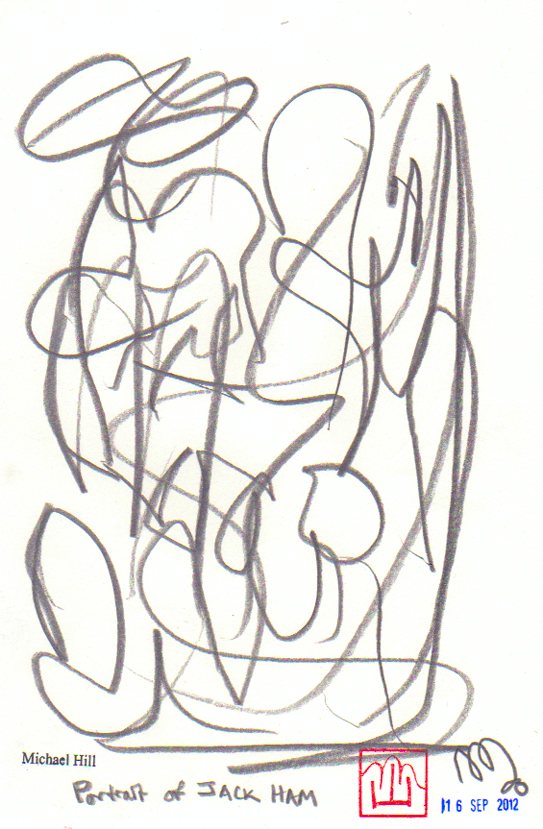
Abstract drawing. (© 2012 Dr. Michael Hill a.k.a. Doctor Comics)

This new chapter also includes experimental approaches to drawing including abstract, contour and blind contour. It’s creative fun time with this drawing process.

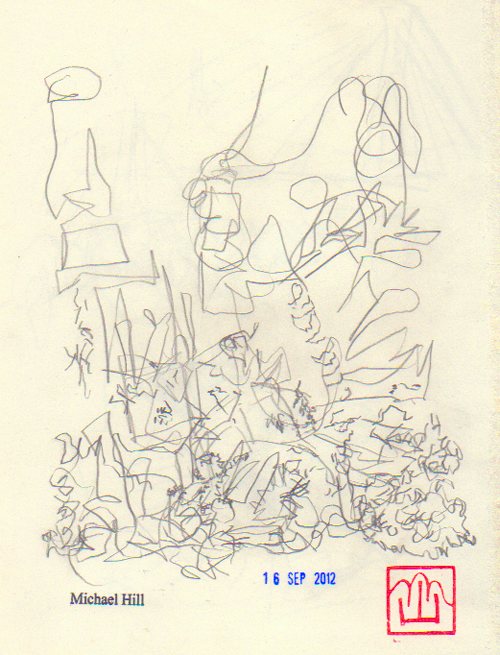
Abstract contour drawing.(© 2012 Dr. Michael Hill a.k.a. Doctor Comics)

Using line as an element of construction and expression, drawn, printed or written, although restrictive, is quite expressive. I find that drawing details very carefully of constantly changing scenes with accompanying alterations in point-of-view leads easily into abstraction.

Abstract drawing to music.
(© 2012 Dr. Michael Hill a.k.a. Doctor Comics)

Drawing anything whilst listening to music invariably produces a pattern of abstract lines on paper that is most expressive. I follow the lines whilst I am making them and try to keep up with the tempo of the music. No erasers! A quicker tempo produces less inhibited lines and surprising shapes.

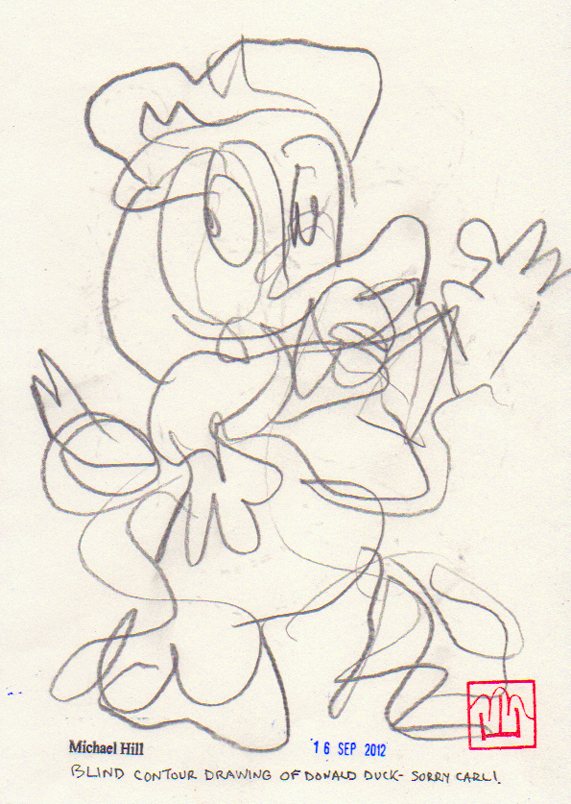
Blind contour drawing of Donald Duck.
(© 2012 Dr. Michael Hill a.k.a. Doctor Comics)

Another fun drawing exercise I have utilised is copying a character or object without looking at my drawing. I try to follow the outlines of the object but don’t look down to see how the drawing looks. Without the constant checking things can drift and shift out of perspective and registration. The contours can be accurate but out of place. How about you? Do you draw? Have you ever created images using printmaking methods? I would love to hear. Feel free to post a comment about your image-making approach on this blog and I shall respond. Till next post, Michael.

(All text, photos and artwork. (©2012 Dr. Michael Hill a.k.a. Doctor Comics)

BLOTTING PAPER The Comic: Production Report No.8

Art, Blotting Paper, Comics, Japanning June 28, 2012

This is the first report documenting the production of the second issue of my artist book/comic…Blotting Paper: The Recollected Graphical Impressions Of Doctor Comics. The new chapter is titled A Blot on His Escutcheon. It delves deeper into the character of Doctor Comics, the environment in which he lives and his life in comics. I am making progress with this and hope to self-publish it next year. The book is partly based on my career in art and design education in Sydney. I worked within these disciplines and their application within the areas of film, video, animation and visual communication. I have employed aspects of comics art in my teaching. Storyboarding, word and image projects and as a medium in itself are examples. I have also employed it in my study and research…the presentation of lectures and conference papers…the staging of conferences, symposiums and exhibitions and the writing of a doctoral thesis. My own comic has fictive passages as well as auto-biographical elements. Printmaking is being utilised as an image-making medium. This includes the Japanese sosaku hanga method, along with pen and ink drawing, collage and found materials.

Proposed title page for issue #2(Pen and ink drawing and collage-© 2012 Dr. Michael Hill a.k.a. Doctor Comics)

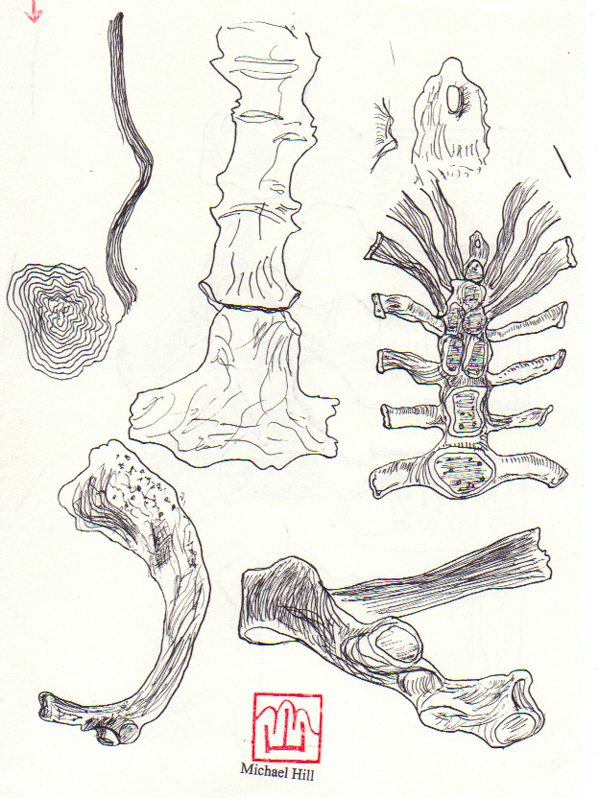
I’m currently learning to draw bones by reading the osteology chapters in anatomy books and studying the illustrations really carefully. In Chapter 1 I used fish bones as an image and as a printmaking substrate for the sosaku hanga technique. In Chapter 2 there will be drawings of human bones of the hand and foot. I have had the opportunity to study some broken bones incurred in falls from bicycles. Speaking of cyclists I also make reference to the Bookseller of Glee character.

Bones of the hand and foot. (Pen and ink drawing-© 2012 Dr. Michael Hill a.k.a. Doctor Comics)

This bookseller rides a penny farthing type of bicycle and will play a part in this issue. I had my portrait of this fine gentleman in the Glebe Sesquicentenary Art Exhibition(see below). It was also a finalist in the 2010 Bald Archy Prize. Titled The Bookseller of Glee (mixed media-drawing, painting and collage on paper)…it is a postmodern portrait of Roger Mackell, co-owner of Gleebooks (4 times Australian Bookseller of the Year). He is a generous character gleefully disseminating books and promoting the joy of reading. The portrait caricatures him and his store’s contribution to the intellectual life of Glee Village and its nearby universities. In my portrait the main street is constructed from the writings of French literary critics and philosophers…whose work the bookshop stocked in the 1980s.

The artist…Dr. Michael Hill a.k.a. Doctor Comics and his portrait of a particular Glebe bookseller. (Photo by Louise Graber)
More bones (pen and ink drawing-© 2012 Michael Hill)
More bones (pen and ink drawing-© 2012 Dr. Michael Hill. a.k.a. Doctor Comics)

I have been drawing more bones. In the meantime I am putting a call out for feedback on this post. I would really love to hear what you think of what I am doing with my blog and bones.

Bones of the hand, heel and hips. (Pen and ink drawing-©2012 Dr. Michael Hill a.k.a. Doctor Comics)

(All text, photos and artwork-©2012 Dr. Michael Hill).

BLOTTING PAPER The Comic: Production Report No.7

Art, Blotting Paper, Comics, Japanning April 21, 2012

Design and production of Issue #1 of my artist book/comic…Blotting Paper: The Recollected Graphical Impressions Of Doctor Comics…involved a range of graphic techniques. These included drawing, handwriting, collage, photography, typography and printmaking. Selected production items were displayed at the launch with a description of my working method.

Searching for inspiration with sketching and sake. (Photo-© 2012 Dr. Michael Hill a.k.a. Doctor Comics)

The first stage of the process is getting an idea. This may come from reading and research, travel, visits to galleries to look at art and objects and make sketches. One sketch book in the photo below shows a collaged image of a fictitious Japanese monster Shitake Man. Some sake also proved useful at this preliminary stage.

Sketch book collage and sake cup. (Photo-© 2012 Dr. Michael Hill a.k.a. Doctor Comics)

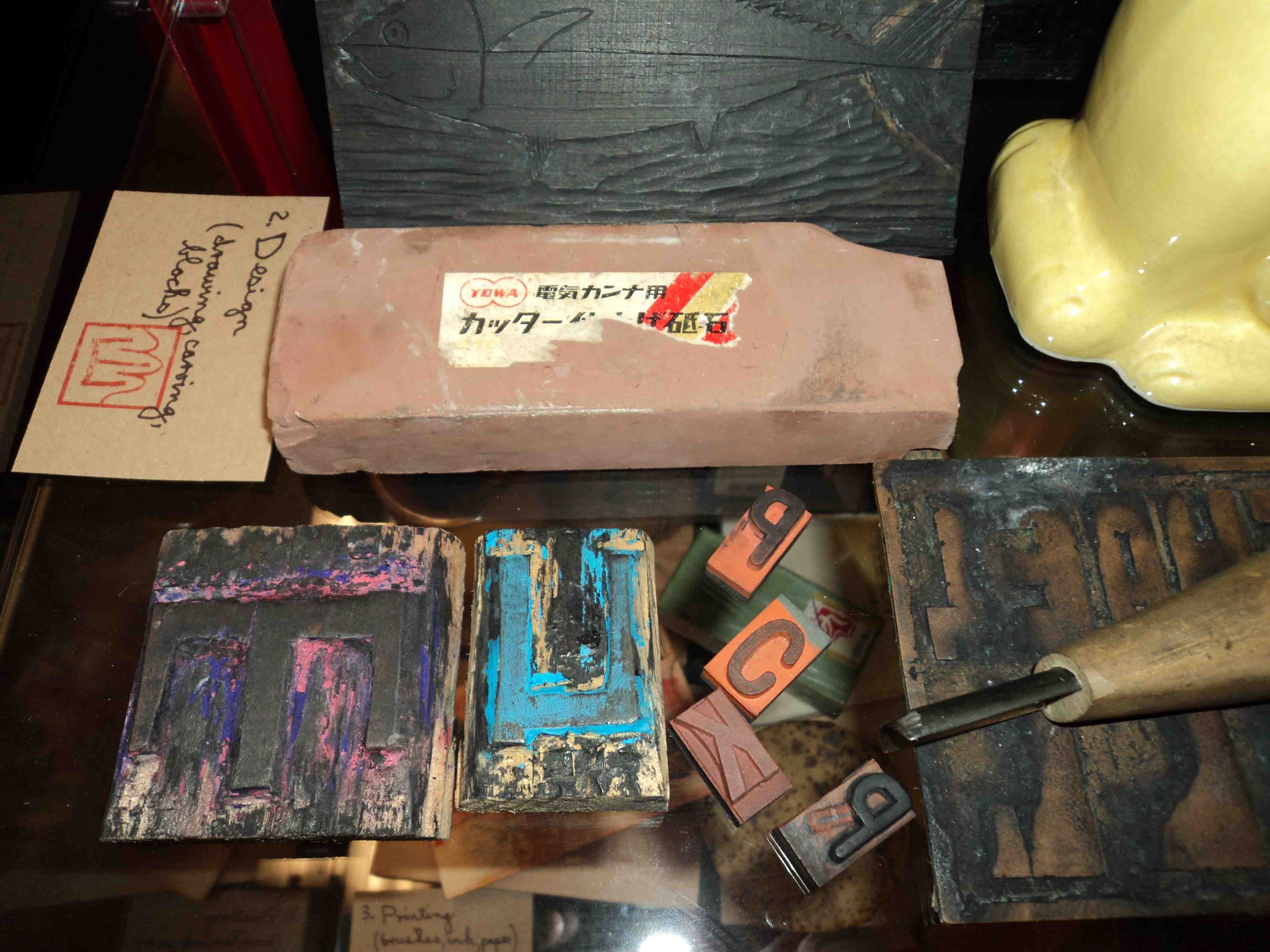
Concepts and images come to mind in the second stage, design. Sketching determines the shapes that will be obtained through image-making techniques.

Printmaking tools: chisel, blocks, type, sharpening stone. (Photo-© 2012 Dr. Michael Hill a.k.a. Doctor Comics)
Bamboo baren, seals, string, sumi ink, brushes and printed postcard.(Photo-© 2012 Dr. Michael Hill a.k.a. Doctor Comics)

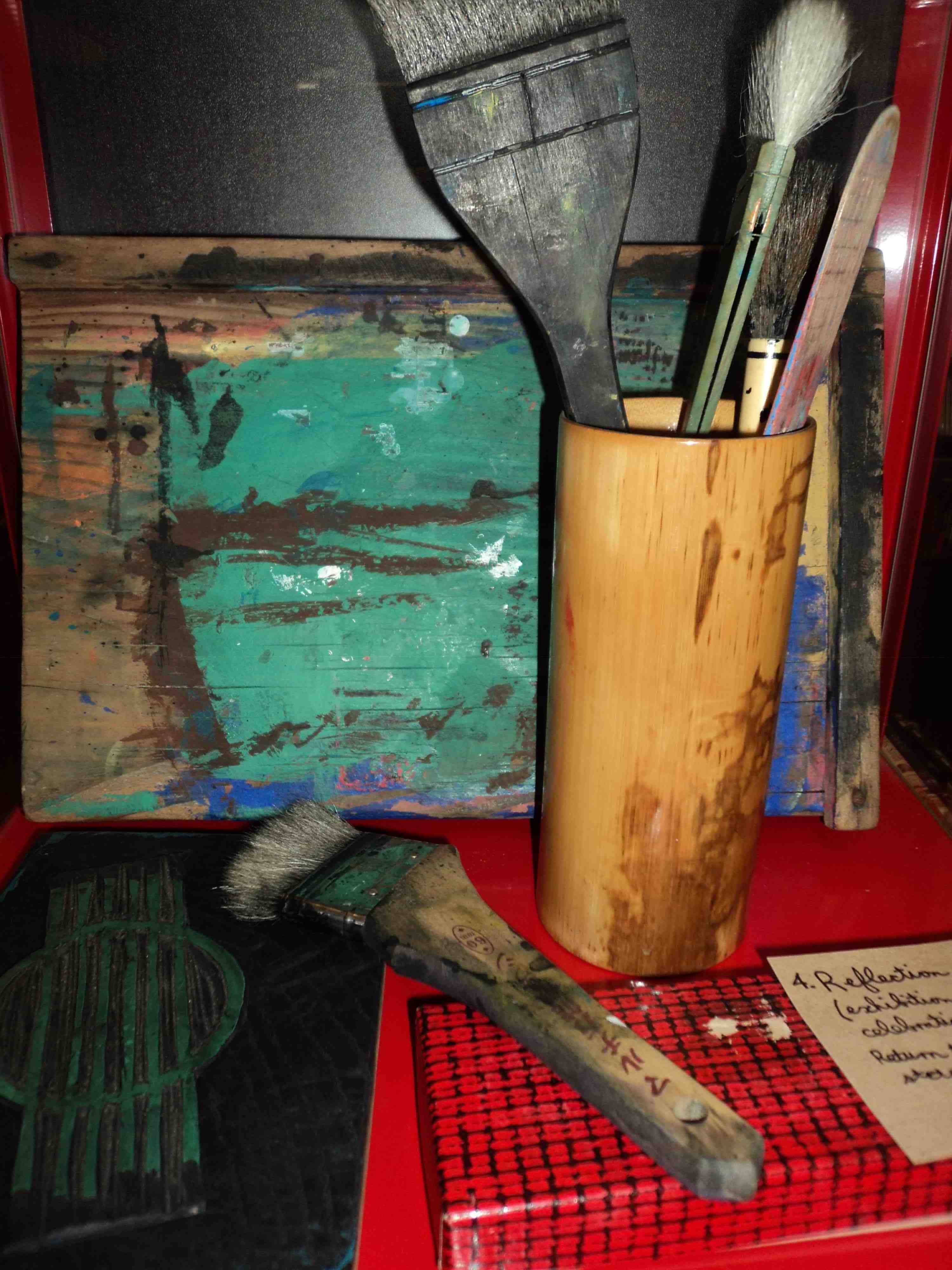
Where printmaking is involved the third stage brings out brushes, ink and paper for the printing part of the project. A baren is piece of dried bamboo that has been stretched over a board. It is used to ensure that the paper makes good contact with the inked block. The pressure applied can be varied to produce the degree of intensity of the ink. The autumn postcard print in the photo above has been constructed from 5 layers of print.

Bench hook, brushes, bamboo jar. (Photo-© 2012 Dr. Michael Hill a.k.a. Doctor Comics)

Copies of my artist book/comic…Blotting Paper: The Recollected Graphical Impressions Of Doctor Comics …are available exclusively from the launch venue Hondarake: Full Of Books till 31 May 2012. The store is located at Level 1, 465 Kent Street Sydney  phone: 02 9261 5225  online shop: http://fullofbooks.com.au

The book with original print on cover. (Original print-© 2011 Michael Hill a.k.a. Doctor Comics)

Another brief break between posts. I welcome your feedback on this event, if you attended, as well as to this and my previous posts, Michael.

(All text, photos and artwork-©2012 Dr. Michael Hill a.k.a. Doctor Comics).