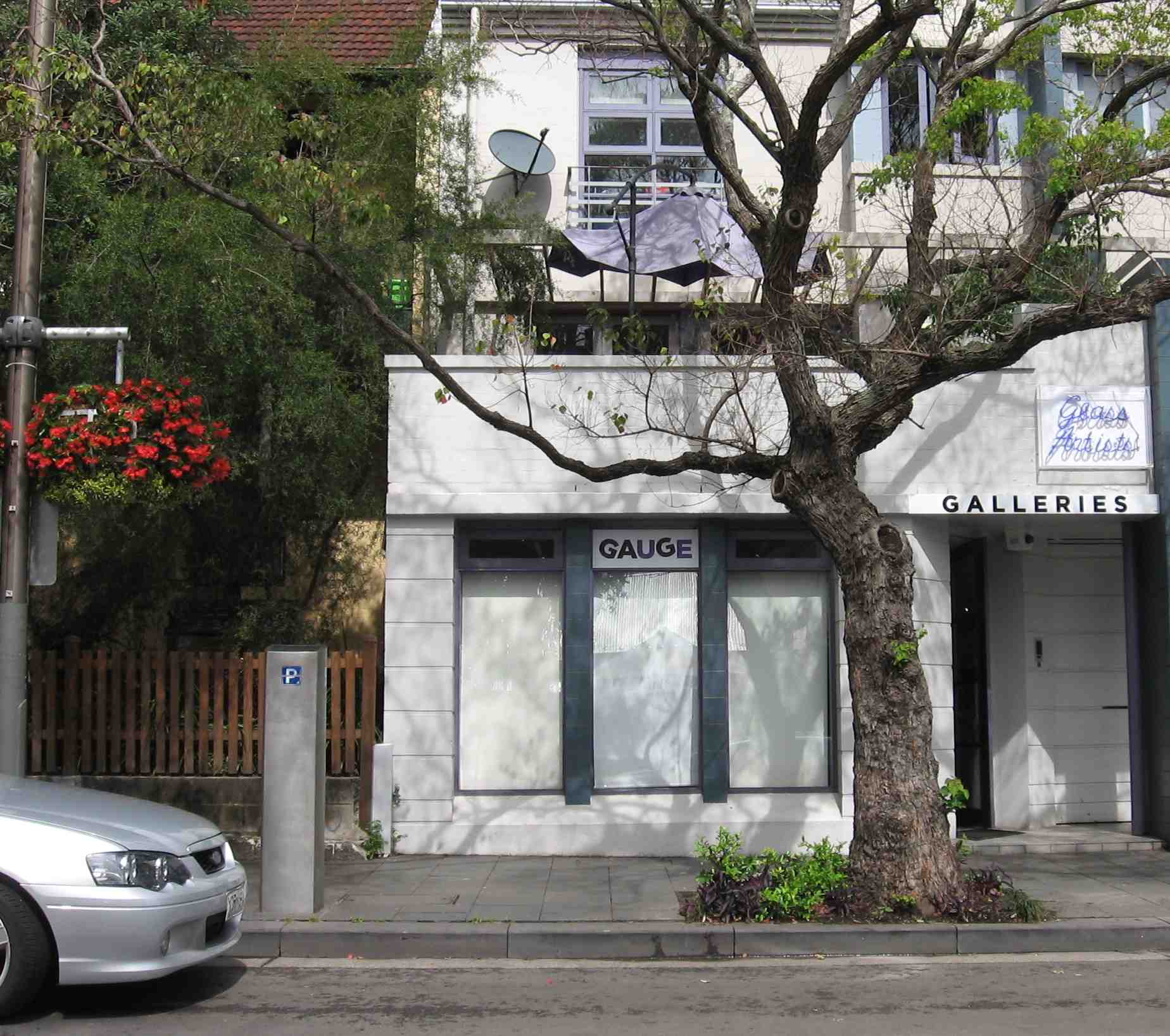
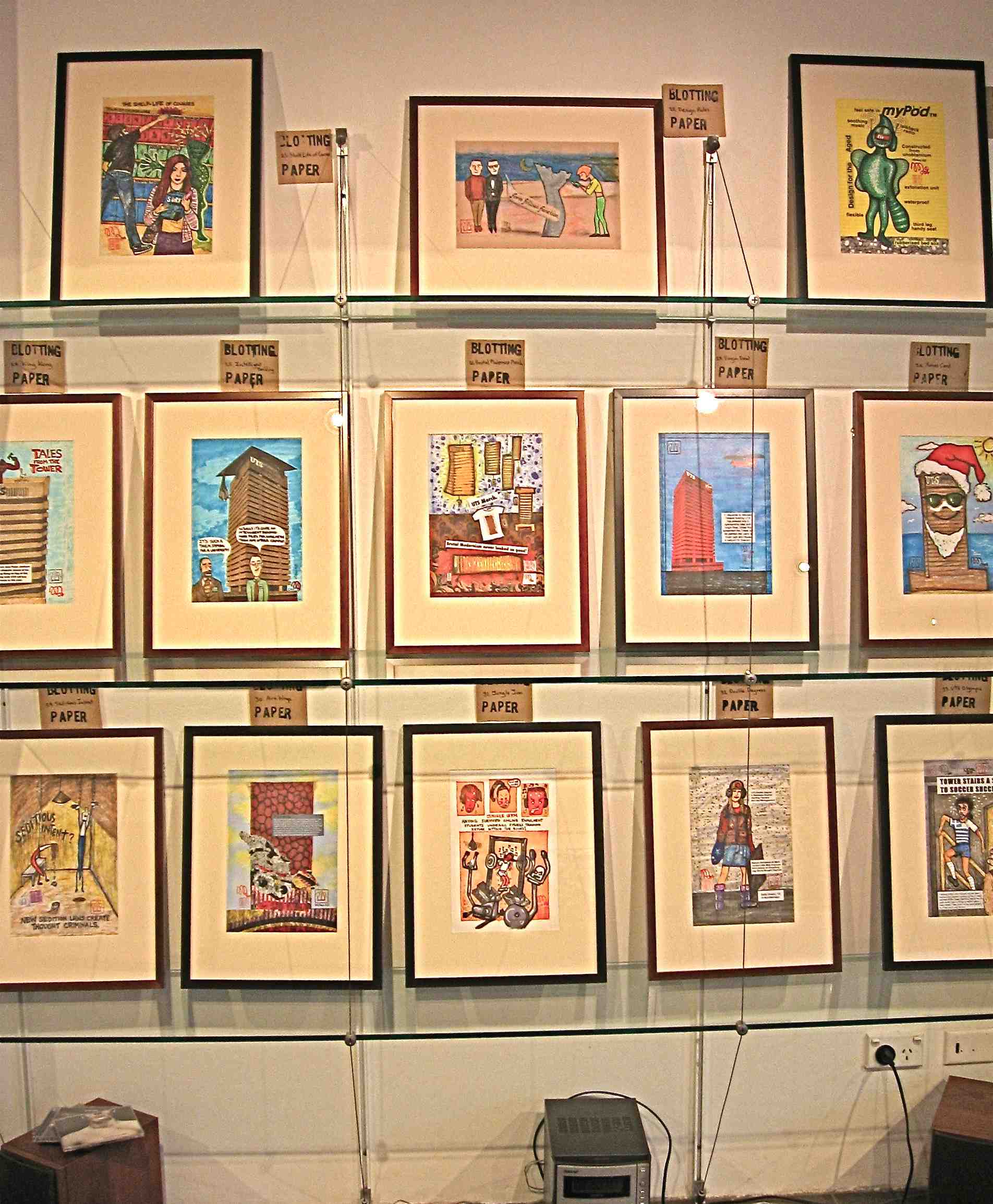
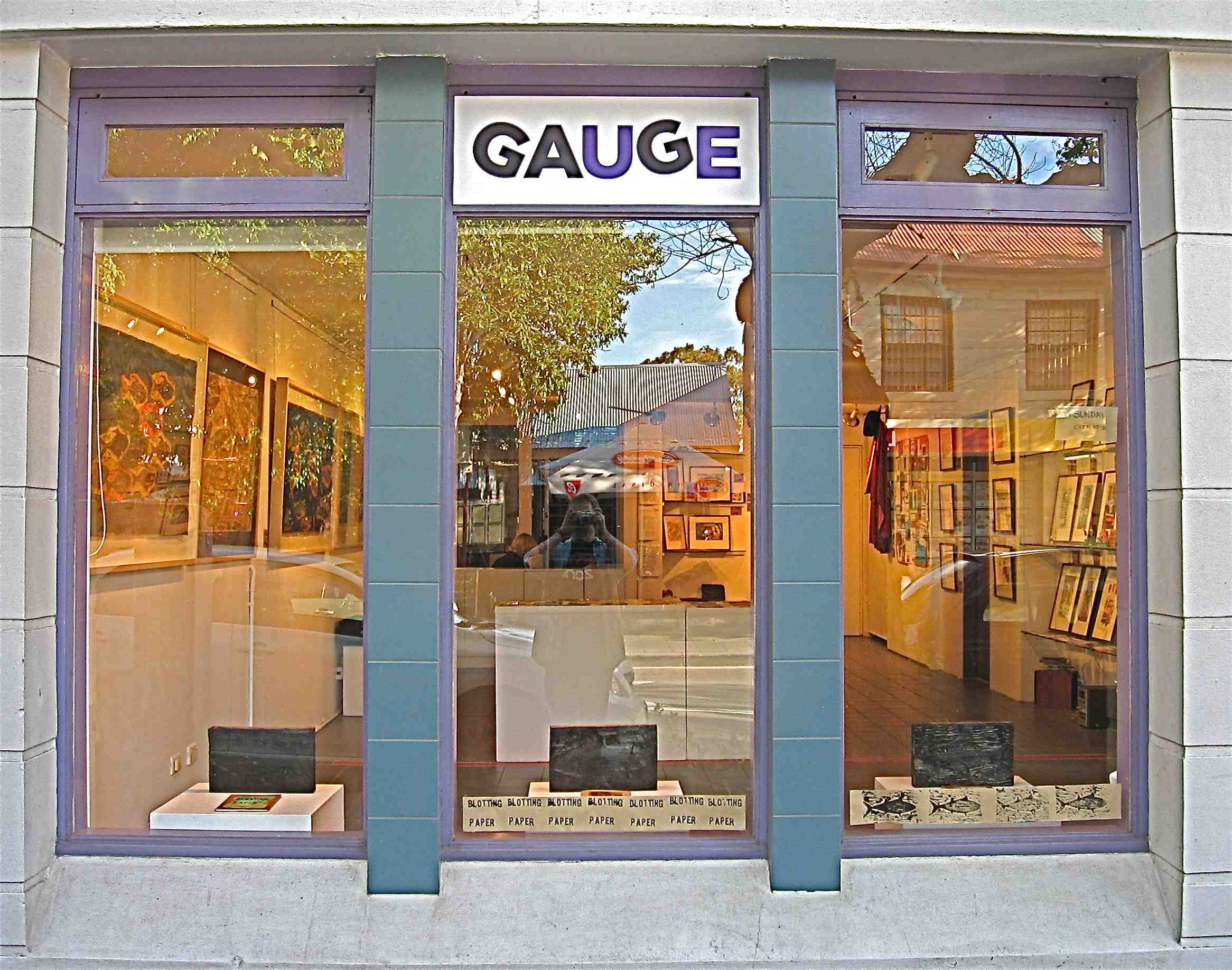
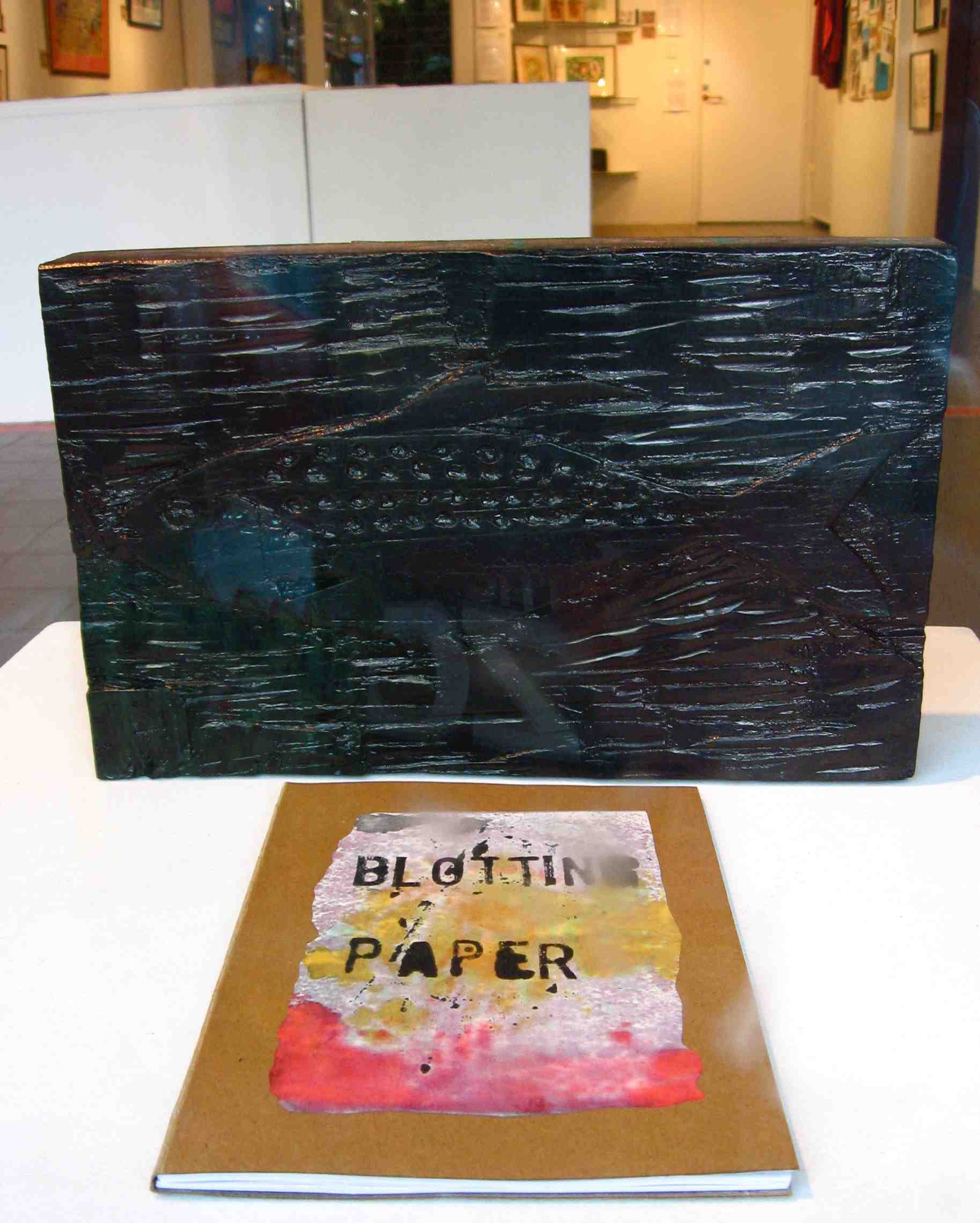
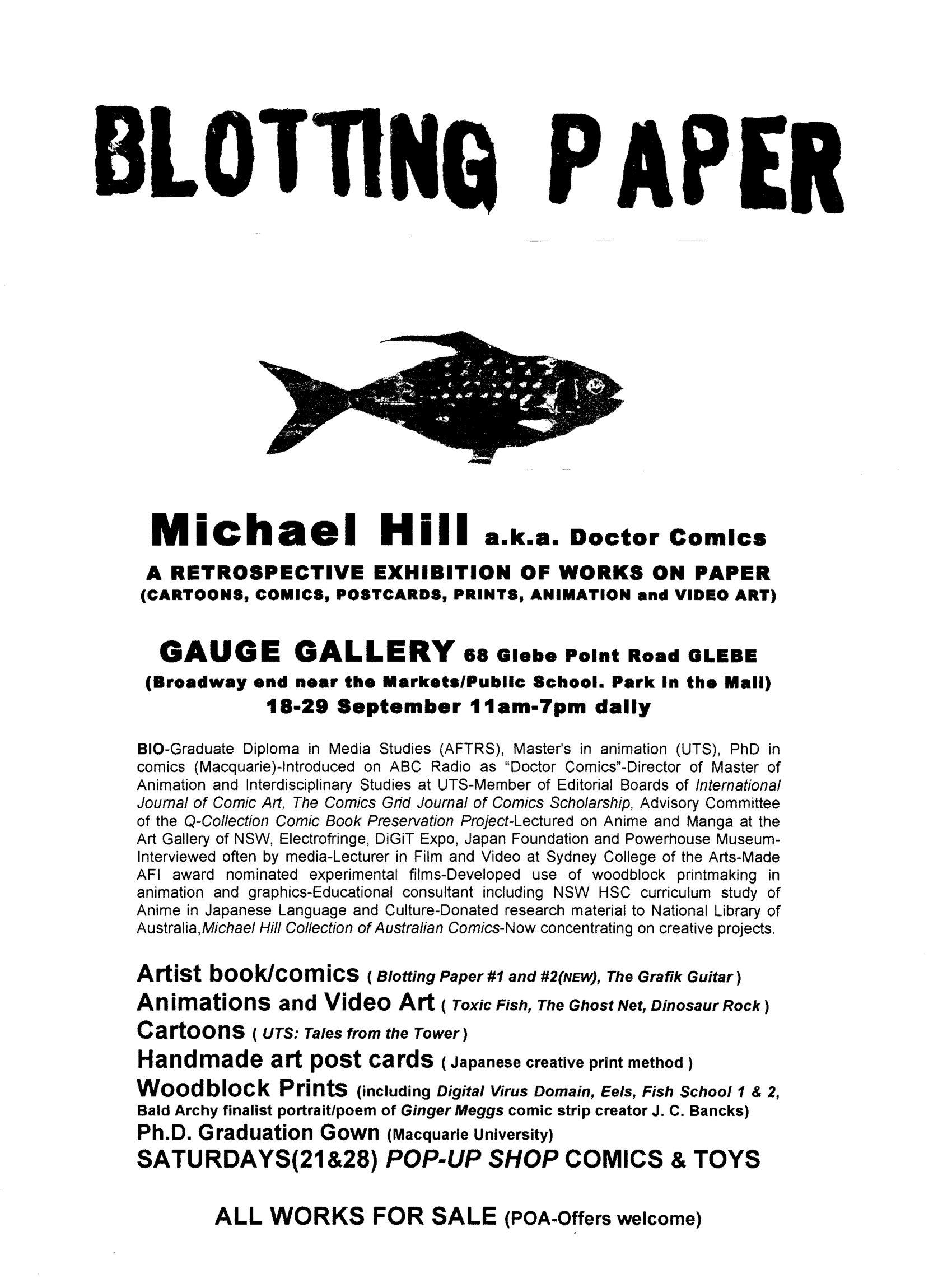
This post covers the installation of my comics art exhibition Blotting Paper: Works On Paper. It was held from18-29 September at GAUGE Gallery in Sydney. It included publication of the second issue of my artist book/comic: Blotting Paper: The Recollected Graphical Impressions Of Doctor Comics, Chapter 2: A Blot On His Escutcheon.
The second issue of my artist book/comic… Blotting Paper: The Recollected Graphical Impressions Of Doctor Comics, Chapter 2: A Blot On His Escutcheon… has now been published. As with the first issue the publication was planned to be accompanied by an exhibition of associated art work. This time the exhibition opening, at GAUGE Gallery, preceded the publication. The exhibition was larger in scope and located in a gallery, as opposed to a bookshop. The comic was late! It arrived on the fourth day of the event. The launch had to be postponed due to its uncertain delivery date. When the book finally arrived at the gallery it went on sale but retained its “yet to be launched” status. With two issues now complete the thoughts of it potentially growing into graphic novel size continue to circulate in my mind! We’ll see! Michael
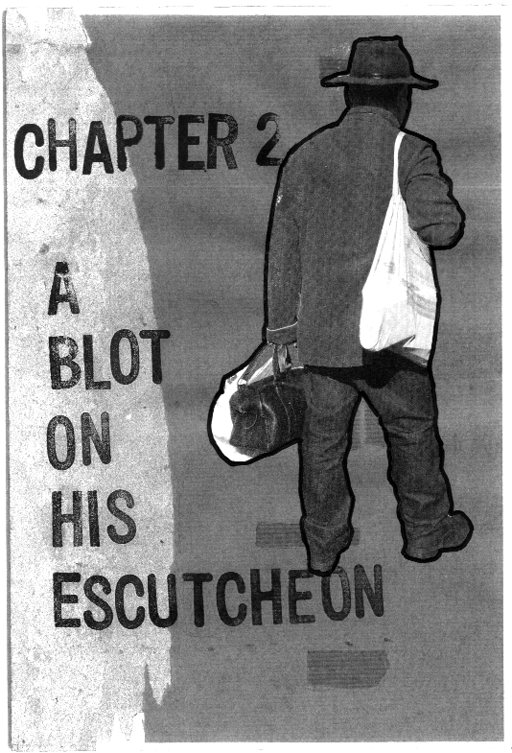
Publication of the second issue of my artist book/comic Blotting Paper: The Recollected Graphical Impressions Of Doctor Comics, Chapter 2: A Blot On His Escutcheon is forthcoming. September is looking increasingly likely subject to completion of the printing, binding and delivery of the comics. The comic will form part of an exhibition of my works on paper at a new gallery in Glebe called GAUGE. Below is an image of the title page. The image has been constructed from elements of photography, printmaking, typography and collage. It shows Doctor Comics returning from a shopping expedition. UPDATE: Exhibition dates have been firmed to 18-29 September 2013 but still no firm launch date for the comic…which is beginning to raise thoughts in the long term of its potential development into a graphic novel. We will have to wait and see about that!
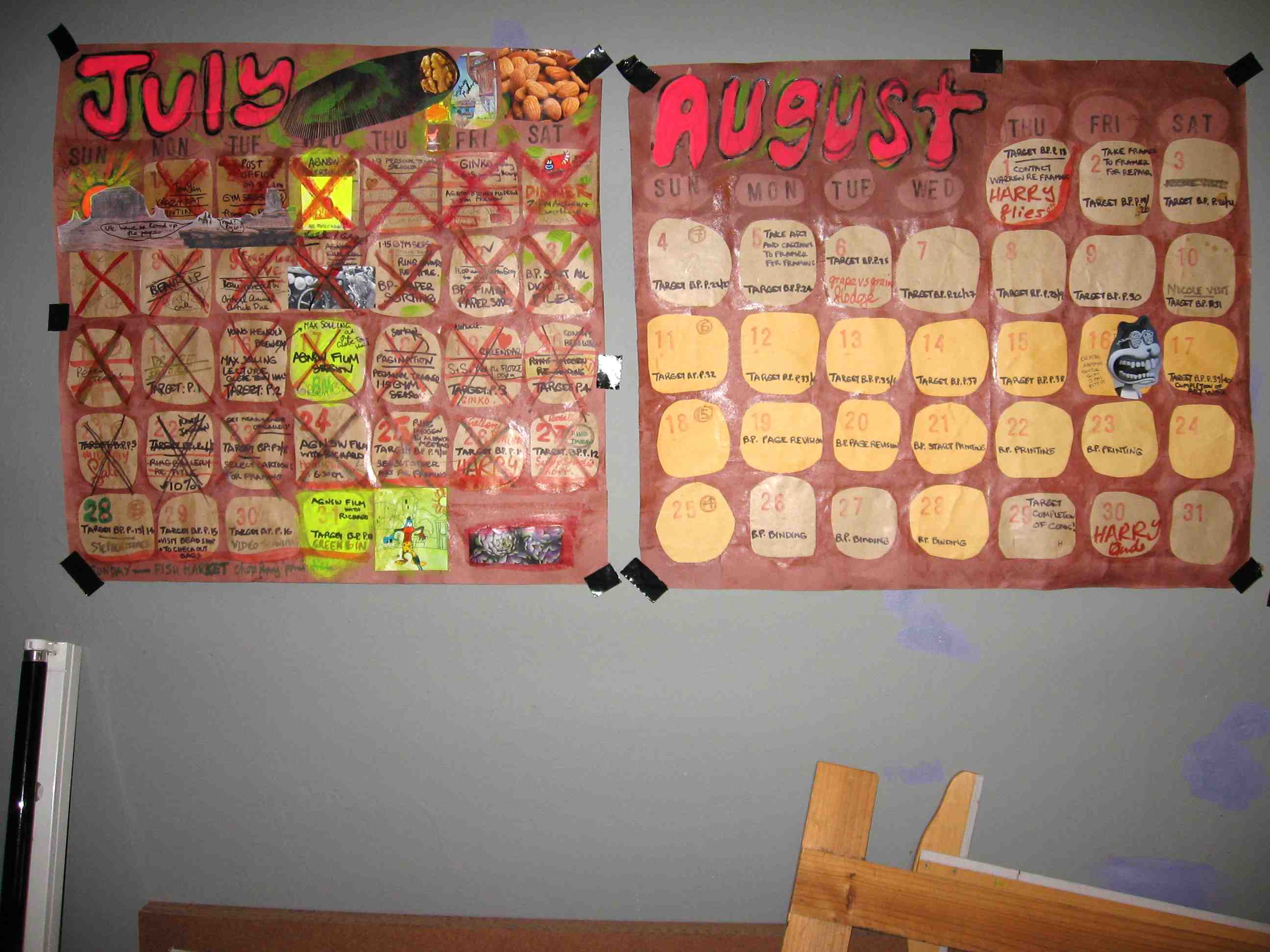
Continuing reports documenting the production process of my artist book/comic Blotting Paper: The Recollected Graphical Impressions Of Doctor Comics…Chapter 1: The Ingurgitator andChapter 2: A Blot On His Escutcheon…this post shows more examples of the image-making aspects of the project. These include assemblage, drawings, design, photography, printmaking, plus project management.
Some colourful project management in my blog log book.
This blog on my Blotting Paper comic has provided a means of documenting the production progress of the comic.
Both fish and cats feature in the comic, the fish more realistically rendered than the cats. Above is an image from my earlier fish animation, with added blood. Below is a rough sketch of one of the feline characters.
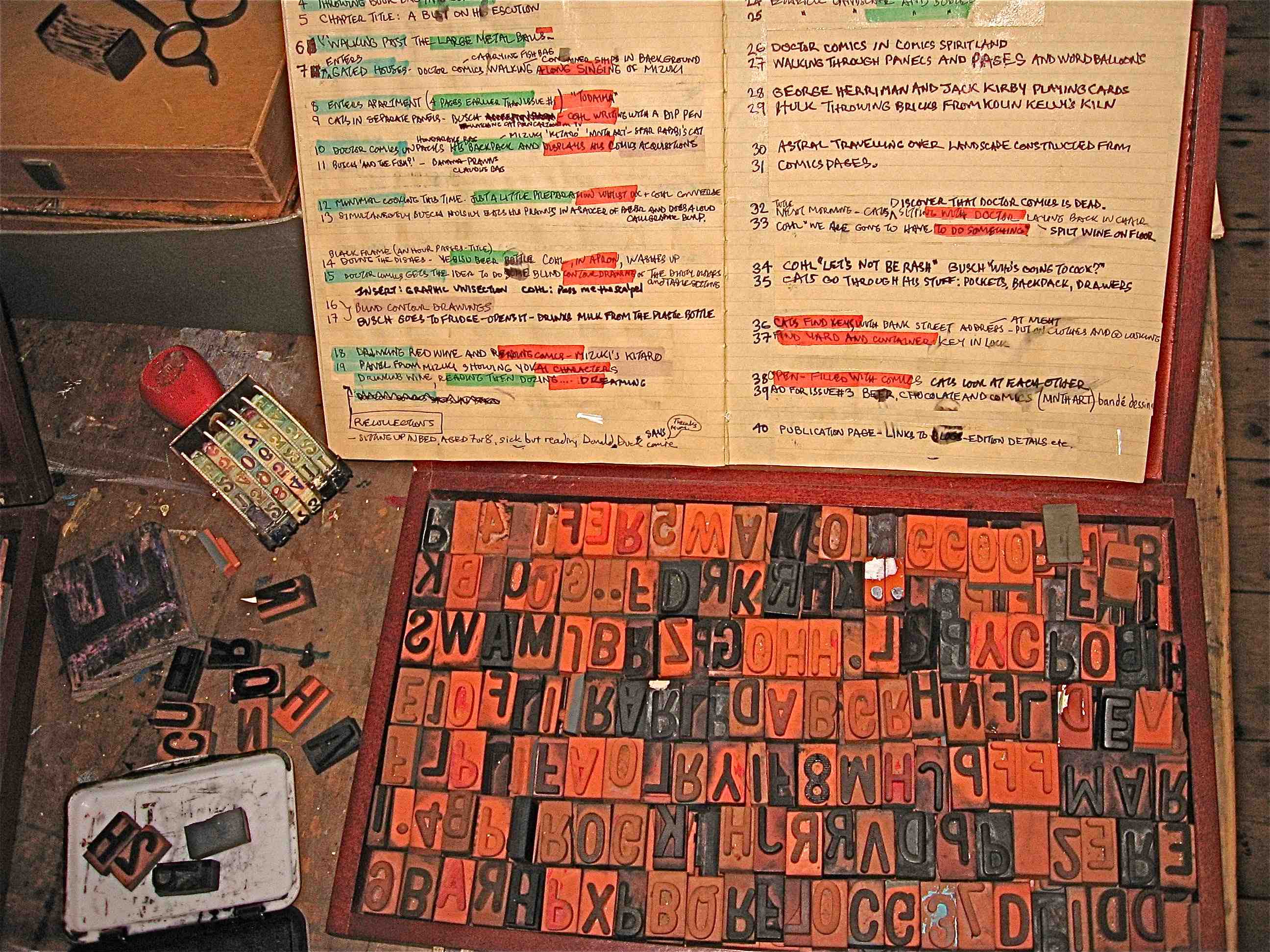
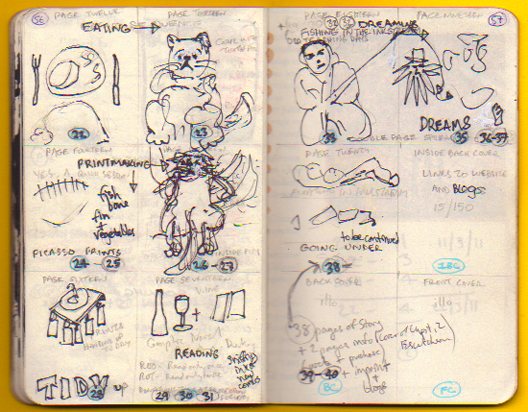
Continuing my series of reports documenting the production of my comic Blotting Paper: The Recollected Graphical Impressions Of Doctor Comics…this post illustrates the use of the note books, sketch books and design processes involved.
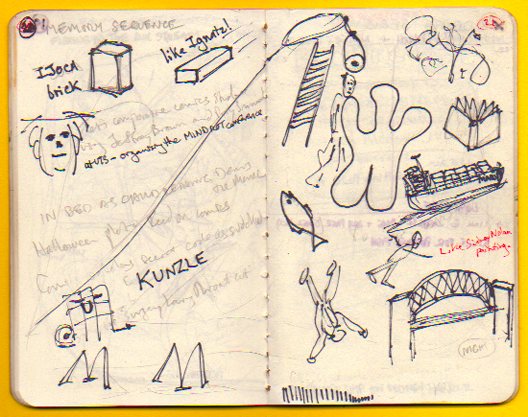
The larger notebook (above) is primarily used for making notes and writing drafts. It has information about the characters and the environment in which they live…plus ideas about the narrative and its construction. The smaller note books (below) contain rough sketches that were used to develop ideas from the main note book.
The design is a little on the rough and sketchy side! It does, however, show an outline of the character design and story sequencing. How did you find it? Let me know. I would love to read your responses to my posts, Michael.
This post continues reportage of the production of my artist book/comic Blotting Paper: The Recollected Graphical Impressions Of Doctor Comics. It describes the use of printmaking in the image-making process, including the creation of landscapes of subconscious terrain.
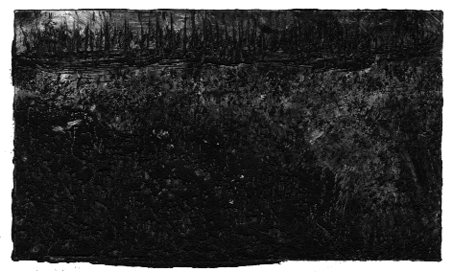
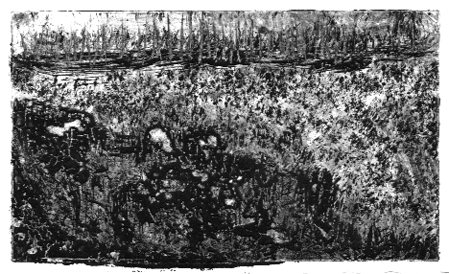
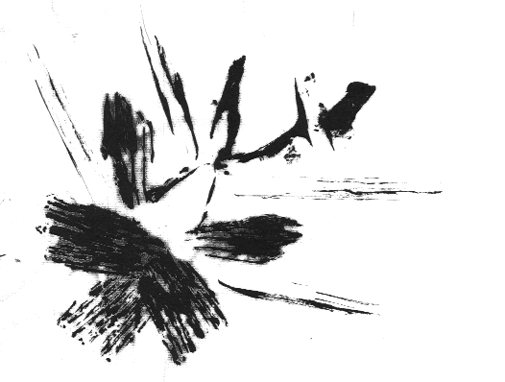
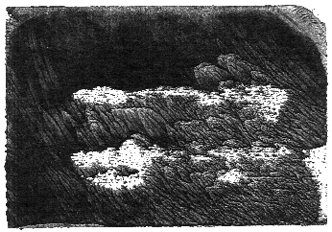
Doctor Comics finds himself in a shadowy landscape during an intense dream experience. I have tried to express the inky and murky feel of this etheric place he traverses. To achieve this I made a series of monochromatic monoprints.
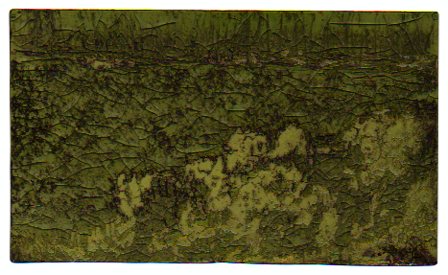
This landscape can be seen more clearly as more light is added to each successive image. Despite the extra light he still finds it hard to trace his way through.
These prints were made using an etching process. It was a novel method of printmaking that involved exposure of the design to a light sensitive plate. This process marked the lines on a gelatin coated metal plate. The plate was then rubbed with a stiff brush under running water to carve the lines. This process is known as solar plate etching.
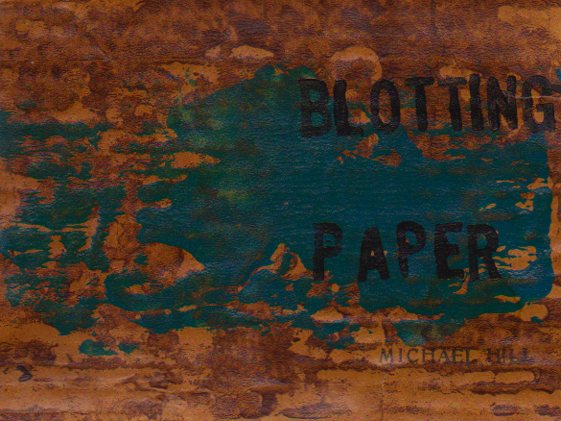
A deliberate ‘blotting’ effect was obtained from pressing a saturated inked block onto highly absorbent blank paper. This was for a scene from the second issue. After printing, the paper was peeled off the block carefully to avoid tearing. This was due to the combination of the wet inked areas and the paper’s soft, tissue texture.
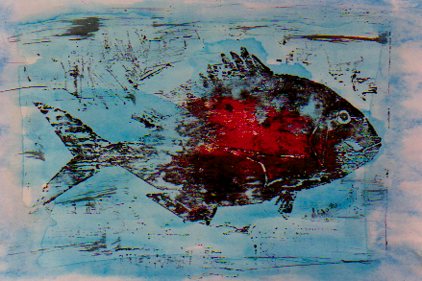
Tails and fins of a cooked fish were inked and printed for some of the images used in Chapter 1. This approach was inspired by the Japanese sosaku hanga printmaking method. That involves inkable flat objects employed as ‘blocks’ as an alternative to woodblocks. The resultant graphic effect is shown in the print above. Photos of the image-making process involved in making that print are below.
Another unused print, above, from the first issue is a possible inclusion as a postcard insert in this issue. It was constructed from a combination of woodblock and object prints. I know I seem to be pushing the printmaking cart here but it has really got me going. I would love to hear of your experiences of printmaking, if you have done that, Michael.
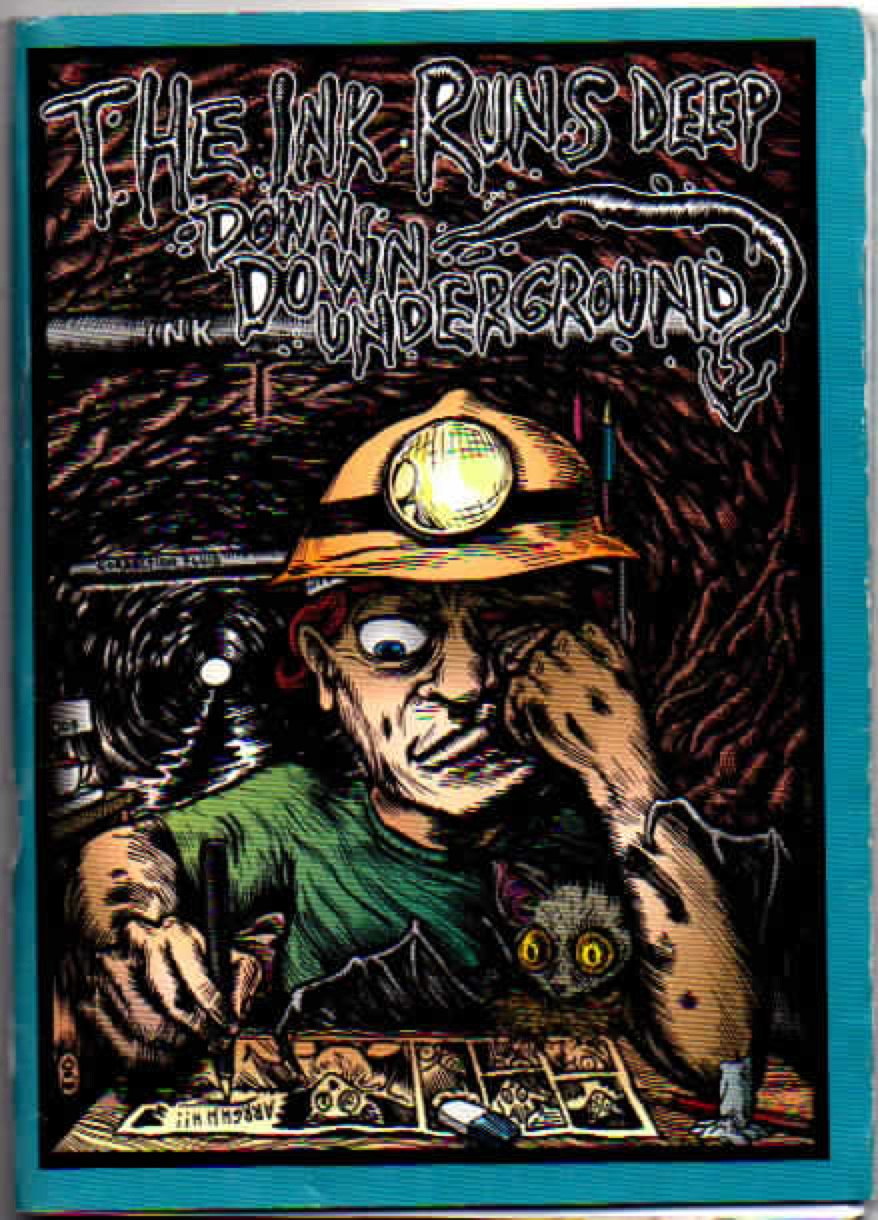
Underground comics are the subject of this post…in particular Australian alternative comics. I start with a review of an exhibition that Glenn Smith curated at the Orange Regional Gallery, in N.S.W. in 2005. The exhibition was titled The Ink Runs Deep Down, Down Underground. I wrote an essay titled “Art From The Inkubator” for inclusion in the exhibition catalogue.
The Ink Runs Deep...exhibition catalogue. (Art & Design by Glenn Smith)
The successive waves of Australian alternative comics produced since the 1980s often feature a raw, spontaneous graphic style. This is accompanied by an irreverent attitude and a D.I.Y. Punk influenced approach to production. It is notably different from mainstream approaches to comics production. These alternative comics can be pluralistic, wide-ranging, antagonistic, mocking and containing taboo themes. The exhibition in Orange celebrated the creative expression behind these comics. Comics art…this much maligned art form…usually consigned to the pop culture trash bin…was hung for exhibition on the gallery wall.
Back cover of the exhibition catalogue. (Design by Glenn Smith)
Creators featured in the exhibition, all 27 of them, are listed on the back cover of the exhibition catalogue, above. They exhibited applications of comics art in a range of mediums from pen and ink to digital imaging. These were applied in animation, painting, posters, book covers and skate boards.
Exhibit of Cruel World minicomics by Anton Emdin.
Exhibit of Black Light Angels minicomics by Louise Graber.
Noting the emergence of underground comix in Australia in his book Panel By Panel…John Ryan pointed to the social context of the 1970’s. This was a period in which a sense of national pride emerged. This led to a consequent interest in locally made art. That first wave of Australian alternative comics also seems to have been influenced by the North American Underground Comix movement. As in the Abstract Expressionist art movement of the 1950s, Australia seemed to have imported rather than grown, the art. Initially appearing somewhat derivative an Australian style later developed .
Louise Graber with her painting of a panel from her comic Black Light Angels from the exhibition.
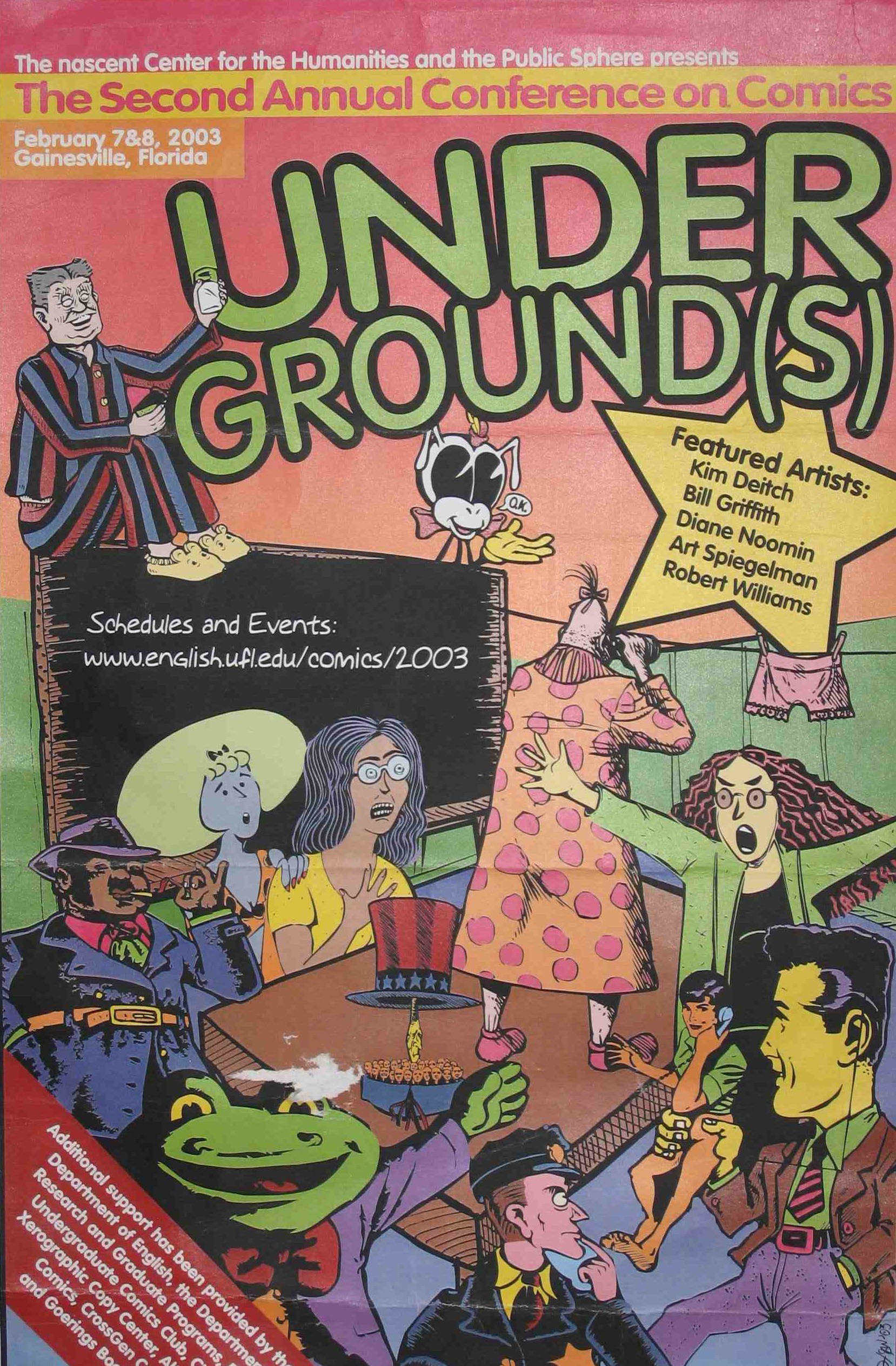
I had attended the Underground(s) conference on Comics and Graphic Novels at the University of Florida in 2003. It was organised by Donald Ault. At that conference I presented a research paper…titled “Down Under Ground: Emotional and Oppositional Outpourings from Sydney’s Subculture in the Comics of Glenn Smith”. Smith’s comics seemed to be an echo of the Underground comix of the late 1960s that began in San Francisco. They were different in style and content to the mainstream North American super-hero themed comics. They opened up the way for autobiographical and artform approaches. At that conference I heard from some of the creative figures from the original Underground(see back cover of program below). It was pleasing to describe Glenno’s work, and argue that it had some resonance with what they had done.
Front cover of Underground(s) conference program. (Design by William S. Kartalopoulos)
Back cover of Underground(s) conference program. (Design by William S. Kartalopoulos)
Underground(s) conference poster (detail).
Have you read any Underground comics? I’d love to hear your thoughts about them as well as reactions to this post.
This is the twelth in a series of posts titled Archives of Australian Comics History. They document moments in the recent history of Australian comics, particularly alternative comics and the Australian Small Press. I started researching this subject in the late 1990s. It eventually led to the writing of my doctoral thesis. Details: Ph.D., Macquarie University, Division of Society, Culture, Media and Philosophy, for the thesis…A Study Of Contemporary Australian Alternative Comics 1992-2000…With Particular Reference To The Work Of Naylor, Smith, Danko And Ord, 2003. On completion of the research I donated the large number of comics I had collected…to the National Library of Australia: Michael Hill Collection of Australian Comics.
This is a further report on the production of my graphic novel Blotting Paper. This post focuses on print layers used to create the cover design. Planned for the first issue but not used until the second here are some images of the printmaking procedure.
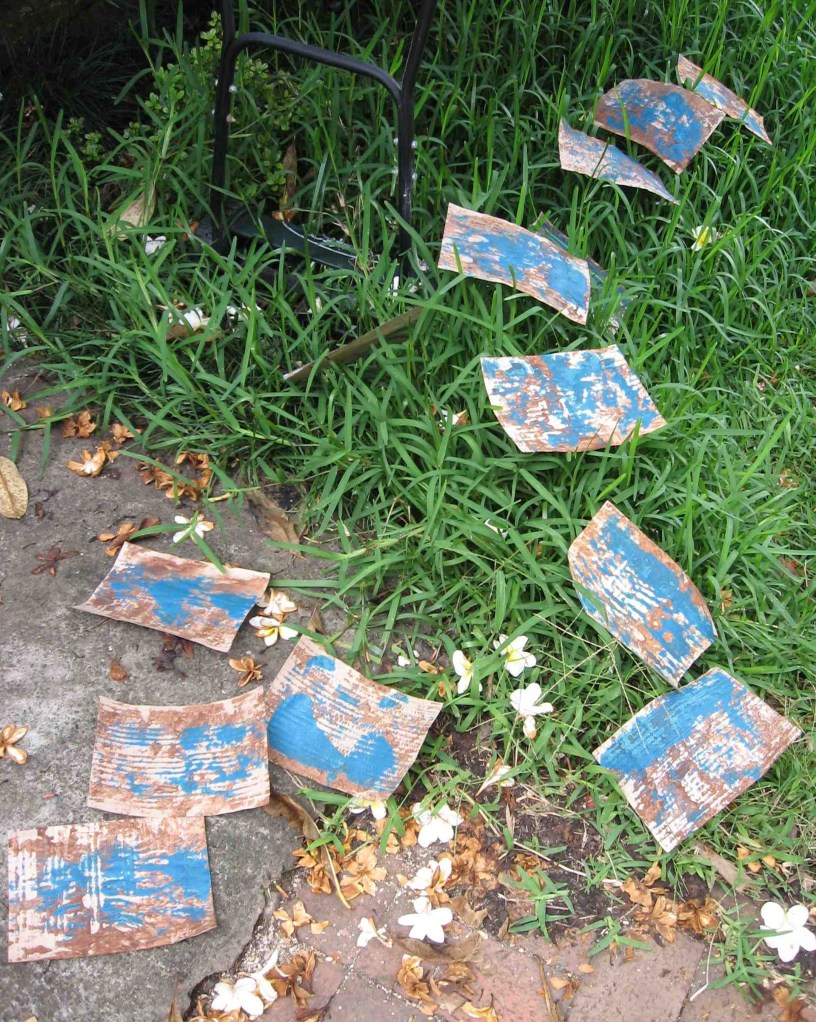
Working in a small studio I had no bench space for drying. Letting the prints dry outside on the ground in the Spring sunshine proved a fast way to obtain the dryness. The prints were vulnerable to a breeze and were blown into the grass and garden.
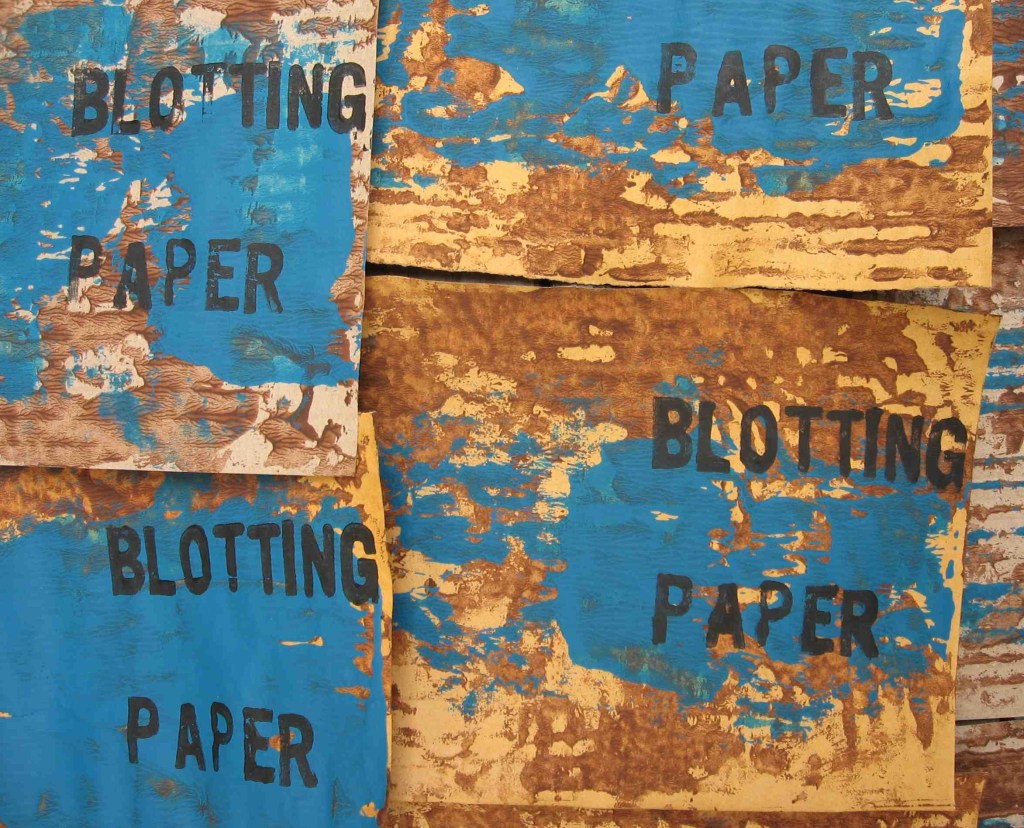
The final stage involved printing the type over the blue overlay and brown background.
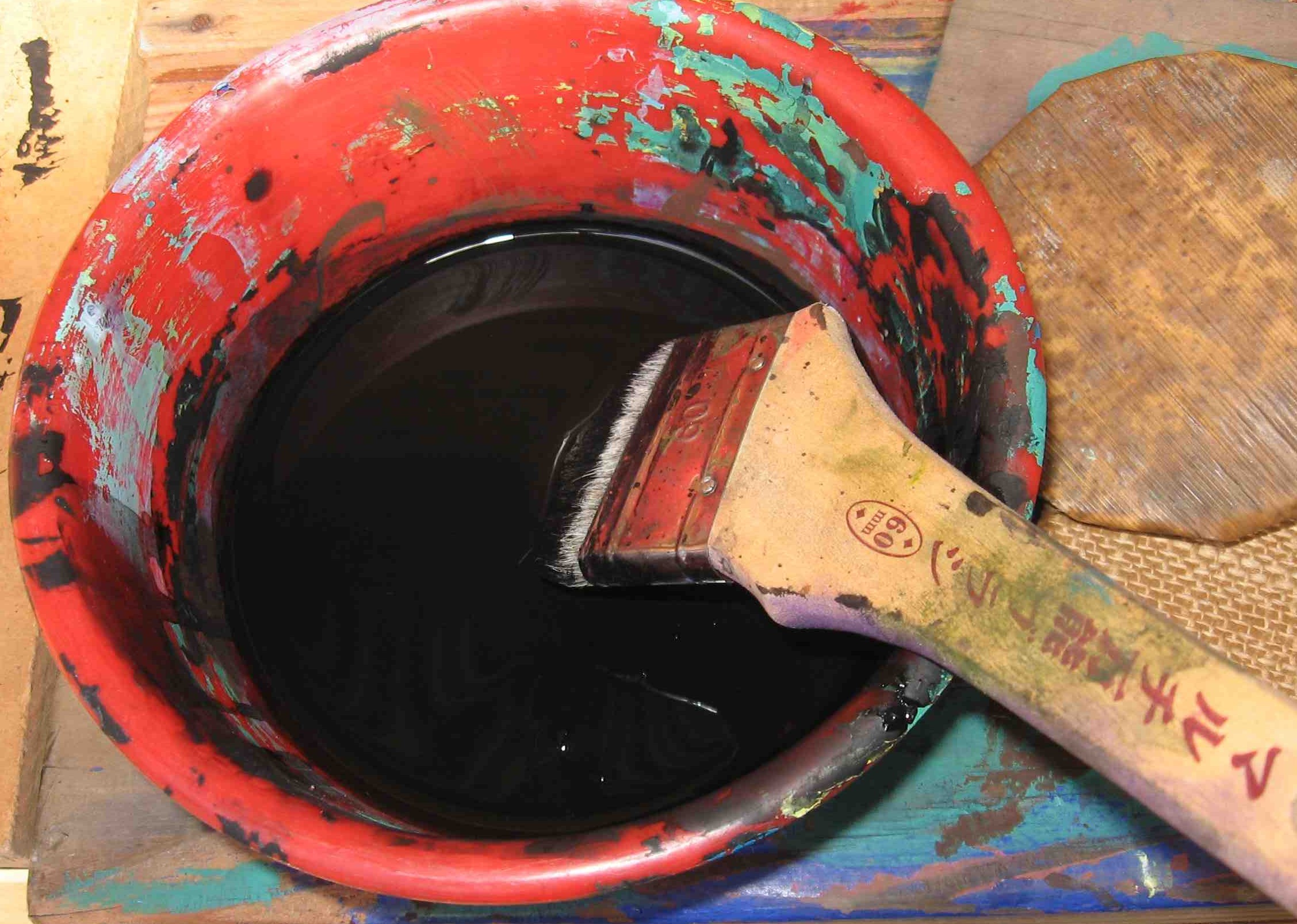
A bowl of sumi ink, a brush and a bamboo baren. (Photo by Dr. Michael Hill a.k.a. Doctor Comics)
Following the Japanese creative print approach of using sumi ink enabled me to obtain solid blacks. The ink was brushed onto the block. Then the paper was placed face-down onto this and rubbed with a bamboo baren to make firm contact.
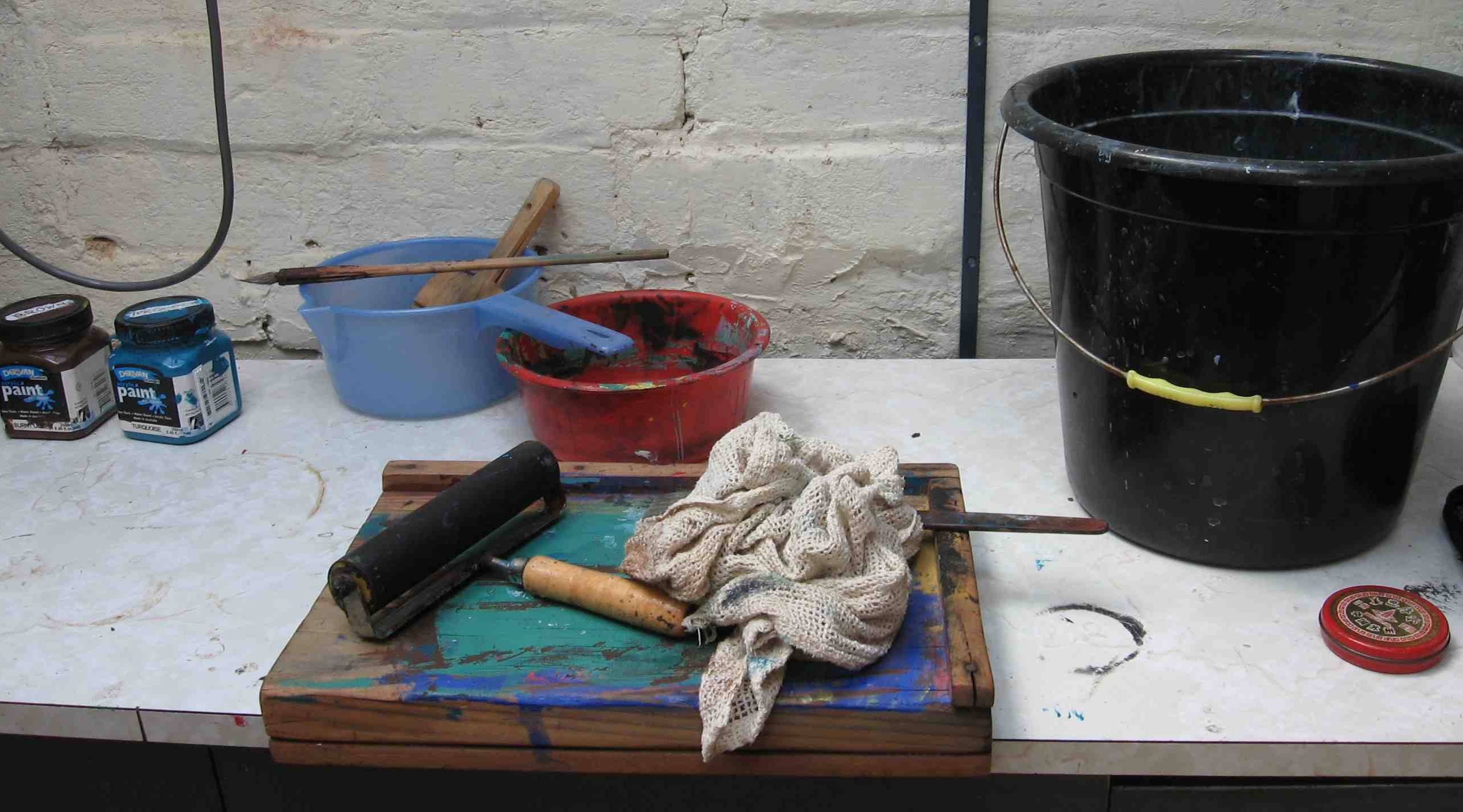
Bench hook, roller, rag and bucket on studio bench. (Photo by Dr. Michael Hill a.k.a. Doctor Comics)
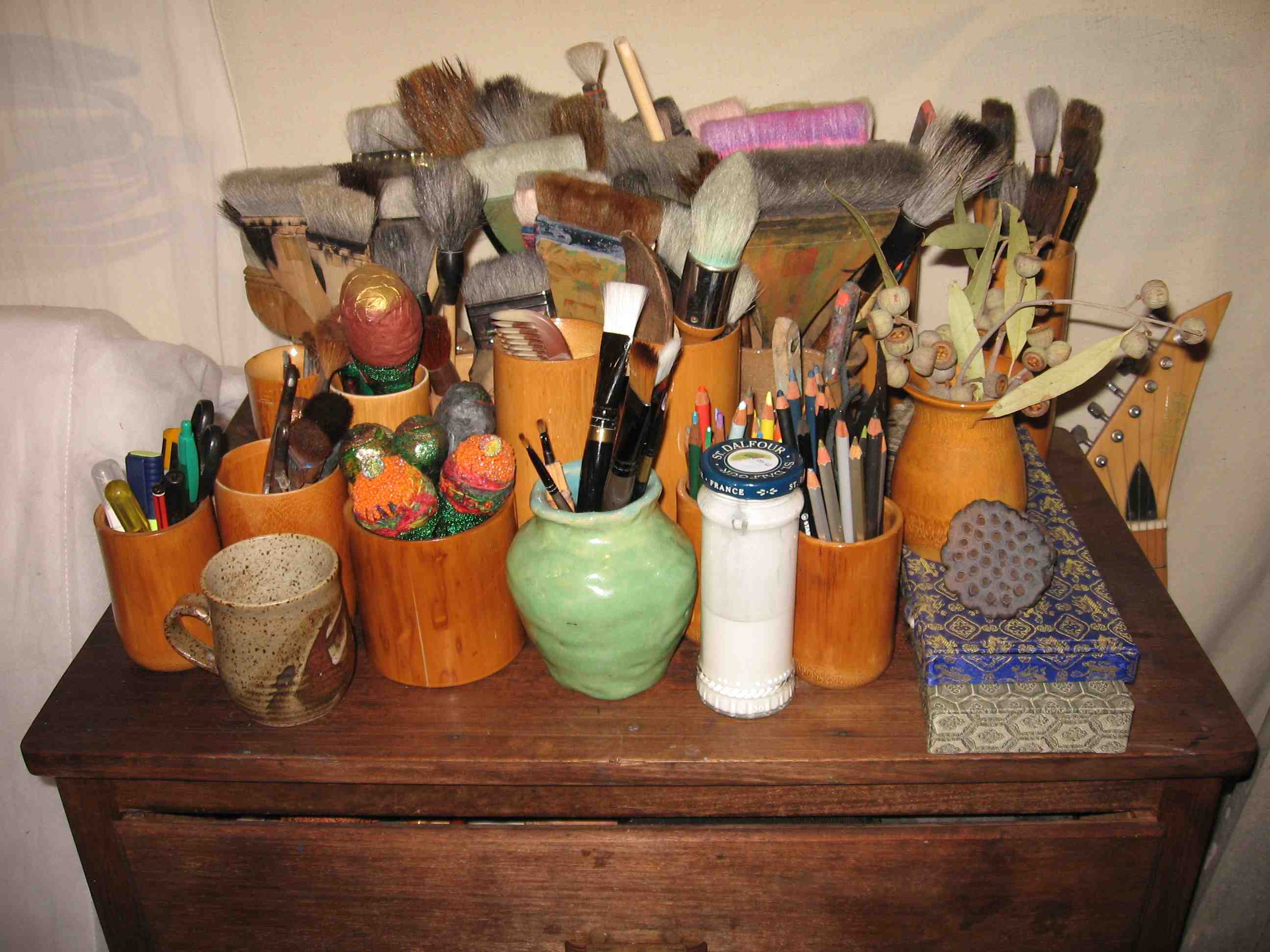
Materials used included ink, rags, cloth, plus water for washing the blocks, brushes and hands.
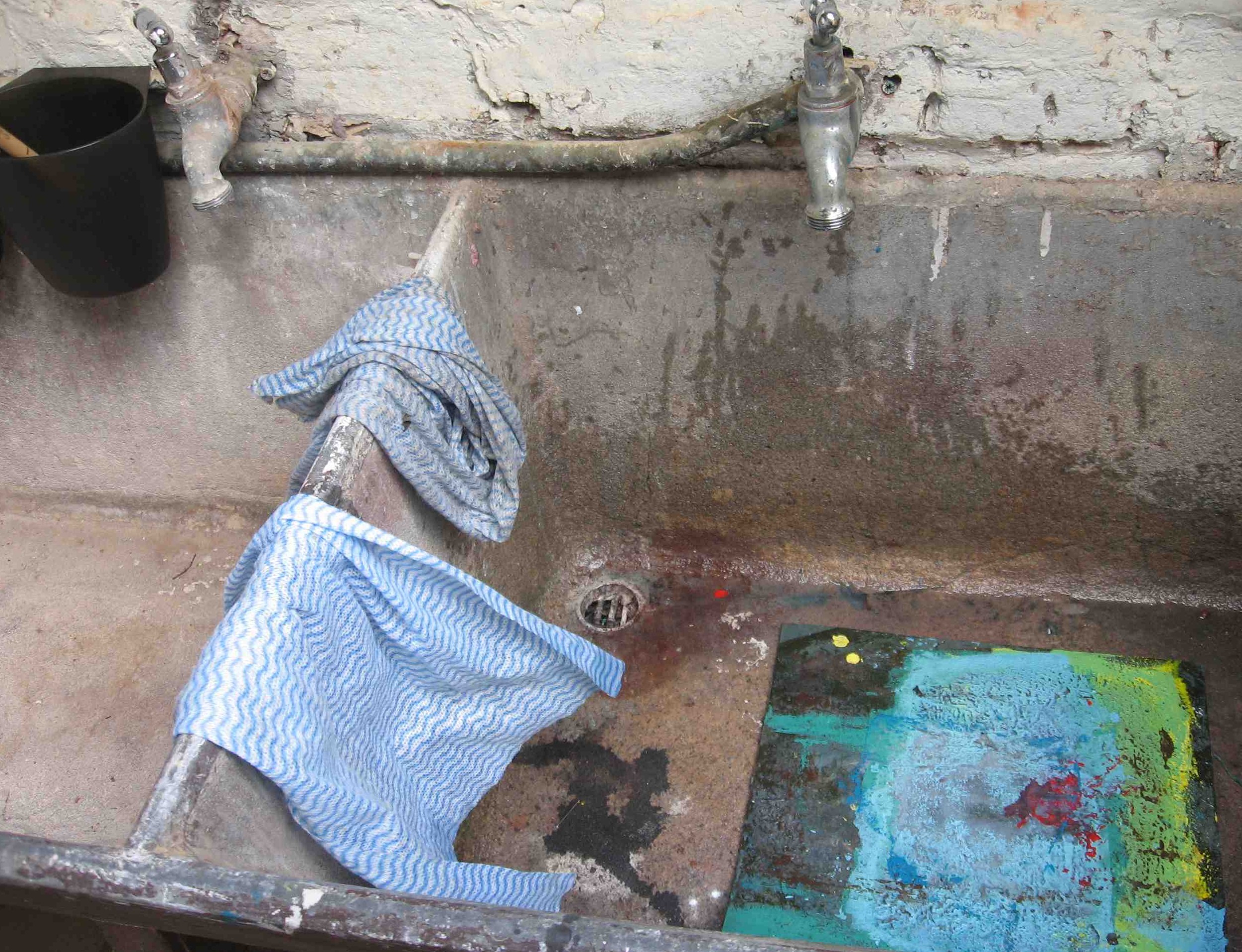
Water, cloths, sink and lino block. (Photo by Dr. Michael Hill a.k.a. Doctor Comics)
Despite the implied reference to woodblocks in Japanese print techniques the wood may be replaced by other materials. These include vegetables, fruit, leaves, rubber and other objects that are sufficiently flat to be inked and pressed onto paper. The creative print (sosaku hanga) approach places the emphasis on the act of making the print. It’s a joy! Please let me know if you share the joy of printmaking…or wish to make any comments about this post and blog, Michael.
Ink-stained printmaking attire. (Photo by Dr. Michael Hill a.k.a. Doctor Comics)
1999 event: Outsider meetings. (Photo by Louise Graber)
On Sunday 27th September 1998, I drove from Sydney to Newcastle…to attend the two sessions devoted to the discussion of comics at the inaugural National Young Writers’ Festival. Accompanying me were three active members of the Sydney ‘small press’: Stuart Stratu, Anton Emdin and Ross Tesoriero. As there had been no formal attempts to discuss and promote ‘small press’ activity we were impressed with their inclusion in the event. As to its presence in a writers’ festival, there was some uncertainty as comics also has its drawing side. We were also a little curious…as to why the organisers had by-passed Sydney and only invited Melbourne and Canberra based creators! Nevertheless we were curious enough to make the trip. It offered an opportunity to meet with colleagues from interstate. Although familiar with their work, we had never met many of them.
1999 event: Tim Danko, Stuart Stratu, Q-Ray and Kieran Mangan. (Photo by Louise Graber)
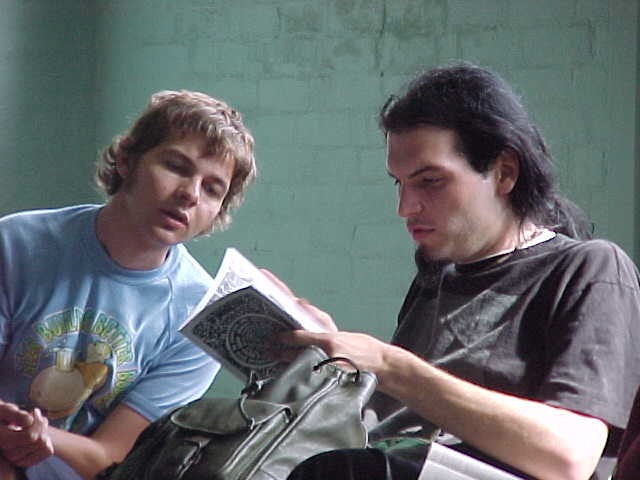
1999 event: Michael Fikaris(Froth) reading minicomic. (Photo by Louise Graber).
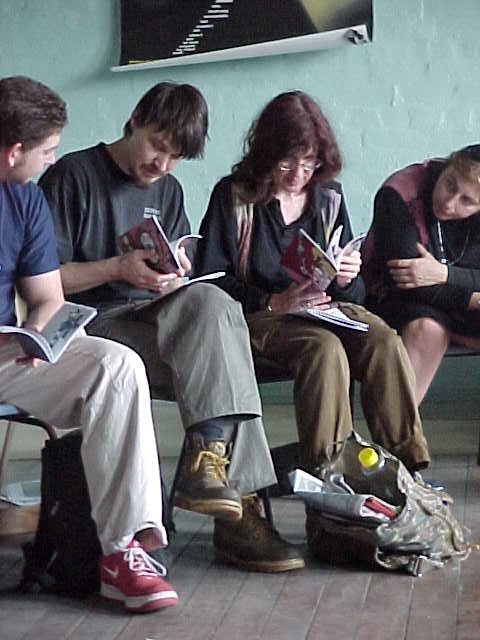
1999 event: Carol Wood and Susan Butcher aka Pox Girls reading minicomics. (Photo by Louise Graber)
The organizational aspects improved considerably over the next few years and the festival developed, expanded and diversified. Originally called the National Young Writers’ Festival it became part of the umbrella event TiNA…the acronym for This is Not Art. This became a multidisciplinary event in the week leading up to the October holiday weekend. It was spread around Newcastle and became known as the TiNa Arena. During the festival weekend the city becomes a catchment area for visiting youth…from a range of artistic, literary, music and media fields all over Australia. I even met a guy who claimed to have walked right across Australia from Perth to attend. I went to five consecutive events from 1998 to 2002…by which time comics discussions had moved into the Town Hall main room. A high point for comics creators is the annual comic and zine fair held on the Sunday afternoon. There was a busy trading event staged in the park then moved into the Mission theatre with accompanying live music.
1999 event: Anton Emdin(If Pain Persists) with Lewis P. Morley and Marilyn Pride(Red World Komics). (Photo by Louise Graber)
1999 event: Tim Danko(Dead Xerox Press) and Stuart Stratu(Sick Puppy Comix). (Photo by Louise Graber)
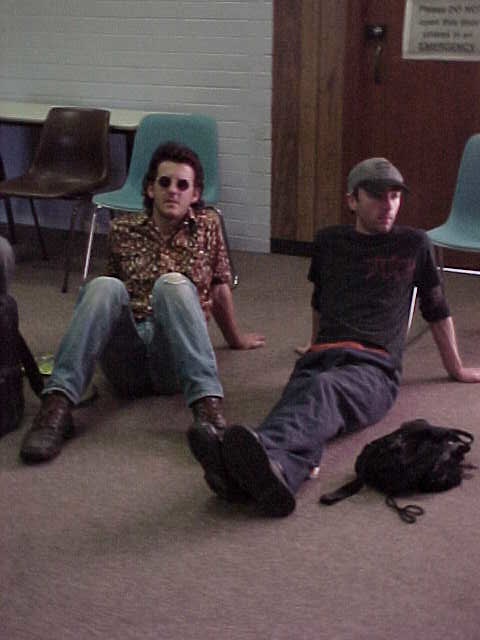
On arrival in the city that afternoon in 1998 we easily found the centre of activities laid out in various sumptuously appointed rooms of the Newcastle Town Hall and Civic Centre. There were panels and presentations in the Banquet Room…the Function Rooms and some impressively attired Committee Rooms in the Council Chambers and also at the nearby Wintergarden Cafe. We were, however, unable to find the venue for the discussion of comics. On asking for that information we were directed out of the main building to the back. There it was, a modest room with a few plastic chairs. A few attendees had to sit on the floor. No podium, no lectern, no microphone, no monitor, no vcr, no whiteboard, no jug of water, no media nor reporters were present. Furthermore, this was not a seminar but a workshop. Comics were not so much to be discussed as produced…and if there was to be any discourse it would be on matters of production rather than on content. Then I realised how appropriate all of this was in the then current scheme of things. It was the “accustomed” venue at a writers’ festival for the discussion of comics and it indicated how marginalised the form was. The established, pure literary forms such as the novel and poetry headed the hierarchy. Even emerging word based forms such as e-mail and writing textual content for the Internet and journalism had superior status and were located in the main hall. But comics and zines were out the back and out of sight, so to speak.
1999 event: Happy Pox Girl Susan Butcher. (Photo by Louise Graber)
1999 event: Q-Ray(The Comic Messiah) and Kieran Mangan(Urrgh). (Photo by Louise Graber)
Interested (Photo by Louise Graber)
Things changed over subsequent years. There have been comics events at the Sydney Opera House with international guests…but it was so different back in Newcastle, so ‘underground’, so beneath the radar. Comics were even made during the event in an upstairs, cut and paste graphics studio called Octapod…where minicomics had been produced. At the 1999 event I did a series of interviews with many of the comics creators in attendance. This became research material for my doctoral thesis. In closing, I welcome comments about this blog, especially if you have attended an events like this.
1999 event: Ross Tesoriero(Radiation Sickness). (Photo by Louise Graber)
Event organiser Kylie Purr with Glenn Smith. (Photo by Louise Graber)
This is the tenth in a series of posts called Archives of Australian Comics History…that document moments in the recent history of Australian comics, particularly alternative comics and the Australian Small Press. I started researching this subject in the late 1990s and it eventually led to my PhD thesis: Ph.D. Macquarie University, Division of Society, Culture, Media and Philosophy…A Study Of Contemporary Australian Alternative Comics 1992-2000 With Particular Reference To The Work Of Naylor, Smith, Danko And Ord, 2003. On completion of the research I donated the materials and comics I had collected to the National Library of Australia: Michael Hill Collection of Australian Comics.
1999 event: Dr. Michael Hill. (Photo by Louise Graber)
Work continues on the production of the second chapter of my artist book/comic…Blotting Paper: The Recollected Graphical Impressions Of Doctor Comics. This report looks back at two of the main characters from the first chapter, the feline characters Cohl and Busch. These are funny animal characters that belong to Doctor Comics.
These feline characters Cohl and Busch are named after famous cartoonists of mine Émile Cohl and Wilhelm Busch. They live in the apartment with Doctor Comics as his companions. They l-o-v-e fish! They also know about comics, as much and possibly more than their owner, the so called Doctor Comics. In lecturing mode Doctor Comics has been known to channel Cohl! That cat is incredibly well read but with a distinct bias toward bandes dessinées.
Printmaking is playing a formidable role in the design of the spirits, ghosts and apparitions in this chapter. I am experimenting with sequential prints. This is a hangover from my animation days when I utilised the technique to generate large volumes of artwork.
In this chapter the Doctor Comics character is teleported into the supernatural world via a dream experience. To obtain a shadowy landscape for some ethereal figures he encounters, sumi-ink blots have been soaked on soft paper. Over and under-inking the blocks has resulted in intense black or under-inked white patches on the printed paper.
This dream sequence occurs toward the end of the chapter. There Doctor Comics confronts fearful looking ghostly figures that step out from the background. The monotype printing method and the use of sumi ink enabled the making of experimental images with a restricted palette. The incorporeal characters were manifested and embodied in this manner. Examples of these are in the monoprints of the etheric body and the shadowy phantoms above and below this paragraph.
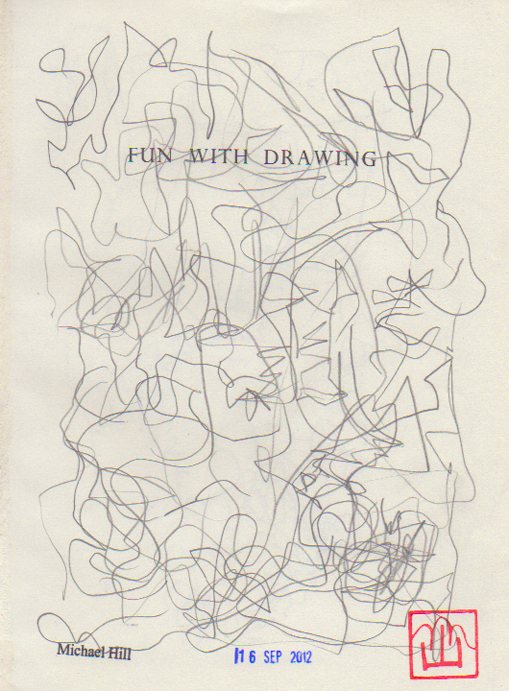
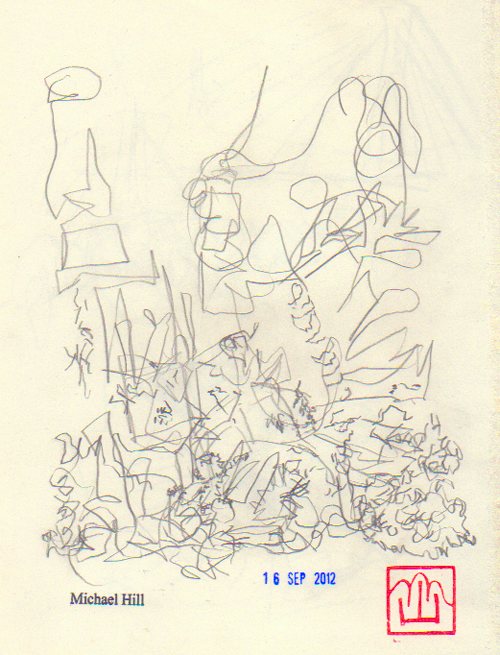
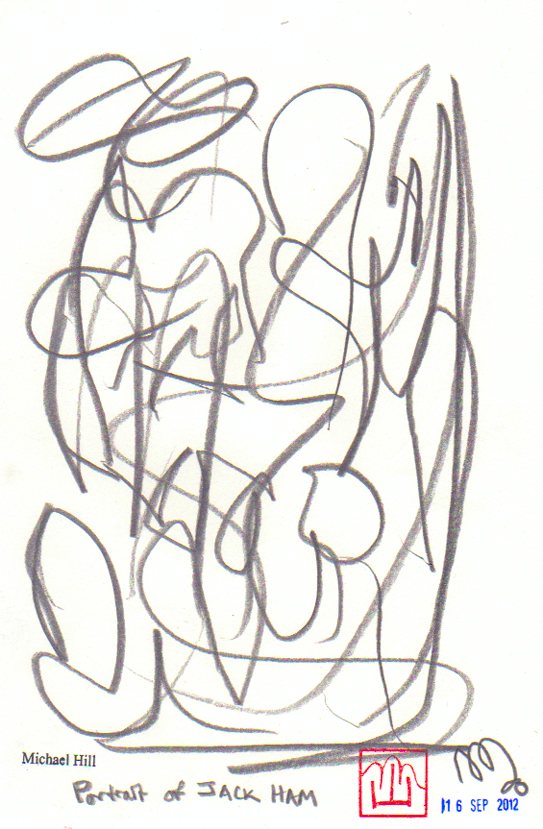
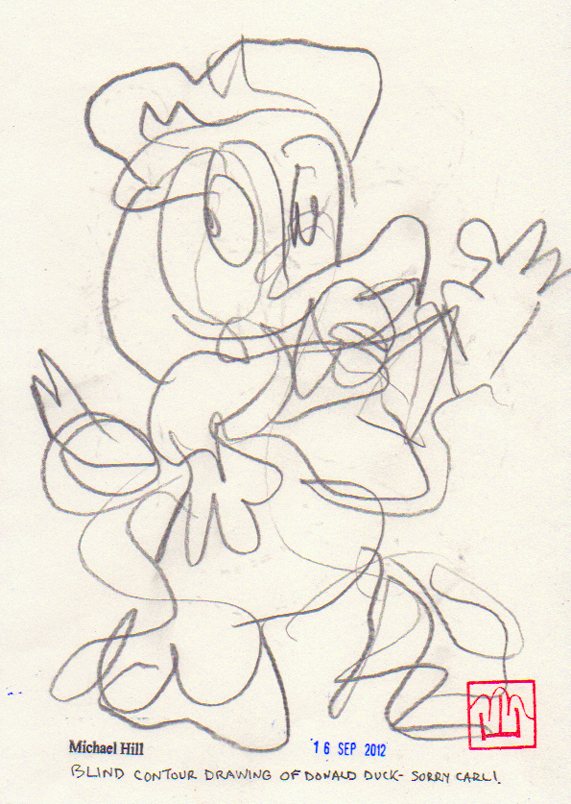
This new chapter also includes experimental approaches to drawing including abstract, contour and blind contour. It’s creative fun time with this drawing process.
Using line as an element of construction and expression, drawn, printed or written, although restrictive, is quite expressive. I find that drawing details very carefully of constantly changing scenes with accompanying alterations in point-of-view leads easily into abstraction.
Drawing anything whilst listening to music invariably produces a pattern of abstract lines on paper that is most expressive. I follow the lines whilst I am making them and try to keep up with the tempo of the music. No erasers! A quicker tempo produces less inhibited lines and surprising shapes.
Another fun drawing exercise I have utilised is copying a character or object without looking at my drawing. I try to follow the outlines of the object but don’t look down to see how the drawing looks. Without the constant checking things can drift and shift out of perspective and registration. The contours can be accurate but out of place. How about you? Do you draw? Have you ever created images using printmaking methods? I would love to hear. Feel free to post a comment about your image-making approach on this blog and I shall respond. Till next post, Michael.
In the 1990s it was not unusual to find alternative comics in record shops in Sydney. Examples were Phantom Records, Red Eye Records and Waterfront Records. Customers could find an assortment of locally made comics…in a corner on the floor or on a shelf or display rack. Odd sized comics which did not fit the display racks were laid on the floor. A similar layout could be found in Brisbane at Rocking Horse Records…in Canberra at Impact Records and in Adelaide at Big Star Records and Dominator Records. It was in these record shops that I first found some Australian alternative comics. These became the subject of my research into comics. There were also specialist bookshops that stocked comics as well as fantasy, science-fiction and movie material. In Sydney such shops were Land Beyond Beyond, Comic Kingdom, Kings Comics, and Half A Cow. The latter was a really wonderful shop to browse in with its carefully selected subcultural range of goods. It also had that strange logo of a cow cut in half…across not along like the Damien Hirst version and in cartoon rather than realistic style. There were also mail order distros such as Chewing Gravel that sold Australian comics.
The shop in Glebe. (Photo by Louise Graber)
Half A Cow business card with it’s eye catching sliced cow illustration.
The reason why independent record shops were selling alternative comics…was perhaps due to the perceived affinity of both medium’s independent approach to production and distribution. This positioning of the small press in the independent landscape…created parallels with the independent music industry that had flowed on from the Punk Rock movement. The term ‘Xerox music’ referred to the independent production of Punk records where the distribution system also employed a D.I.Y. approach with product being delivered to interested shops by hand. Alternatively it could be distributed by mail order. There were similarities in the way alternative comics were produced and distributed. These comics of the 1980s and 1990s…with their small print runs (usually less than 500), were commonly printed on photocopy machines by their creators. This was instead of the more costly offset process or digital printing used by professional print technicians for commercial clients. After printing their comics the creators, like their musical colleagues, would distribute their work themselves. Visiting comics, books and record shops…on foot, bus, train or bicycle…were creators carrying small amounts of stock in their bags. Then they would return a week later to check on sales. Eventually most of the more mainstream comics shops carried some alternative comics. There were even some musicians who made comics. Ray Ahn, Ryan Vella and Glenn Smith are examples. Half A Cow’s affinities with independent music ended up morphing them from a bookshop into an independent record label. Have you ever bought a comic from a record shop? I would love to hear!
Louise Graber’s Black Light Angels Gothic comic-first sold at Half A Cow in Glebe.
This is the ninth in a series of posts called Archives of Australian Comics History…that document moments in the recent history of Australian comics, particularly alternative comics and the Australian Small Press. I started researching this subject in the late 1990s and it eventually led to my PhD thesis: …Ph.D. Macquarie University, Division of Society, Culture, Media and Philosophy…A Study Of Contemporary Australian Alternative Comics 1992-2000…With Particular Reference To The Work Of Naylor, Smith, Danko And Ord, 2003. On completion of the research I donated the materials and comics I had collected to the National Library of Australia:…Michael Hill Collection of Australian Comics.


































 Doctor Comics