Welcome to another visit to my modest library collection of comics art…with selected books, journals and associated paraphernalia related to my research, study and enjoyment of the comics art medium. This previously published post…from my now deleted ON THE COFFEE TABLE series…has been re-edited and transferred to the new FROM MY LIBRARY series as the Sixth Reading. It documents items from my comics art library and research collection that pertain to manga and mangaka.
It was looking likely that I would have a yōkai themed Xmas…with master mangaka Shigeru Mizuki (1922-2015) material on my reading list. Due to a backlog, these manga readings did not get underway until after the New Year period. It proved well worth the wait as it was a wonderful read! This industrious creator of both autobiographical and fantasy manga…with his gekiga approach to graphic storytelling…placing cartoon style characters over realistically drawn backgrounds…has reached legendary status in Japan but needs to be better known in the rest of the comics world. Here’s my modest contribution.
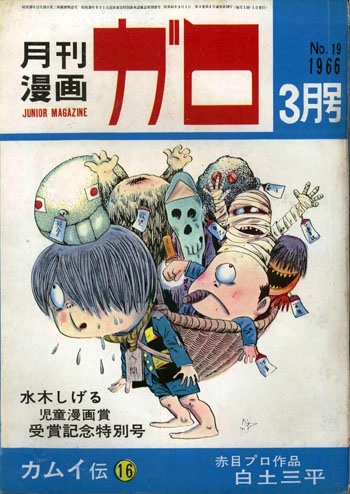
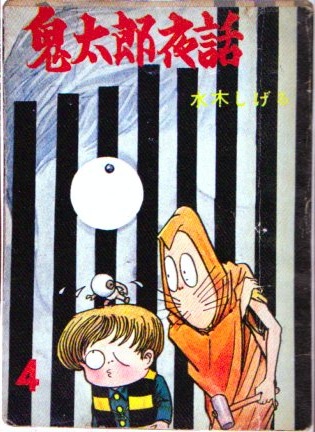
After serving in New Guinea for the Japanese army in World War II Mizuki got his start in graphic storytelling…first as an apprentice artist in kamishibai, or paper theatre. Here successively shown painted cards…accompanied with vocal and musical narration by a street performer…told a story to audiences gathered on street corners in Japan. Mizuki moved on to the print media making manga for the rental market…and participating in the emerging gekiga form of alternative comics developed by Yoshihiro Tatsumi. From his interest in the ghosts and spirits of Japanese folk tales…he developed his Kitaro character in a series of stories…based on a popular kamishibai play by Masami Ito called Hakaba Kitaro from 1930s…inventing the yōkai genre in the process.
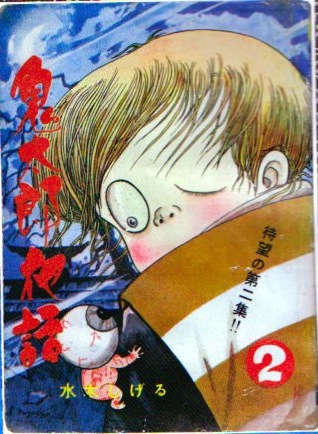
Mizuki found an outlet for his stories in GARO magazine, an eye-catchingly creative, comics art anthology publication of alternative manga. There he gained an assistant, Yoshiharu Tsuge, the developer of nejishiki, or Screw Style manga. In these stories Kitaro’s deceased father, Medama Oyaji, reanimates himself as an eyeball…and, with the eyeball as a head, grows a new body…hangs out in Kitaro’s hair and his hollow eye socket(Kitaro had lost one eye)…and tries to help his son with his adventures.

An increasing number of Mizuki’s works have been translated into English and published by Drawn & Quarterly. This publisher publishes comics, graphic novels and textual studies of the comics art medium.

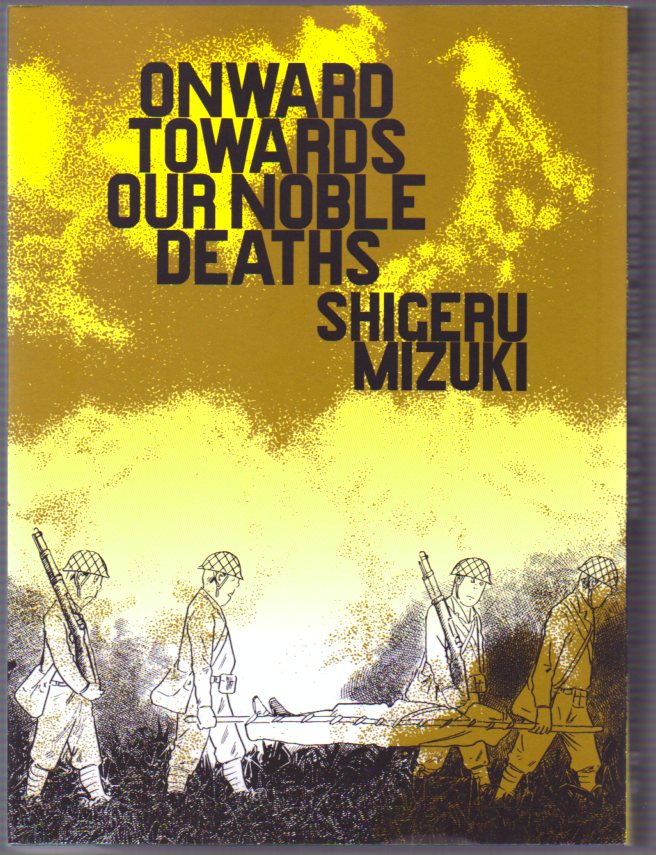
In Onwards Towards Our Noble Deaths (originally published as Soin gyokusai seyo! in 1973) based on his own experiences in the Japanese army in New Guinea during World War II,…Mizuki portrays the sadistic officers who, driven by their ideological beliefs, were cruel to their own troops. This English translation from Drawn & Quarterly has an introduction by manga analyst and critic Frederik L. Schodt.
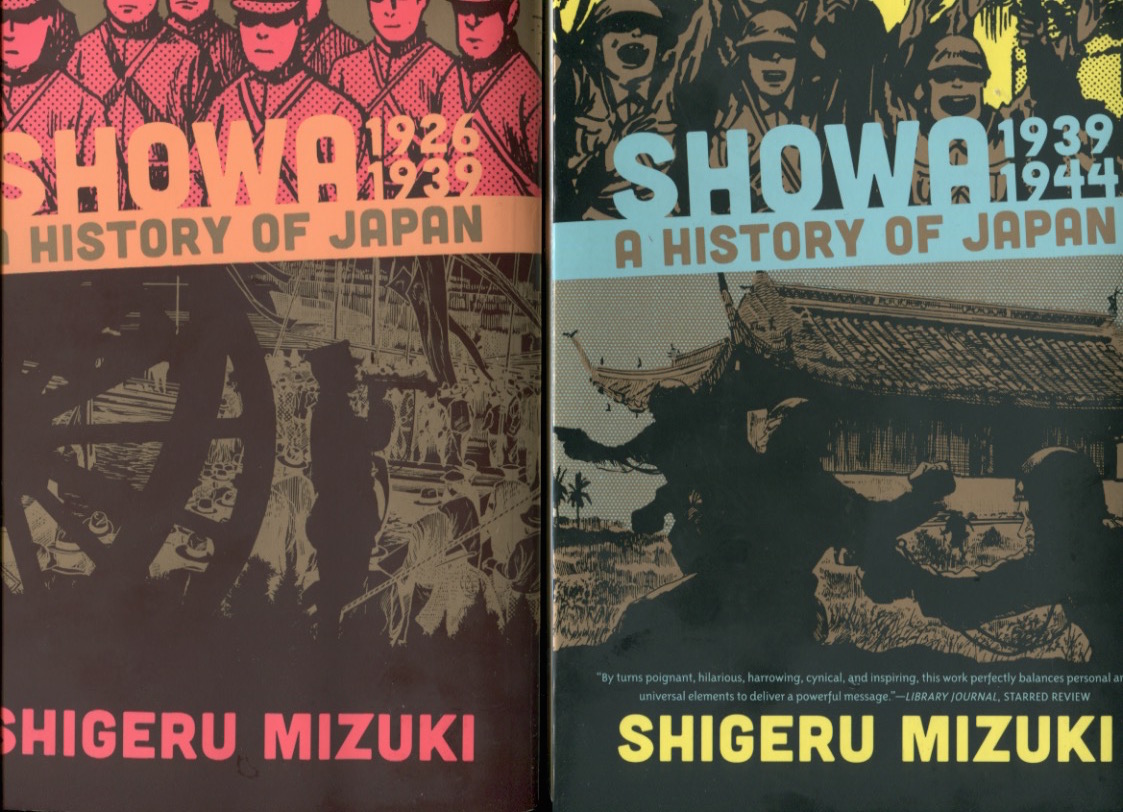
Japanese history gets the Mizuki treatment in SHOWA1926-1989…a four volume history of Mizuki and his family…presented in his juxtapositional mix of cartoons and photographic realism in manga form. It’s an impressive work.
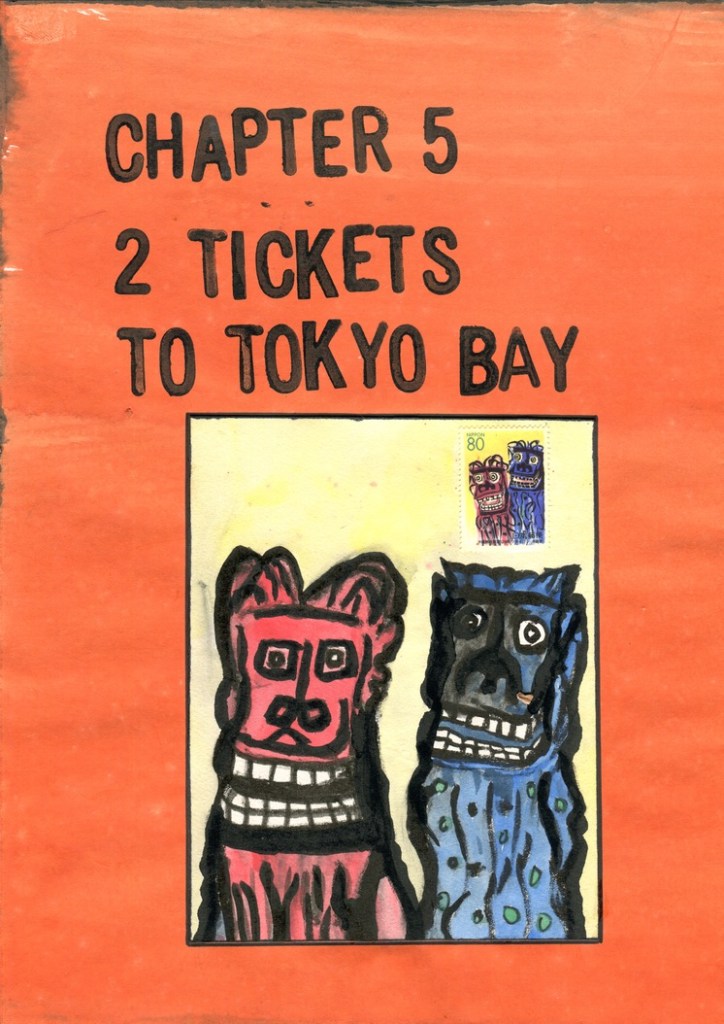
Inspired by Mizuki and other mangakas is the title page, above, of a chapter of my graphic novel. It points to my visits to Japan…and the particular resonance that country has had on my comics art research and creation. This manga influence and my appreciation of it led me to reference it in my graphic novel…here attempted in the graphic style of the illustration for the chapter’s title page.
(Original text, photos, artwork and scans-©2024 Dr. Michael Hill a.k.a. Doctor Comics).
 Doctor Comics