Welcome to an initial visit to my library with a new format! It’s been a long time since my library posts on this blog appeared under the title COFFEE TABLE. The old COFFEE TABLE posts are gradually being replaced with new posts carrying the heading RESEARCHING COMICS ART. The COFFEE TABLE heading will discontinue. This new series will examine thematic connections in books that I have bought, borrowed or loaned from libraries. There will be short blog posts on aspects of comics art based on books that I have read. I must admit that my own collection is rather small, as far as libraries go…less than three hundred volumes, and not a general collection but more a specific, comics and graphic arts one…and somewhat randomly acquired…largely consisting of comics, graphic novels and associated publications about comics art, animation, printmaking and graphic arts in general. From those fields the bulk of the volumes relate to aspects of the history and creation of comics art…books about particular titles and their creators…books on cartooning and cartoonists as well as actual copies of comics and graphic novels.

(Photo-©2019 Dr. Michael Hill a.k.a. Doctor Comics)
This small section of ten books on one of my shelves is simply a starting point…for a series of proposed blog posts, some specific, some general, about my collection of books on comics art. As previously stated, the majority of the books in my collection are on the subject of comics. They have that in common and to start this series…I have randomly selected the volume about Harvey Kurtzman, third book from the Left in the photo above. Who is Harvey Kurtzman? Well, the Harvey Awards in the U.S.A. that honour outstanding work in comics art…are named after him due to his contribution to North American comics and cartooning…that included his cartooning contribution to MAD MAGAZINE.
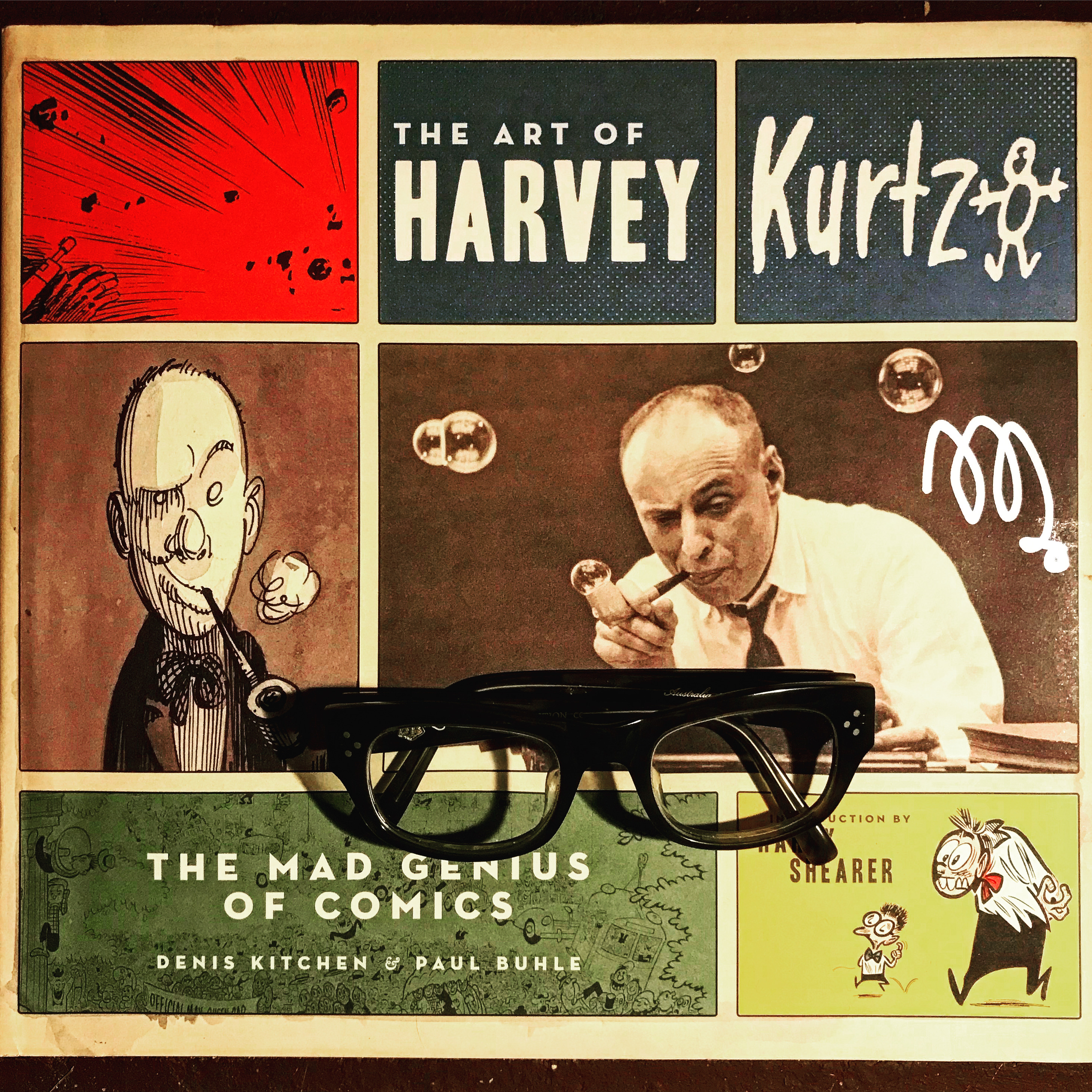
(Photo-©2019 Dr. Michael Hill a.k.a. Doctor Comics)
Having said that and introduced Harvey I am now having second thoughts about starting with his work. Although this is an excellent book selected at random…and Harvey Kurtzman is an outstanding figure in comics history…whose work ranged from war comics to Playboy Magazine cartoon strips, I am suddenly distracted by thoughts of manga. Manga! Yes, manga…how did that happen? It’s even on a different shelf! I don’t know, but I shall follow this momentary distraction. and return to Harvey’s contribution to comics in a future post. So, taking another leap across the library shelves…but still in the comics art domain, I’m landing here, in a different place with other books. In doing so we are switching from New York (home of Harvey Kurtzman) to Osaka (home of Osamu Tezuka)…and moving from comics to manga, the generic name of Japanese comics, and to our second book from the shelves. At least the manga book is by an American author, Frederik L. Schodt, so some consolation for the Kurtzman title from Kitchen and Buhle.

I got excited about manga during my first visit to Japan on a research trip back in 1987. There seemed to be copies everywhere…on buses, on trains, on the streets, lying on the pavement or left in cafes and laundromats…mostly in excellent, near new, if recently read, condition,…and generally deposited by readers seemingly happy to leave their copy for other readers, or so it seemed,…although I never actually witnessed anyone performing this act of generous abandonment. However, I was a frequent beneficiary of this practice by comics comrades. The book above, was not found in this manner, however, but was purchased. I bought it from the Kinokuniya bookstore at Umeda Station, Osaka. It was my first visit to that store. Decades later one opened in my home city of Sydney, Australia. I visit it frequently…but back to Osaka in 1987 that purchase became my first book on Japanese comics. It was in English…well the text was…but all of the illustrations and graphics were in Japanese, in manga form! It also contained a foreword by legendary Japanese comics and animation genius Osamu Tezuka. The book was written by a notable American comics studies authority Frederik L. Schodt, whom I met and learned from a few years later at a comics forum at Sydney University. This book does what its title declares in providing a broad introduction to manga and the world of Japanese comics. Liberally illustrated with a wide range of graphic styles and genres it’s a good starting point for understanding manga.

(Photo-©2019 Dr. Michael Hill a.k.a. Doctor Comics)
The issue of this journal by the notable American magazine on comics, The Comics Journal…was published almost 20 years after the Schodt book(above). It features a profile of five masters of the manga medium…Hino, Maruo, Ono, Tezuka and Tsuge in its cover story. This updates and deepens the general knowledge on manga in English,…available at the time of Schodt’s writing(1983) as well as providing large format graphic illustrations of the manga form.
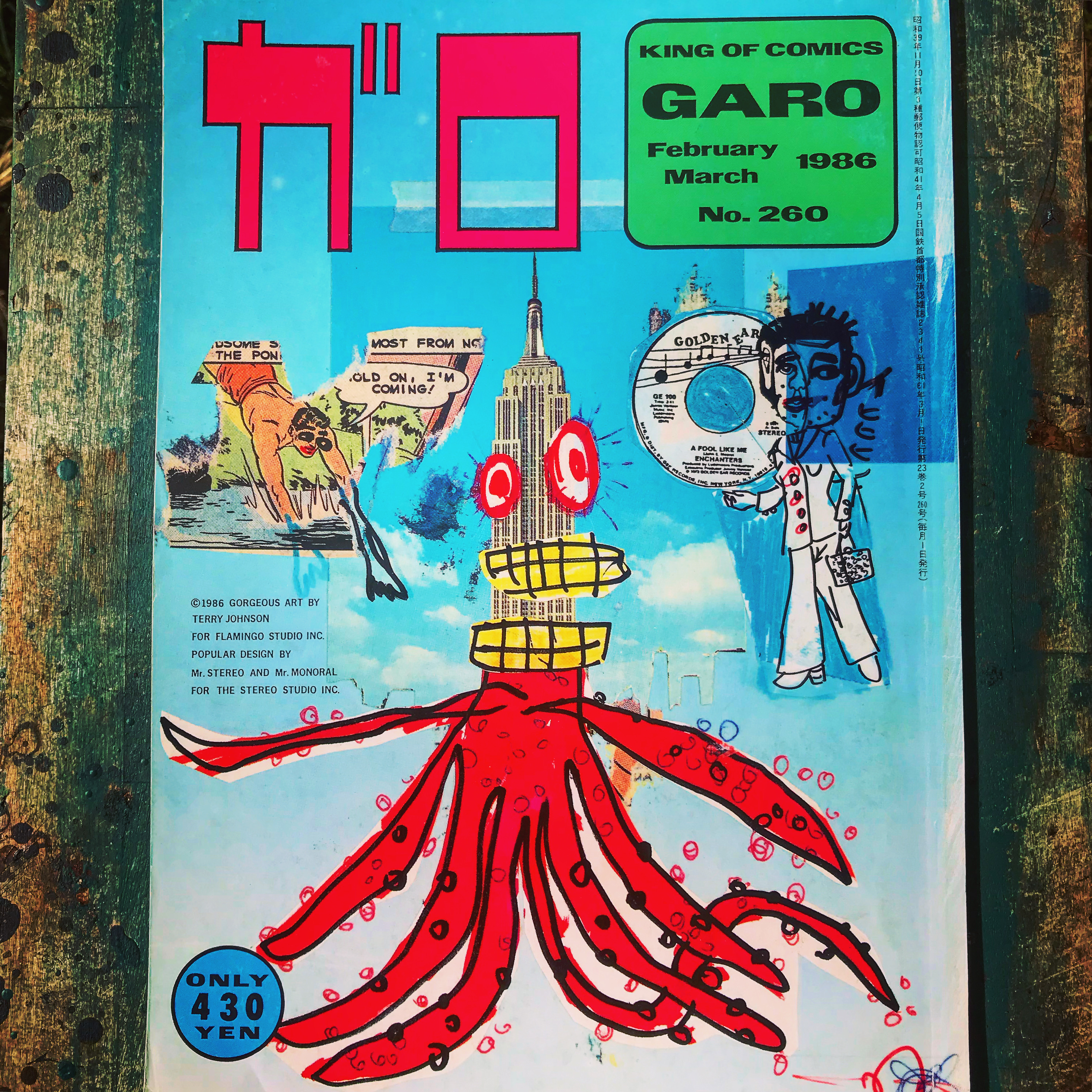
By contrast, there is not much English language in this magazine…as it’s mostly in Japanese and is largely composed of pages of manga more than articles about the subject. What a stunning cover graphic it has by Terry Johnson, a.k.a. King Terry, a.k.a. Teruhiko Yumura, a.k.a. Flamina Terrino Gonzalez, as documented by Frederik L. Schodt in another of his books on manga DREAMLAND JAPAN: Writings On Modern Manga. I bought this copy of a 1986 edition of GARO in Tokyo…during that same 1987 visit mentioned above…from a store in the Jimbocho area of Tokyo…that stocked thousands of back copies of manga as well as manga magazines. This was not the only magazine that caught my eye about manga as I also found several magazines about manga. Years later (1998) I found this copy, see below,…of LOOKER: The Emotional Graphic Magazine in the same store as I earlier (1987) found GARO. (Photo-©2019 Dr. Michael Hill a.k.a. Doctor Comics).


I even started learning the Japanese language through this magazine MANGAJIN…that made extensive use of manga style graphics and layout…in its visual communication design and cartooning as a method of teaching the Nihongo language to English readers and students.
So there is my initial post on this topic of books about comics art…a brief taste-test in my proposed series Researching Comics Art…that didn’t go according to plan…with the sudden leap from the Harvey Kurtzman book. In future posts I shall show more examples of manga…and books about manga…and various other types of comics from around the world…including that promised return to writing about the Harvey Kurtzman book (above) that started out this post. The Kurtzman post will follow at some stage, I expect…with comments on his comics career and some of his notable published work. The proposed systematic approach of restricting analysis to the grouping of books in the initial photo will also come. Forgive my first try but I just need to get into that groove. (Photo-©2019 Dr. Michael Hill a.k.a. Doctor Comics)
This post forms part of my graphic based material…that includes the fields of painting, printmaking and cartooning…including artwork for my comic and graphic novel…BLOTTING PAPER: The Recollected Graphical Impressions of Doctor Comics plus my scholarly research and study of the comics medium.
(All text, photos and artwork-©2019 Dr. Michael Hill a.k.a. Doctor Comics).
 Doctor Comics